As I see it
As US cries ‘genocide’ at China
for Xinjiang, its silence on Myanmar’s Rohingya is deafening
·
- . Details of both
countries’ alleged abuses against their respective Muslim
minority groups emerged the same year – and
the evidence against Myanmar is damning
- . By dragging its heels on condemning
Naypyidaw, Washington risks revealing where its
true motivations lie – especially after February’s coup, writes
Maria Siow

+ FOLLOW

Rohingya children wait
for food aid at a refugee camp in Bangladesh in 2017 after fleeing the violence
in Myanmar. Photo: AP
Why has the United States not accused Myanmar of committing genocide against it Rohingya Muslim minority,
almost a year after saying the same of China and its Uygur Muslims in Xinjiang?
Given that the grim details of
both countries’ alleged abuses against their respective minority groups emerged
in 2017, the lack of censure from Washington as it drags its heels on
condemning Naypyidaw is rather unfathomable.
Last week, US Secretary of State
Antony Blinken said during a visit to the region that Washington was looking
“actively” at whether actions taken in Myanmar might constitute genocide.
I am not sure what there is to
look at, much less “actively”, given that thousands of Rohingya were killed by
Myanmar troops after a brutal military crackdown in August 2017.
Nearly 1 million Rohingya
subsequently fled Myanmar’s Rakhine state to take refuge in neighbouring Bangladesh.
Tortured, executed, shot: a junta’s way of death in post-coup Myanmar
2 Oct 2021
Myanmar faces genocide charges
in several international courts and a United Nations fact-finding mission even described the killings as a “textbook
example of ethnic cleansing and slow-burning genocide”.
Apart from abducting and raping
women and girls, the report noted that soldiers had piled bodies in at least
five mass graves before burning their faces off with acid.
An estimated 24,000 Rohingya
have been killed, according to a Ontario International Development Agency
report, with 34,000 more thrown into fires, 114,000 beaten and 18,000 women and
girls raped.
What more evidence does
Washington want?

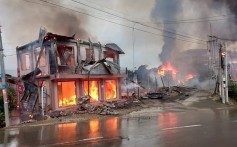
A house burns in Gawdu Tharya
village near Maungdaw in Myanmar’s Rakhinestate in 2017. Photo: AFP
Even the US State Department, in
a 2018 investigation, found that Myanmar’s security forces had engaged in a
“well planned and coordinated” campaign of violence against the Rohingya.
That year, bipartisan senators
urged Blinken’s predecessor Mike Pompeo to formally declare that the killings
were genocide, arguing that failing to do so would “deny truth-telling and
accountability” for the Rohingya.
A bill was also introduced to
Congress in April this year by 10 US senators to “require a determination” on
whether genocide has been committed against the Rohingya.
Perhaps some in Washington had
reservations about calling the killings genocide when the democracy-friendly
Nobel laureate Aung San Suu Kyi was still in power, in view of the punitive measures such a
label would legally imply.
Detention, beatings, death:
Myanmar’s media suffers as junta tightens grip
22 Dec 2021

But Suu Kyi’s civilian
administration was overthrown by the Myanmar military in February, prompting a
slew of Western countries – including the US – to impose trade and military
sanctions on the junta.
So why the delay? Washington
should have no compunctions about censuring Myanmar now.
Not doing so risks conveying the
message that the US’ strategic considerations in countering China’s influence
are more important than righting the injustices faced by the Rohingya, who have
been described by the UN as the world’s most persecuted people.
Or worse, that the brutal
killings and wanton acts of terror against the Rohingya are “lesser” crimes –
as compared to activists’ allegations of mass incarceration, hi-tech
surveillance and forced sterilisation of women in Xinjiang.


No comments:
Post a Comment