An Israeli soldier told Haaretz he had reported a bulldozer moving near the village of Jalud early on Thursday, shortly before settlers used it to demolish homes belonging to the Tubasi family, but his commanders dismissed the account
November 29th, 11AM November 29th, 15PM
An IDF soldier stationed near a West Bank village reported a bulldozer operating in the area where settlers later demolished the homes of a Palestinian family, but his commanders dismissed the warning, claiming the vehicle was likely on its way to demolish an illegal outpost, Haaretz has learned.
The bulldozer used by the settlers was located last week but was not confiscated until Sunday, Haaretz has learned. In a joint statement, the IDF and police said security forces had seized the bulldozer and arrested its owner, who is suspected of involvement in the demolition of the Tubasi family's home. A quad bike allegedly used by those involved in the incident was also located.
"Security forces view these events as a serious blow to the State of Israel and the image of the IDF," the statement said. "They stand in complete contradiction to its values and cause serious damage to security efforts."
The IDF said it had lacked the personnel to confiscate the bulldozer earlier, despite warnings from senior defense officials that settlers could tamper with evidence or attempt to conceal their involvement.
The soldier's report came early on Thursday, shortly before settlers were recorded using the bulldozer to demolish three homes belonging to the Tubasi family, who had been forced to leave in July after settlers had built an outpost nearby and besieged them for weeks, following months of violent harassment.
Haaretz has also learned that several days earlier, the family had also reported that settlers had arrived at the scene and damaged the houses, but the army ignored the acts as "early warning signs" before a bulldozer was used in the attacks.
Despite a September court order requiring the state to allow the family to return to their homes by September 20, the IDF did not notify them that they could prepare to return until September 28.
Senior defense and Shin Bet security service officials have blamed Central Command chief Maj. Gen. Avi Bluth for the military's failure, during closed-door discussions, saying the army had information beyond the soldier's report that should have prompted Bluth to station guards at the scene instead of allowing the settlers to demolish the homes.

"This failure has one address: Avi Bluth," a senior defense official said. "He and the army are trying to shift responsibility onto others, but everybody in the IDF knows this was a colossal failure."
On Thursday, a senior defense official added that the attack is "an insane military failure. How does a bulldozer show up and nobody knows about it? How come nobody stopped them?"
Attorney Ghiath Nasser, who represents the family, told Haaretz that an engineer visited the structures earlier this month, but an appraiser was not allowed to arrive. Documentation from Thursday morning shows broken support pillars and breached outer walls.
According to Nasser, the demolitions are "an expression of the army's continued serious failure in enforcing the law in the area." He added: "Even after the homes were torched, we repeatedly appealed to the military authorities and warned about the continuous acts of destruction during nighttime, but nothing was done to prevent them."
Sources in Central Command also confirmed to Haaretz that both the command and the army's regional brigade had advance information about the incident but chose not to deploy forces to prevent settlers from entering the area. The sources blamed the Shin Bet, claiming that the information had also been passed on to the security service, which failed to take appropriate action.
On the night of September 28, the army told the family to prepare quickly to return home. The family complied, but the operation soon turned into an evacuation effort.
Between 100 and 200 settlers entered one of the homes, attacked the family and the security forces accompanying them, and set fire to the family's vehicle and military vehicles. After the family was evacuated, settlers also torched the houses.
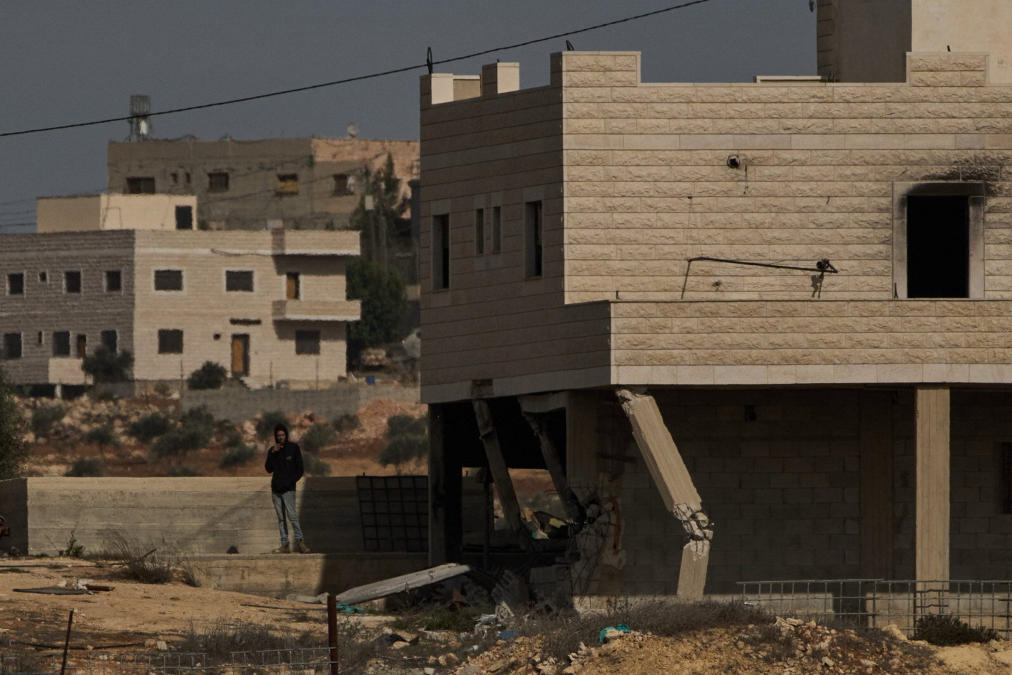
The fires burned for hours without firefighters arriving. The following day, extensive damage was discovered inside the homes, which had been completely blackened by the blaze.
On October 29, the High Court ordered the government to allow engineers, appraisers and other professionals access to the homes within two weeks to prepare for renovations, and to ensure they could enter continuously over the following 30 days, as necessary, with their safety guaranteed.
The justices also ordered the state to pay the family 51,000 shekels ($15,000) in legal costs. Supreme Court President Isaac Amit and Justices Daphne Barak-Erez and Yechiel Kasher sharply criticized the army's handling of the case, stressing the "exceptional severity" of the state of affairs that had emerged.
The court also ordered that the Tubasis' safety be guaranteed throughout the process. It also instructed the state to report by November 10 on the measures it intends to take to "secure and ensure the petitioners' safe and sustainable return to their homes, with all that entails."
West Bank is most volatile front
"The most volatile front is the West Bank, not Iran," a senior defense official told Haaretz, following a series of settler attacks in the territory in recent days. "The refusal to acknowledge the IDF's loss of control in the West Bank has become a strategic threat that everyone prefers to ignore."
The defense official added that, alongside attacks on Palestinians, looting by settlers has also become increasingly common. The defense establishment has received footage showing settlers stealing agricultural produce, equipment from businesses and property from homes.
"This has become a phenomenon we simply can't afford to go on living with," the official added. "People stop at vegetable stands or grocery stores, enter while armed and simply take whatever they want... This is armed robbery, an extremely serious criminal offense. [This is] one of the most despicable things we as a society can tolerate."
The IDF did not respond to Haaretz's request for comment.


No comments:
Post a Comment