Dr Kerron Ó Luain is an historian from Dublin, Ireland. His latest journal article examines Irish republican democracy in Belfast during 1846-48. He writes, "In Ireland, in the recent presidential election campaign, a formerly marginal, Trump-like figure and crank named Peter Casey managed to secure 23.1% of the vote based on nothing more than anti-Traveller (Ireland’s only indigenous ethnic minority) and anti-immigrant rhetoric and hearsay."
Zionism is inherently reactionary
The origins of Zionism are profoundly misunderstood by many. This is not coincidental and can be seen largely as the result of propaganda, which opportunistically and erroneously asserts that Zionism is the natural expression of Judaism.
In fact, Zionism gained traction among some Jews only in the late 19th century in response to antisemitism and romantic European nationalist movements. Zionists syncretized many white supremacist, antisemitic, messianic and fascistic racialized dogmas and were thus overwhelmingly unpopular among most Jews, who viewed the ideals of the enlightenment–emancipation, equality and integration – as their target.
Zionism first increased its influence in the small Jewish towns in Eastern Europe–the shtetls–at a time when many of their inhabitants became secular but not emancipated. Thus, their view of antisemitism and its accompanying violence and trauma was a modern one, not the traditional Jewish notion that deemed oppression and hardship as divine punishment for sins (for review see here). Zionism offered a seemingly empowering vision of a “new Jew”, who shed obsolete beliefs, which were viewed as passive and weak. Instead, Zionists reacted with force against oppression and adopted the antisemitic notion whereby Jews were the cause of their own oppression and should thus segregate themselves.
In response to antisemitism, Zionists embraced their fear and contempt of their abusers to produce defensive aggression, reinventing identity in a reactionary attempt to ensure survival and restore pride. The reward of violence–power-quickly enticed Zionist leaders to morph what began as a defensive strategy into an offensive one that culminated with a settler colonialist vision of a homeland in Palestine at the expense of its Indigenous population, the existing Palestinian people. Defense and oppression–a self-sustaining cycle
It is instrumental to view this dynamic through a behavioral neuroscientific perspective, which affords a means of understanding underlying motivations of both persons and class structures, as well as informs on potential resolutions.
Studies show that the emotions of fear and anxiety and their corresponding neural circuitries are highly conserved among all mammals, including humans. In response to threat, fear is expressed in the form of defensive behaviors. These include flight if an escape route is available, freezing and avoidance if not (both techniques of choice in response to antisemitism prior to Zionism), and defensive threat and attack when confrontation is imminent.
Defensive aggression and its corresponding violence can lead to the rewards of resource acquisition–whether it be the sparing of one’s own life or access to the many spoils of dominance: sexual partners, money, land, power etc. Hence, a process that begins with oppression leads to fear in the oppressed (expressed as defensive aggression) and morphs to offensive aggression directed towards resource acquisition, which ultimately results in the subjugation of others by those previously oppressed. The once powerless become “hooked” to the rewards of violence; an addiction which facilitates the transition from defense to offense.
Thus, the everlasting and self-perpetuating dynamic of persecution often shifts the balance of power, yet always maintains an equal or growing level of violence.
How do the hegemonic forces sustain subservience in their subject population while reaping the benefits of oppression? through fear mongering and ever-escalating violence. Fear conditioning and population control
Fear memories are formed when otherwise neutral stimuli are paired with pain or danger and are extinguished when they are decoupled (see here). Chronic, prolonged, generalized or an otherwise abnormal fear reaction to an ambiguous stimulus is viewed as maladaptive and linked to a range of psychopathologies, such as post-traumatic stress disorder (PTSD).
Fear conditioning is “reinstated” in a person or a populace (“collective PTSD”) upon re-exposure to-or the recall of-the fear-inducing stimulus. In such a manner, reinstatement is a technique by which the political, religious, military and economic ruling classes manipulate their populace to gain support for their aggressive and expansionist policies, distract from their own corruptions, privileges and suppression of dissent.
Fear is reinstated in traumatized collectives using several methods: (i) focusing on-and decontextualizing an act of violence or resistance (e.g. “terrorism”); (ii) reminding the public of some atrocity in the past (memorial days, sanctifying bereaved families); (iii) shifting attention to perceived threats (e.g. the Iranian nuclear program); (iv) appealing to past glory, nostalgia (romantic nationalism) and; (v) segregating communities (apartheid), which preserves a process of dehumanization of the “other” and renders re-exposure and reconciliation (i.e. extinction of fear) virtually impossible.
Thus, fear manifests in increasingly violent displays of aggression promoting the interests of those in power. It is precisely these aggressive actions which are rewarded by the hegemony and therefore become more prevalent in the general population. Privilege enables little risk of harm for the hegemonic forces and the reinstatement of perceived imminent threats constantly raises the bar for-and serves to justify permissible oppression.
From an early age the population, through participation in violence in the army or elsewhere, are encouraged to transition from the defensive to the offensive expressions of aggression. As such, the population is made an accomplice to ruling class corruptions and crimes, and thus perceives, together with its leaders, any forms of dissent as treasonous existential threats (see here). Breaking the cycle of oppression
The cycle of violence and inequality has been the backbone of all white supremacist, settler colonialist societies, past and present which engage in ethnic cleansing and genocide of Indigenous populations; e.g. the United States, Australia, Canada, South Africa, Israel and more.
Yet the question arises–how can the cycle be broken?
Victims of abuse can cope with trauma in two ways. They can either channel their rage toward weaker elements in their immediate society or outside of it and in so doing perpetuate the never ending cycle of abuse, or stand up to their abusers, who are stronger than them, resist the temptations of resource acquisition and break the cycle of violence and inequality.
The first option of picking on the weak is easy and can be a solitary endeavor; victims become abusers and in so doing feel empowered; e.g. the Zionist example. The second option of fighting oppressors poses a greater challenge and requires courage, resolve and social skills, i.e. collectivism, as bullies are usually stronger and more formidable than their victims.
For this purpose, it is advantageous for the oppressed to join forces and collaborate with fellow victims of white supremacy; women, immigrants, black and brown people, Indigenous, Muslim, Jews and others so that together they may form a winning strategy to overcome their oppressors.
Notably, Zionist propaganda works against this sort of alliance building and resistance by fragmenting and isolating Palestinian society within historical Palestine and outside of it. BDS and defeating white supremacy
The non-violent Boycott, Divestment and Sanctions (BDS) Palestinian-led movement has demonstrated the utility of adopting an approach which implements the lessons learned by the many victims of settler colonialism and white supremacy.
These lessons include a series of steps which include: (i) promoting truth and dispelling propaganda; (ii) fostering accountability in the guilty (e.g. here); (iii) moving toward cessation of hostilities/injustices; (iv) breaking barriers, physical or otherwise; (v) adopting an intersectional, anti-racist leadership which recognizes interlocking systems of power and oppression that impact those who are most marginalized in society and (vi) creating empathy and forging bonds.
It is glaringly apparent that with every BDS victory the Israeli propaganda machine continues to lose credibility. The demonopolized nature of the internet provides accessibility to truth like never before and an opportunity for Palestinians and other victims of settler colonialism to connect and collaborate towards the breaking of the cycle of violence and inequality.
That said, the rise of global fascistic movements, stimulated by Donald Trump and his Zionist allies in the Israeli government, are hard at work toward their mutual interest of global apartheid, often using the internet to disperse false information (“fake news”). Thus, it is clear that the battle against Zionist expansionism and its oppression of the Palestinian people should incorporate a comprehensive dismantling of settler colonialism and white supremacy.
Since Aug. 2017, more than 700,000 Rohingya have fled into neighboring Bangladesh amid gang rape, arson and mass killing. Author Azeem Ibrahim, a senior fellow at the Center for Global Policy, addressed this and the lack of international attention and resources directed to the Rohingya genocide Thursday at the Ford School of Public Policy to an auditorium of more than 100 attendees.
Ibrahim began his lecture with a quote from Hermann Goering, the Nazi Luftwaffe commander.
“(T)he people can always be brought to the bidding of the leaders … All you have to do is tell them they are being attacked,” Ibrahim quoted. Ibrahim explained how the Rohingya, a political and ethnic minority in Myanmar, are easily marginalized. Popular discourse in the country claims that minorities are “not loyal citizens” but “illegal interlopers.”
When talking about the dangers faced by other minorities in Myanmar, Ibrahim said inaction in this situation could lead to ethnic cleansing of other minority groups as well.
“If you allow one genocide to happen, then you open doors to many others,” he said.
According to Ibrahim, thousands of Rohingyas have tried to escape to Malaysia and Thailand by boat. He said many were promised a future on pineapple plantations, but were instead sold into the shrimp trade. He quoted one Rohingya man who, upon finding out he was sold illegally into the shrimp trade said, “I felt like I should die.” Widely recognized as the most persecuted people in the world, the Rohingyas receive almost no celebrity acknowledgment nor consistent attention from lobbying groups, Ibrahim noted. The U.S. State Department dubbed the crisis an ethnic cleansing this September and an independent United Nations investigation this summer called for military officials in Myanmar to be prosectured for human rights violations, yet no foreign entity has directly intervened in the state’s violent oppression.
The European Union continued to extend an invitation to the head of Myanmar’s military, Senior General Min Aung Hlaing to Europe, which Ibrahim attributed this to the eschewing of the use of terms like “refugees” and “genocide” as the former grants the Rohingya people certain rights, while the latter necessitates international action according to the United Nations Convention on Genocide.
Ibrahim also argued State Counsellor of Myanmar Aung San Suu Kyi, a former Nobel Peace Prize winner, has served as a shield for criticism against the military. Ibrahim said that when the international community warned Suu Kyi of the ethnic cleansing situation in Rakhine, she responded that ethnic cleansing is too strong an expression to use for what is happening.
Ibrahim said the Western world is surprised by Suu Kyi’s Buddhist ultranationalist side because Western narratives of Suu Kyi have overlooked her beliefs and focused on her identity as the daughter of the founder of Burma, a Nobel laureate and a graduate of Oxford University. The Western world, he offered, conveniently assumes that these people like to believe in democracy and will turn their backward countries into ones that resemble the developed world.
Ibrahim explained the central claim made against Rohingya people is that “Rohingya” is a “manufactured word” and that these people are illegal immigrants from Bangladesh and should return to Bangladesh. This refusal to accept the term and the ethnicity has had implications on foreign relations.
“Even the Pope is warned not to use the word,” Ibrahim said.
He refuted these claims by showing documents with the usage of the term “Rohingya” dating back to 1811, and tracing the roots of the group’s persecution go back to World War II. During the Japanese occupation of then-British Burma, the Buddhist nationalist majority believed the Japanese could liberate the country, whereas the Rohingya stayed loyal to the British. Ibrahim said this bitterness escalated during General Ne Win’s rule when the Burmese Way to Socialism was introduced as the state ideology in 1962. As stated by Ibrahim, the differences in language, culture and skin color made Rohingya the “scapegoats of society” under Ne Win’s rule. In 1974, the Emergency Immigration Act designated all Rohingyas as foreigners.
The most modern eruption of violence between the Buddhists and the Rohingyas took place in spring 2012 when the death and rape of a young Buddhist woman blamed on the Rohingyas. In response, Buddhists attacked a bus of Muslims traveling in Rakhine and killed 10 people, leading to a protest.
LSA sophomore Fareah Fysudeen, the Social Justice and Activism Chair of the Muslim Students’ Association — which co-hosted the panel with the Michigan Refugee Assistance Program — said Ibrahim’s discussion taught the Muslim community about the situations in Rakhine.
“A lot of people within the MSA and within the Muslim community don’t know about this so it’s really enlightening to have a speaker here so well-informed to be speaking about it,” Fysudeen said.
Public Health junior Anurima Kumar said she agreed talks like Ibrahim’s are important to attend, but she wants more instruction on how to help improve the crisis.
“After going to all of these talks, I feel frustrated about without having an avenue of what we can do next,” Kumar said. “(But) I think all of us just being here is very important and being educated and bring this conversation to other people on campus.”
Here is the link to a documentary on the subject of atrocity committed by savage Buddhists in Myanmar against the Rohingya.
ABOUT THIS REPORT
In March and April 2018, the Public International Law & Policy Group (PILPG), undertook an as yet unprecedented large-scale and comprehensive human rights documentation investigation mission in the refugee camps and settlement areas in Eastern Bangladesh. The purpose of this investigation mission was to provide an accurate accounting of the patterns of abuse and atrocity crimes perpetrated against the Rohingya in Myanmar’s Rakhine State and to help inform the policy decisions related to accountability in Myanmar. PILPG’s investigation team ultimately conducted 1,024 interviews with Rohingya refugees, and those interviews are the basis of this Report.
PILPG’s investigation collected more than 15,000 pages of documentation collected from the 1,024 interviews conducted by PILPG. PILPG reviewed all of this documentation and identified more than 13,000 instances of documented grave human rights violations. Based on all of this information, PILPG drafted an initial qualitative report to outline the factual findings and initial conclusions from PILPG’s investigation mission.
Since the conclusion of the investigation mission, and with substantial support from an array of international attorneys and international criminal law experts, PILPG has also been drafting an extensive legal analysis of the factual findings. PILPG will publish this analysis, along with recommendations for future justice accountability efforts in its second report. PILPG’s second report on the investigation mission, the Factual Findings & Legal Analysis Report, is forthcoming.
A human rights law group contracted by the State Department to interview refugees as part of an investigation into atrocities against Rohingya Muslims in Myanmar has found that there is a reasonable basis to conclude that genocide was committed - even though the US government stopped short of saying so.
A report due to be released on Monday by the Washington-based Public International Law and Policy Group (PILPG) will also say there was a reasonable basis to conclude that the Myanmar military committed crimes against humanity and war crimes, as well as genocide.
A US State Department report released in September, which relied on PILPG research, found that Myanmar's military waged a "well-planned and coordinated" campaign of mass killings, gang rapes and other atrocities against the Rohingya.
But it stopped short of describing the crackdown as genocide or crimes against humanity, an issue that US officials said was the subject of fierce internal debate that delayed the report's rollout for nearly a month.
A declaration of genocide by the US government, which has only gone as far as labeling the crackdown "ethnic cleansing," could have legal implications of committing Washington to stronger punitive measures against Myanmar. This has made some in the Trump administration wary of issuing such an assessment.
In an advisory on Thursday announcing the planned release of the legal analysis of its investigation, PILPG said it would reveal that "there is a reasonable basis to conclude that war crimes, crimes against humanity, and genocide were committed against the Rohingya population."
PILPG based its report on more than 1,000 interviews with Rohingya refugees who fled to Bangladesh. The group said its mission was conducted in March and April "to provide an accurate accounting of the patterns of abuse and atrocity crimes."
The September State Department report was released in low-key fashion nearly a month after UN investigators issued a report accusing Myanmar’s military of acting with "genocidal intent" and calling for the country’s commander-in-chief and five generals to be prosecuted under international law.
State Department officials have said the objective of the U.S. government investigation was not to determine genocide but to "document the facts," and it would be up to Secretary of State Mike Pompeo to make a "legal" designation in the future.
Pompeo has urged Myanmar's government to investigate abuses against the Rohingya and hold accountable members of its security forces and others who were responsible.
A top State Department official said in September those responsible could be held accountable for genocide and crimes against humanity.
The military in Myanmar, previously known as Burma, where Buddhism is the main religion, has denied accusations of ethnic cleansing and says its actions were part of a fight against terrorism.
Tens of thousands of farmers from across India took to streets of the capital on Friday, demanding relief from debt, higher prices for their produce and a special session of parliament dedicated to their needs.
Friday's rally in New Delhi may be the biggest demonstration so far of frustration with Prime Minister Narendra Modi and his ruling Bharatiya Janata Party, or BJP. The farmers want Modi to intervene and forgive some of their government loans.
"Down with Modi!" thousands chanted.
India's agriculture sector employs nearly half of India's 1.3 billion people, but it makes up only about 15 percent of the country's economy. Low food prices have depressed rural incomes and farmers are frustrated. They remain a huge voting bloc, and elections are coming in early 2019.
The government of India provides some crop subsidies, but farmers say it's not enough.
In trains and tractors, as many as 100,000 farmers, according to Indian media estimates, arrived in the capital Thursday night. Around 3,500 extra security personnel are deployed along the march route, which winds through the city center. Police held back traffic as protesting farmers filled six-lane thoroughfares.
Galli Venkatrao Reddy, a chili pepper farmer from Andhra Pradesh, who wants loan relief for his drought-stricken crops. Furkan Latif Khan/NPR hide caption
toggle caption
Furkan Latif Khan/NPR
Galli Venkatrao Reddy, a chili pepper farmer from Andhra Pradesh, who wants loan relief for his drought-stricken crops.
Furkan Latif Khan/NPR
The crowd is made up of more than 200 farmer groups created after police shot to death six farmers at a similar protest in 2017, in the Indian state of Madhya Pradesh.
In New Delhi on Friday, students and doctors set up medical checkpoints along the route, distributing food and water. One of the trending hashtags on Twitter is #MarchWithFarmers. There's also a website for participants, called Dilli Chalo, or "Let's go to Delhi."
Modi has promised to support farmers, and insists they get a fair deal under his BJP rule. He has also accused opposition parties of using the farmers' plight for political gain.
But in the lead-up to next year's elections, Modi has been more vocal about causes dear to his nationalist base, such as protecting Hindu holy sites, including one at the city of Ayodhya that has been the focus of tensions between Hindus and Muslims for decades. In 1992, Hindu extremists demolished a 16th-century mosque there, sparking riots that left thousands of people, mostly Muslims, dead.
Modi has vowed to build a Hindu temple on the site.
On Thursday night, some farmers chanted "Ayodhya nahi, karz Maafi!" — which in Hindi means "Not Ayodhya, we want loan waivers."
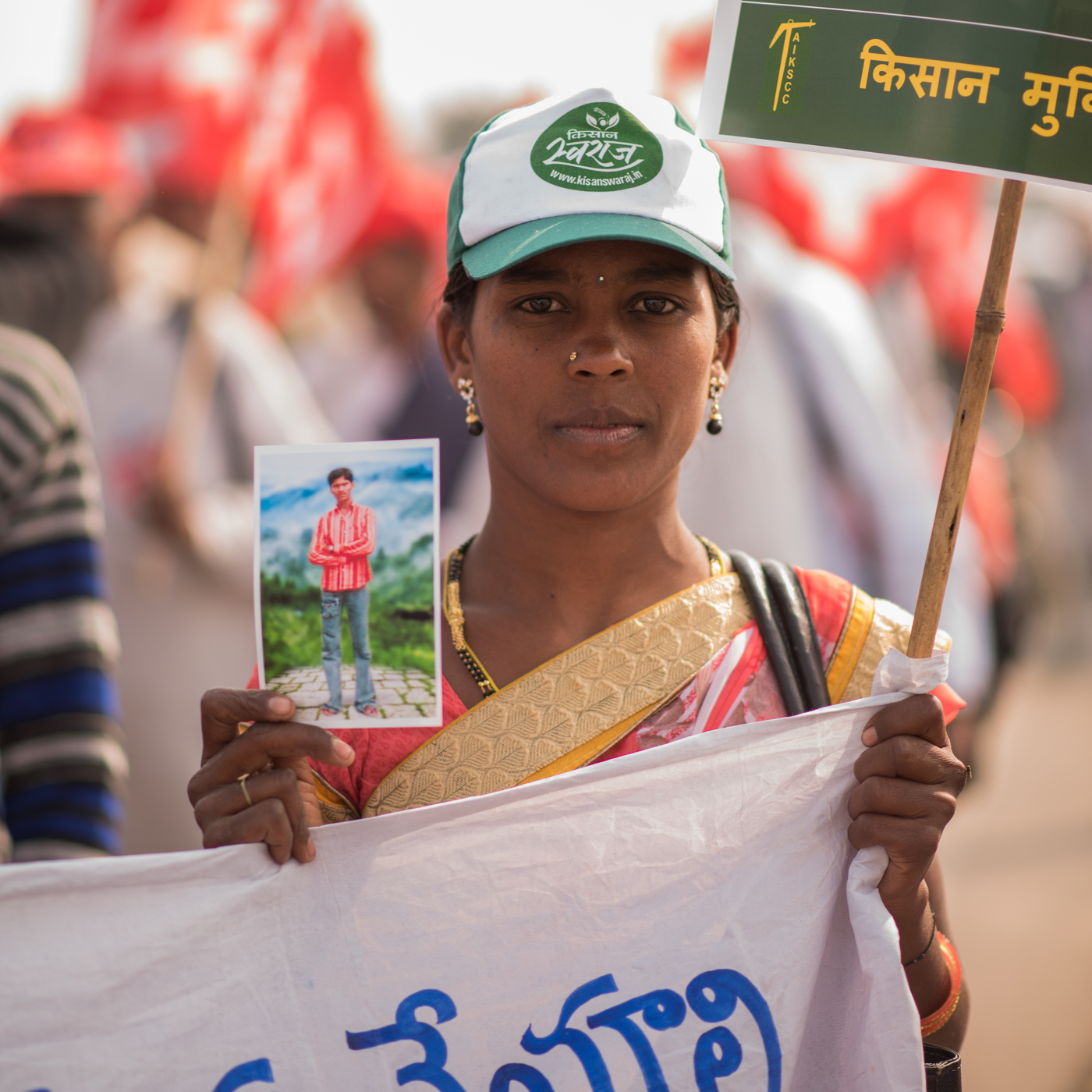
Surya Raga, a cotton farmer from Telangana, holding her husband's photo. He killed himself in 2014, after being unable to repay his loans. Furkan Latif Khan/NPR hide caption
toggle caption
Furkan Latif Khan/NPR
Surya Raga, a cotton farmer from Telangana, holding her husband's photo. He killed himself in 2014, after being unable to repay his loans.
Furkan Latif Khan/NPR
Some protesters carried skulls and bones they said were from farmers who had killed themselves in desperation. A handful of farmers stripped naked and laid down in front of TV cameras, to draw attention to their cause.
For India's farmers, debt can be deadly. Since 2013, some 12,000 farmers have killed themselves each year, according to a report submitted to India's Supreme Court last year.
"I hope the government helps me, so I can help my son to grow up," says Surya Raga, a cotton farmer who traveled to Delhi from the southern Indian state of Telangana.
Raga was marching with a photograph of her deceased husband. In 2014, he took his own life after being unable to pay back a government loan of about $4,300 dollars. With her husband dead, and Raga having taken over his farming duties, she wants the loan forgiven. She was marching with a group of women farmers who've all lost family members to suicide sparked by farming debt.
India's government has pledged debt relief in cases of drought or natural disaster. But farmers say it's been slow to arrive.
"We are suffering a lot. There is no drinking water even 1,000 feet under the ground," says Galli Venkatrao Reddy, a chili pepper farmer from the state of Andhra Pradesh whose crops have been been hit by drought. "We want the government to immediately send us some relief."
Reddy believes he is entitled to a drought relief package from his state government, but he says it hasn't come. He traveled more than 1,200 miles to Delhi, with his wife and eleven other farmers from his region.
Various politicians waded into the farmers' crowd, pledging to help them. The leader of the opposition Congress party, Rahul Gandhi, was expected to be at the rally later Friday. Modi was unable to attend, because he is in Argentina for the G20 summit.
The mass rally on Friday marks the second time farmers have marched on the capital in recent weeks. The last time, on Oct. 2, they were met by police with water cannons and tear gas. Dozens of farmers were injured in clashes.
Indian farmers' complaints are longstanding. The biggest government effort to help them came in 2004, with a national commission that issued five reports on how to help Indians working in agriculture.
But advocates for farmers say the recommendations have never been addressed.
"In 14 years, Parliament has not found the time to have a discussion on those reports," says P. Sainath, founder of the People's Archive of Rural India, which publishes reports about farmers and supports their efforts to organize. "But when it comes to the interests of corporations, they'll hold a special session of parliament at midnight."
To read or view the report on farmers' march in India, click here.
The murder of 12-year-old Silvana Tsegai in south Tel Aviv has shaken up the Eritrean asylum-seeker community in Israel, but it is far from the first case of a woman being murdered in that community. In November 2010, a 30-year-old pregnant woman was murdered by her partner. In July 2012, 18-year-old Natznet Michael was murdered by her Eritrean partner and in September 2015, a 29-year-old woman was murdered by her 33-year-old partner, Dasbella Havos.
The asylum-seeker community in Israel is in a state of crisis and its women and teenage girls are paying an increasingly heavy price. Women are a minority among the refugees – there are only 7,000 female asylum seekers in Israel. Thirty percent of these were victims of abuse and torture in the Sinai desert, and many of them have suffered sexual harassment at work but don’t report it. Without access to the police and out of fear of how the authorities will relate to them, these women and girls don’t report the domestic violence they suffer. The handful who do report it do not get protection from the police and say that their partners ignore restraining orders fearlessly. Battered women’s shelters are not set up to accept asylum seekers, even as the demand increases. >> Analysis: Why the murder of a 12-year old in south Tel Aviv comes as no surprise
In December 2012 I interviewed Sanait Kidana, the founder of the Eritrean Women’s Community Center. Kidana has since emigrated to a Western country. We met following the murder of six Eritrean women by partners or family members between 2010 and 2012.
“I couldn't listen to any more stories about murdered women, domestic violence, threats and harassment,” Kidana said, explaining why she had set up the center, which provides women with vocational training, family counseling and enrichment programs. “No official Israeli institution keeps records but we are overwhelmed by women coming to us for help. I estimate that 70 percent of the women in the Eritrean community suffer from violence - from being locked up at home to economic, sexual, verbal and physical violence.” Her successor at the center confirms that these problems persist today.
The controversial law requiring asylum seekers working in Israel to deposit 20 percent of their salaries into a closed account they can only access when they leave the country forced many asylum seekers into poverty and pushed many women into prostitution. Only a month ago it was decided to exclude women from this law, but the damage had already been done.
The scope of the prostitution was documented in a recent government report commissioned by the Social Affairs Ministry, the Health Ministry, and the interministerial anti-trafficking coordinator. An investigative report by Haaretz on the increasing number of asylum seekers forced into prostitution is now part of the government documentation. In 2014, aid organizations found that some 40 asylum seekers were caught up in the cycle of prostitution, while today there are 400 documented cases. But this is just the tip of the iceberg. Despite the understanding of their situation, there is no rehabilitation available to these asylum-seeker women. Human rights in Israel are for Jewish women only.
Asylum seekers in Israel are subjected to systematic institutional abuse aimed at breaking their spirit. Israel could have absorbed the members of the community with dignity, enabled them to integrate, provided basic social benefits and respectful access to welfare, education and health institutions. The government’s decision to play with the feelings of an entire population is leaving its signs on the most vulnerable among them – the women.
“The murder of the girl [Tsegai] by the mother’s partner is a sad and shocking case; we condemn all violence in our community and hope that the murderer will be caught today,” says Eden Tesfamariam, the new director of the Eritrean Women’s Community Center. “That sweet girl was magic, she was always friendly and was always happy and optimistic. This is a great loss for all of us.”
“Life in Israel is not easy for us,” says Tesfamariam. “We suffered a great deal during the journey and here in Israel. Because we were not accepted as refugees, we were left to cope alone. Many of the men who came to Israel experienced many traumas and never underwent any rehabilitation process, and if that weren’t enough, the government has exerted heavy pressure on us from the moment we arrived and did everything in its power to make us feel undesirable, with laws that restrict our freedom, that sink us into poverty with the deposit law. There is a great deal of frustration at the lack of an orderly policy regarding our asylum requests."
“Unfortunately, more than a few men turn to alcohol, which in many cases leads to violence, and the first ones hurt are us women, who must cope with all this at home. Many times we are left with nowhere to turn and are forced to again cope alone. Please stop exerting this pressure on us and instead institute an orderly policy so that we can make use of our rights as women, so that we can get proper solutions in the realms of welfare and health, to prevent other painful cases like this one,” she said.
By By Rowaida Abdelaziz October 2002 was the last time Gul Rahman’s family ever saw their father, dead or alive. Little did they realize that the Afghan citizen, who was residing in a refugee camp in Peshwar, Pakistan, at the time with his family, was taken by Central Intelligence officers to a secret prison over 40 miles away near the Afghanistan capital.
It was inside this clandestine facility, also known as the Salt Pit, where Rahman was chained up, interrogated and tortured for three weeks. He was also deprived of food and sleep, made to stand for days and was drenched with freezing water until he showed signs of hypothermia. For the almost the entire time he was held, Rahman was either fully naked, naked below the waist, or naked except for a diaper he wore.
Rahman remained in those conditions until he died of hypothermia on Nov. 20, 2002. His body was found early that morning, still shackled, nude from the waist down on the concrete prison floor where temperatures dropped to almost 30 degrees Fahrenheit that night.
His family, who still believed he was still alive and just missing at the time, wouldn’t find out for over 16 years that Rahman was actually dead. It was only in December 2014, during the release of the declassified executive summary of a 6,000-page report titled the Senate Select Committee on Intelligence Study of the CIA’s Detention and Interrogation Program did the CIA confirm that Rahman died while in their custody. The agency, however, did not mention where his remains were and now his family cannot bury their family member.
What this lawsuit would give [the family] is some kind of closure and the basic decency that the CIA has denied them for so long by just making him disappear.Dror Ladin, staff attorney at the ACLU’s National Security Project
With the help of the American Civil Liberties Union, the family is now suing the CIA in order to find out exactly what happened to Rahman’s body. The family, who is being represented by Rahman’s nephew, Obaid Ullah, hope to receive their uncle’s body in order host a burial and finally some closure after over a decade of silence from the American government.
“I think everyone can understand the agony across any culture of not having your loved ones’ remains and not being able to bury them,” Dror Ladin, a staff attorney at the ACLU’s National Security Project, told HuffPost. “Throughout history, people have gone through extraordinary lengths to get the remains of their loved ones back. For them, it’s this open wound that they still can’t bury him. It’s a piece of them. It’s just really, really hard. What this lawsuit would give them is some kind of closure and the basic decency that the CIA has denied them for so long by just making him disappear.”
The Freedom of Information Act lawsuit filed Thursday on behalf of Rahman’s family and the ACLU demands “the CIA to immediately to produce all records” in regards to Rahman’s death and information about his remains.
The CIA has not responded to HuffPost’s request for comment.
“For the longest time, the CIA has relied on secrecy to cover up lies and abuse and this is another extreme example of that,” Ladin said. “Everyone knows that Gul Rahman was killed. Everyone knows he died in CIA custody. The CIA itself has admitted it. The CIA has admitted it made a mistake and not held anyone accountable and the CIA has admitted that killing Gul Rahman was wrong but even so they still kept this key piece of information secret.”
Prior to this lawsuit, Ullah and the ACLU filed an earlier lawsuit alongside two surviving former Salt Pit prisoners in 2015 against the two contract psychologists who designed the CIA’s enhanced interrogation program. During the pretrial, the defendants alleged that Rahman was an enemy combatant but presented no evidence to support that claim. The lawsuit was settled in August of last year in which the CIA confirmed that Rahman was tortured and assaulted by the intelligence officers which “resulted in his death and pain and suffering to his family.” There was no mention of his remains.
“I have faith that people in America will know the right thing for their government to do is to tell me and my family what happened to my father’s body,” Hajira Hematyara, Rahman’s daughter, said in an ACLU press release. “Only then will we be able to do right by my father and give him a proper funeral.”
By Chauncey DeVega
If Donald Trump's reign were a bad novel, what chapter would we be in? Still near the beginning? Somewhere around the middle? Drawing close to the end?
Wherever the American people and the world may be in this story, it is the stuff of hack writing. It's a genre remix and mashup, a story so simultaneously obvious, yet bizarre and full of intrigue, that it cannot be believed. But it is all so very real.
The Trump-Russia scandal is the driving force in the narrative. Here are some recent developments.
There is international intrigue, corruption and greed. Donald Trump's personal fixer Michael Cohen has pleaded guilty to lying to Congress, admitting that he was a go-between for the president and Russian elites -- conceivably including Vladimir Putin, Russian spies, the Russian mafia and other oligarchs. Cohen did this work while Trump was running for president and even as he became the presumptive Republican nominee. This is the very definition of collusion. Trump has consistently lied about these facts. On Thursday, Trump basically admitted as much saying to reporters, “There was a good chance that I wouldn’t have won, in which case I would have gone back into the business. ... And why should I lose lots of opportunities?”
Deutsche Bank, one of the few large financial institutions that will do business with Donald Trump, was also raided by German authorities on Thursday. As investigative journalists David Cay Johnston and Craig Unger have exhaustively detailed, such a move may well be focused on money laundering operations connected to Donald Trump and Russia.
There is sex, lies and videotape. Stormy Daniels was paid hush money to keep her quiet about her (alleged) affair with Donald Trump. Daniels is not the only one of Trump's purported sexual partners to be given money for the same purpose. Paul Manafort, Donald Trump's emissary abroad who rigs elections and is an expert in other types of dirty tricks, apparently enjoys "interracial cuckolding" -- a consensual kink that would ordinarily be nobody's business, but which text messages suggest his wife participated in with reluctance.
The information contained in Christopher Steele's infamous dossier about Trump, his inner circle and his Russian connections has repeatedly been shown to be correct. Given that, the most salacious details about Donald Trump and his rendezvous with Russian prostitutes appear more likely than not.
Donald Trump imagines himself to be a Mafia crime boss whose underlings have pledged him their lives. Trump raged publicly that Michael Cohen has "flipped." Donald Trump says that people who betray him to "the feds" are "weak." By comparison, Paul Manafort -- Trump's personal mole and informer, who has apparently violated his plea agreement with special counsel Robert Mueller -- is "strong." Trump has signaled that a presidential pardon awaits Manafort and others who remain loyal to "the family."
Roger Stone and Jerome Corsi have now been connected to WikiLeaks and the latter's release of stolen emails and other information from the Democratic National Committee and Hillary Clinton's campaign, all of which served Russia's plot to undermine democracy and install Donald Trump. In the clichéd mob movie "Trumpfellas," Stone and Corsi are his toadies and personal bagmen.
The violence, racism, bigotry and hate Donald Trump has encouraged mirror the images and sounds of history. Too much of this drama suggests documentaries made not too long ago in Europe and elsewhere, depicting how people and nations went collectively insane, mad with fascism and authoritarianism. The age of Trump is dark comedy. Mike Judge's justly famous movie "Idiocracy" has been made real, with Trump as the professional-wrestling heel president, his MAGA-hat cultists, the right-wing media echo chamber, unchecked corporate power and the triumph of ignorance, stupidity and "fake news."
In many ways Donald Trump is like Cobra Commander from the G.I. Joe cartoon. Trump is a villain with overly elaborate plans who enjoys initial success before the good guys rally and he is betrayed by his allies, hubris and ego.
Reporters, journalists and those other Americans who follow politics closely are unable to resist this bonanza. But in their eagerness they may be missing one of the most important details from the last few days of revelations.
In his interview with the New York Post on Wednesday, Trump warned the Democrats that, “If they go down the presidential harassment track, if they want go and harass the president and the administration, I think that would be the best thing that would happen to me. I’m a counter-puncher and I will hit them so hard they’d never been hit like that." Trump continued talking about FISA warrants and other classified information, saying, "If they want to play tough, I will do it. They will see how devastating those pages are."
Then, on Twitter -- of course -- Trump continued to threaten his political enemies with prison.
On the surface, this is just another example of absurd behavior from a president who is a malignant narcissist and compulsive liar who lives in his own self-made reality.
But again, when the authoritarian speaks he should always be taken seriously. "Presidential harassment " is a new phrase, one probably never before used in American public discourse.
Donald Trump -- the American fascist and would-be dictator -- believes he is above the law: Accountability is now "harassment." Indeed, "presidential harassment" is Trump's updated version of the divine right of kings.
Like other Republicans and conservatives, Trump insincerely claims to respect the U.S. Constitution as a sacred document that should be "strictly interpreted" through "original intent." It is clear, however, that Trump has not actually read the Constitution or taken seriously the wisdom and warnings of the framers.
In the Federalist Papers No. 47, James Madison explained:
The accumulation of all powers, legislative, executive, and judiciary, in the same hands, whether of one, a few, or many, and whether hereditary, self-appointed, or elective, may justly be pronounced the very definition of tyranny. Were the federal Constitution, therefore, really chargeable with the accumulation of power, or with a mixture of powers, having a dangerous tendency to such an accumulation, no further arguments would be necessary to inspire a universal reprobation of the system. I persuade myself, however, that it will be made apparent to every one, that the charge cannot be supported, and that the maxim on which it relies has been totally misconceived and misapplied. In order to form correct ideas on this important subject, it will be proper to investigate the sense in which the preservation of liberty requires that the three great departments of power should be separate and distinct.
Much to Trump's disappointment, the President is not a king. In the United States there is supposed to be a system of checks and balances whereby Congress, the courts and the American people (informed and aided by the free press) hold elected officials accountable.
Coming days and weeks will see more political tumult as Robert Mueller continues to tighten his grip on Trump and his inner circle.
What happens next? As I suggested earlier this year, once Donald Trump is fully exposed and the extent of his treasonous behavior is made publicly known, he will say, "I did it to save America from Hillary Clinton and the Democrats. I am a patriot. I dare you to do anything about it!"
In this story there will be no magical deus ex machina moment where the story is neatly resolved for the benefit of the hero and the audience. The unbelievable story about a billionaire conman who became president of the United States with the help of a hostile foreign country will end in what might delicately be termed a clusterf**k. No one will get out of this clean or easy. America has been stained and sullied by a scandal right out of a horrible novel or screenplay.
Will there be a sequel where all these loose ends are tied up and all is made right in the world? We shall see; I doubt it.
By Maureen Clare Murphy
Amnesty International is demanding that Israel’s defense ministry revoke the export license from a company whose spyware has been used in “a series of egregious human rights violations.”
Amnesty said that it intends to pursue legal action over NSO Group Technologies, an Israeli firm whose technology was revealed earlier this year to have been used to hack a phone belonging to one of the rights group’s staffers.
The staff member received a WhatsApp message “with Saudi Arabia-related bait content and carrying links Amnesty International believes are used to distribute and deploy sophisticated mobile spyware,” the rights group stated in August.
More recently, the exiled US intelligence leaker Edward Snowden said that NSO Group’s software was used to track Jamal Khashoggi, the Saudi writer who was killed and dismembered by a hit team at the country’s consulate in Istanbul last month.
The company’s spyware was also installed on the phone of a Saudi dissident living in Canada.
The NSO Group spyware, called Pegasus, has previously been sold to Mexico and the United Arab Emirates, and has been used in attempts to spy on political leaders, activists and journalists in several countries.
The spyware can reportedly give those deploying it full access to a target’s mobile phone, turning it into a weapon against them and those close to them.
The Tel Aviv newspaper Haaretzrevealed this month that NSO Group had “offered Saudi Arabia a system that hacks mobile devices, a few months before Crown Prince Mohammad bin Salman began his purge of regime opponents, according to a complaint to the Israel Police now under investigation.”
According to the paper, the Israeli government views the sale of these spy technologies to Gulf countries as part of its “strategic battle against Iran.”
As the Israeli government approves the export of spyware used by governments to hack the phones of journalists and crack down on dissent, its military forces have reportedly posed as humanitarian workers while operating clandestinely in Gaza.
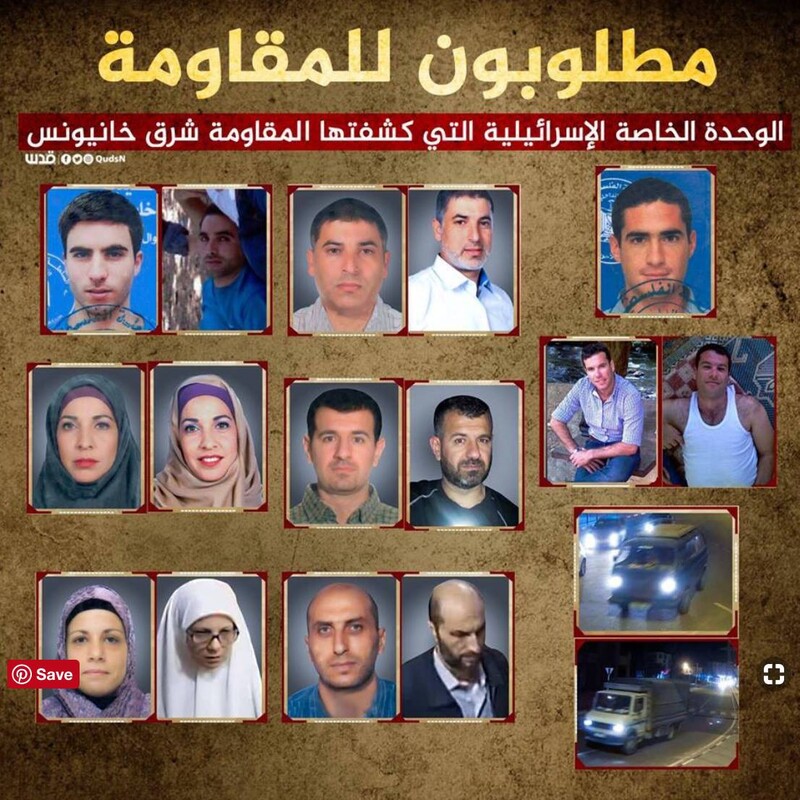
Hebrew-language media reported last week that an Israeli commando squad discovered by Hamas in Gaza earlier this month were operating under the cover of a relief group.
The commando unit was discovered when the vehicle they were traveling in was stopped by a member of Hamas’ armed group. A gun battle erupted, leaving an Israeli lieutenant colonel and seven Hamas fighters, including a battalion commander, dead and prompted a short but intense round of hostilities over the Gaza boundary.
Israeli military censorship
Israeli media are subject to military censorship of details related to the 11 November incident and the specifics of the commando unit’s cover story, such as the name of the organization they were said to be working for, have not been published.
The name of the Israeli officer who was killed during the battle has been censored and Israeli outlets have referred to him as “Colonel M.” However, his name was revealed by publications out of censors’ reach as Mahmoud Kheireddine of the Sayeret Matkal elite reconnaissance unit.
Israel’s military censor has banned media from publishing the photos of the Israeli commandos after they were released by the Qassam Brigades, the armed wing of Hamas. Palestinian media released images of the Israeli commando unit discovered in Gaza. Israel’s military censor has banned Israeli media from showing these images.Israeli media have reported that Hamas’ websites have been blocked in the country and users who try to access them are directed to an Israeli government webpage.
Aid workers have expressed fear that Israeli military intelligence activity under the cover of humanitarian aid will undermine the delivery of critically needed assistance by international organizations.
The use of civilian or humanitarian disguises by Israel to conduct military activities in the Gaza Strip may amount to a war crime under international law.
Israel already controls what humanitarian aid gets into Gaza, which has been under land, sea and air blockade for more than a decade.
That blockade has severely eroded Gaza’s economy, plunging its population of two million into poverty and leaving them dependent on humanitarian aid.
On Wednesday, Lebanon’s Al-Akhbar newspaper published further details on the failed commando raid.
Relying on a security source in Gaza, Al-Akhbar reported that Hamas’ investigation into the movements of the commando unit in Gaza was nearing completion.
Hamas believes that the unit had previously entered Gaza multiple times to install surveillance devices, some of which had been discovered and dismantled by the resistance group months earlier.
Before its discovery on 11 November, the commando personnel entered Gaza at differing times through Erez checkpoint in the north of Gaza using forged Palestinian Authority IDs.
Their spy equipment was smuggled in through Gaza’s commercial crossing by a Palestinian collaborator who is said to have provided the commando unit with vehicles.
Aid cuts
Meanwhile the US State Department aid agency said that more than half of its employees in the West Bank and Gaza will be dismissed by early next year.
USAID provided more than $319 million in funding to projects in the West Bank and Gaza in 2016.
Dozens of USAID projects were suspended after the Trump administration froze more than $200 million in bilateral aid to Palestinians earlier this year as a means of punishing the Palestinian Authority leadership for protesting the US declaration of Jerusalem as the capital of Israel.
In August, the US announced that it would stop funding UNRWA, the UN agency for Palestine refugees, after freezing $300 million in aid in January, throwing the body into unprecedented financial crisis.
The punitive cuts by the US, formerly UNRWA’s largest donor, have caused Israeli military leaders to worry that they would soon find themselves having to deliver essential services to stave off humanitarian catastrophe in Gaza in the agency’s stead.
UNRWA has since nearly closed a $446 million funding gap, its commissioner-general announced last week.


 Furkan Latif Khan/NPR
 Furkan Latif Khan/NPR