As we close this difficult year, we ask you to consider
supporting the work of the Palestine Institute for Biodiversity and
Sustainability (PIBS, Bethlehem University) through a year-end donation or by
volunteering your time and expertise. Your contribution (tax deductible in many
countries) will directly support the opening of the Palestine Museum of Natural
History and our ongoing conservation programs that protect the biodiversity and
the human diversity that defines our beautiful Palestine.
This year has brought profound pain to our communities.
It was a most difficult year not just in Palestine but globally. Everyday, our
hearts are heavy with the weight of the genocide in the Gaza Strip, watching
the systematic destruction of life, the environment (ecocide), and the very
future of our people. Here in the West Bank, we have faced our own immense
challenges. Unemployment reaching 50%, movement restricted with 1,250 gates and
checkpoints installed just this year, and ongoing loss of life and property.
Yet, in the face of this darkness, we have chosen to keep digging, keep
planting, and keep building. We believe that caring for our land is a profound
act of resistance and a way to hold onto hope.
Despite everything 2025 has thrown at us, your support
has allowed us to achieve things that felt impossible a year ago. We publish
about two research papers a month, thousands benefit from our facilities and
programs (with 4–5 events every week), and we are in the final stages of
opening the Palestine Museum of Natural History at the new building. It is
becoming a beautiful reality. A place where our children can learn about their
heritage and the resilience of nature. This year, we also successfully established
a seed bank. These seeds are our promise that life will return and flourish. We
worked hard to document the environmental impact of the war as well as to
develop and implement plans of restoration and renewal.
We are deeply grateful for your generous contributions of
time, money, and resources. Truly, you are the reason we can keep our doors
open and our spirits high. You remind us that we are not alone.
*Joyful holidays to you and yours, and wishing you peace,
safety, and a more just and sustainable world (for people and all living
things) in the coming year.*
With warmth and gratitude,
The Team at the Palestine Institute for Biodiversity and
Sustainability:
Jessie, Amal, Sara, Johan, Zena, Victor, Mohammed, Saleh,
Mazin, and the many volunteers (and soon to expand our team) Bethlehem
University Bethlehem, Palestine
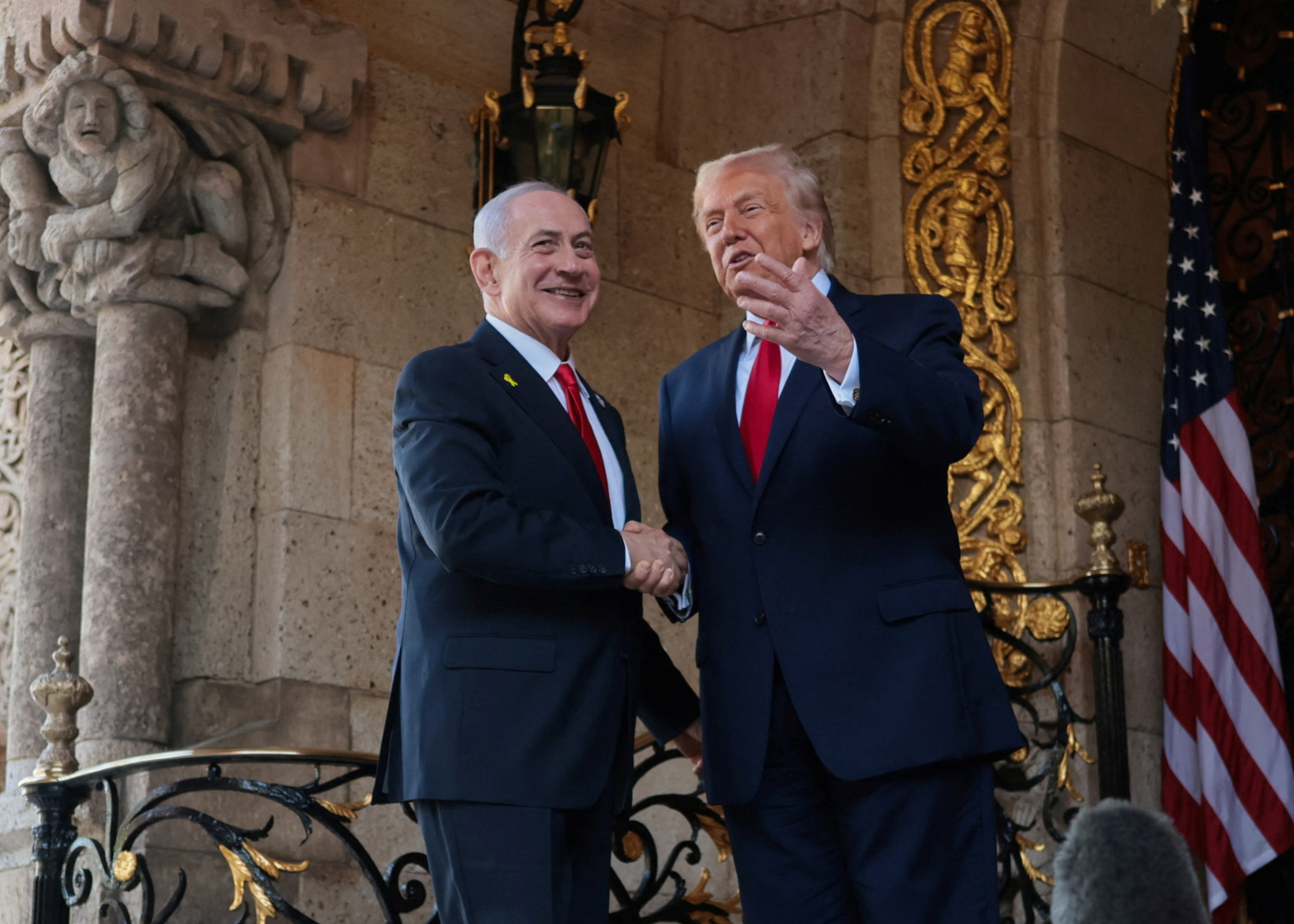
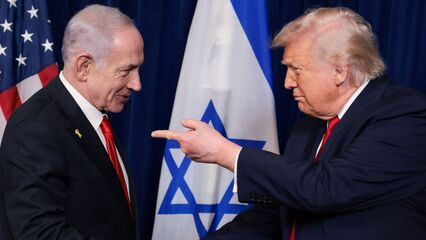
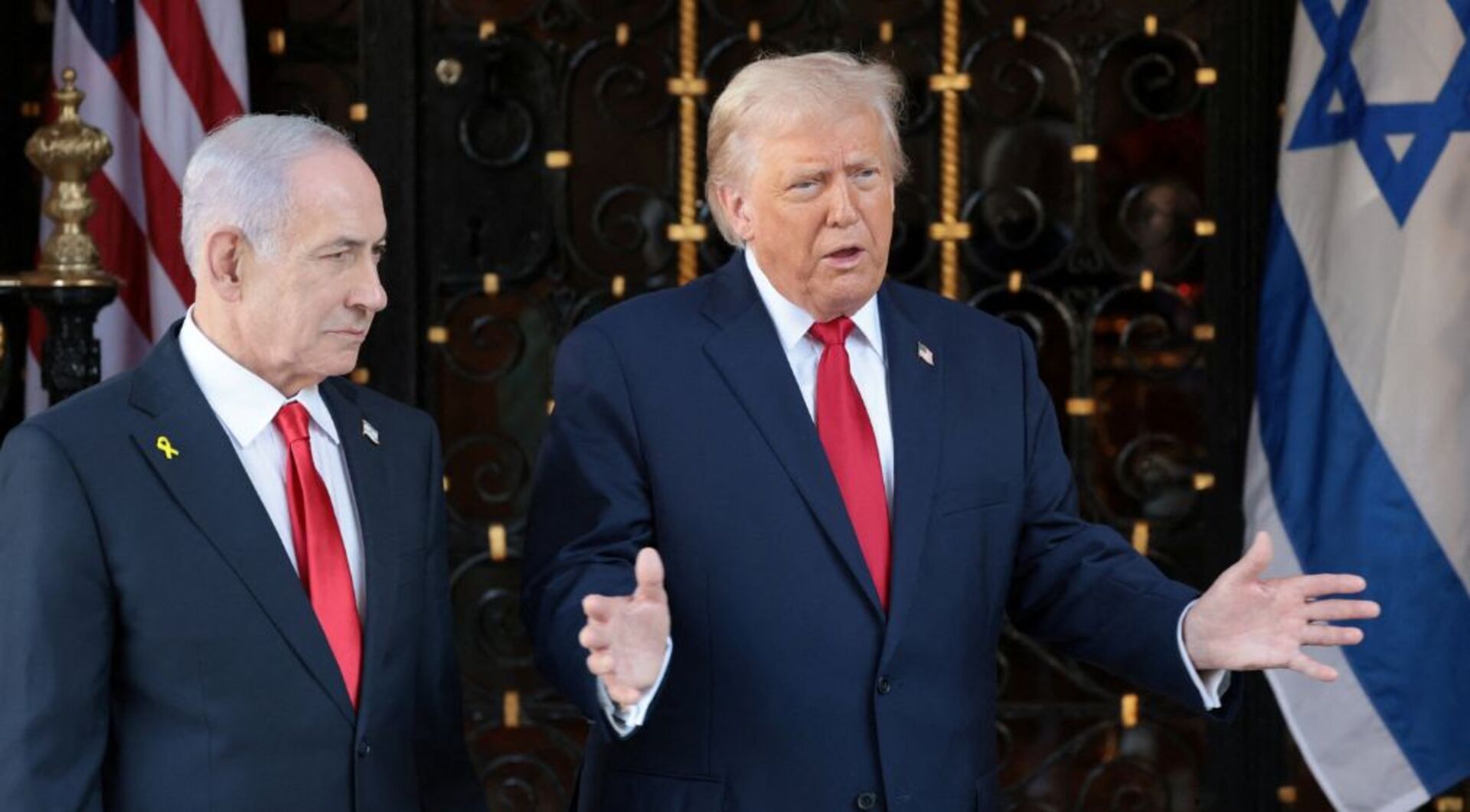
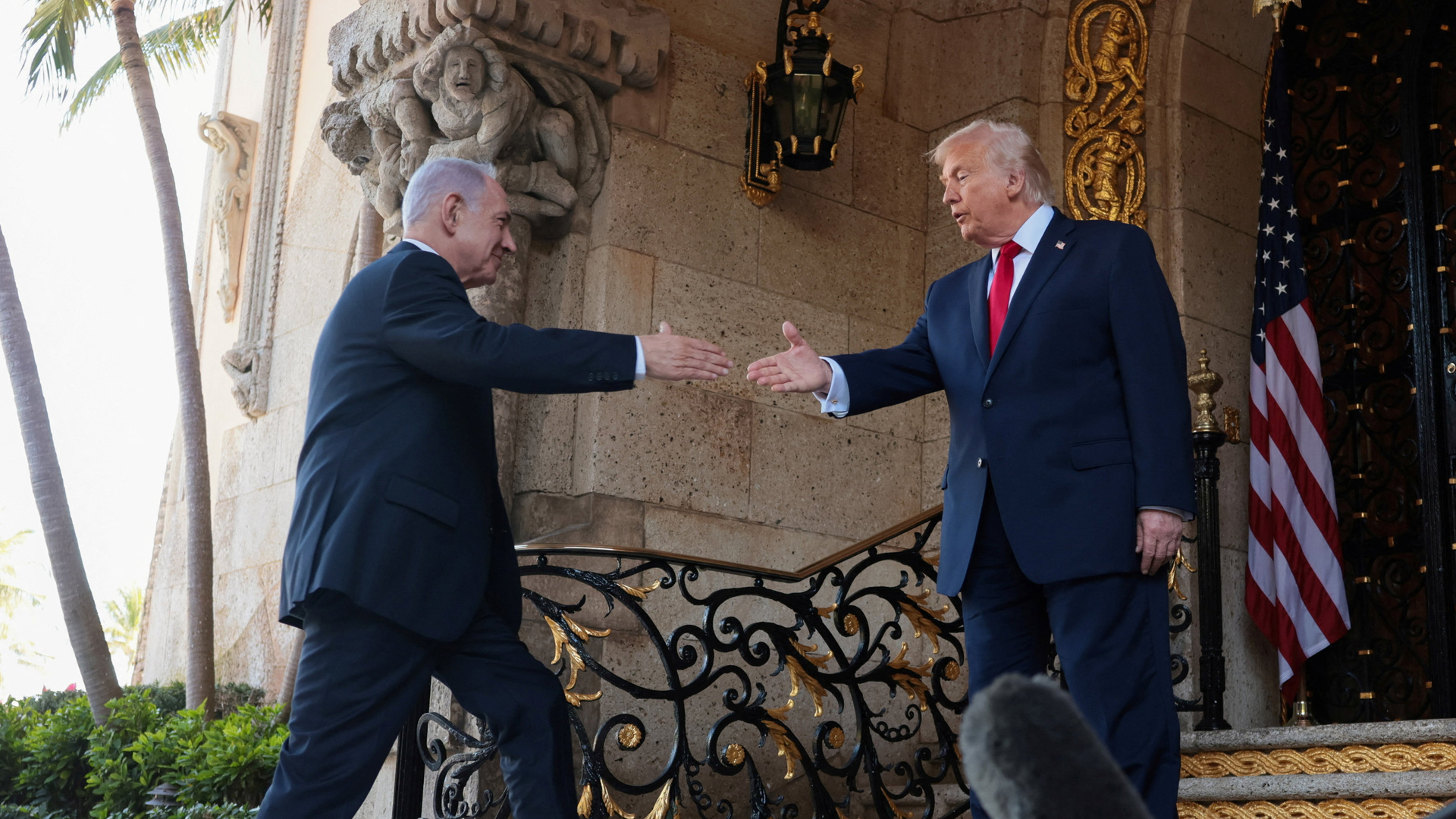
Israeli Prime Minister Benjamin Netanyahu and US President Donald Trump have presented a united front and heaped praise on each other as they heldanother meetingto discuss the tensions in the Middle East.
On Monday, Netanyahu paid his fifth visit to the United States since Trump’s inauguration in January, meeting the president at his Mar-a-Lago resort in Florida.
Their mutual flattery turned into geopolitical alignment as the two leaders addressed the most pressing issues in the Middle East: Gaza and Iran.
Trump claimed that Israel is helping the people of Gaza and dismissed the near-daily Israeli ceasefire violations.
Here are the key takeaways from Monday’s meeting.
Trump stresses Hamas must disarm
Before and after his meeting with Netanyahu, Trump stressed that Hamas must disarm, issuing a stern threat to the Palestinian group.
Asked what would happen if Hamas refused to give up its weapons, Trump said: “It would be horrible for them, horrible. It’s going to be really, really bad for them.”
1:00
Now Playing
01:00
‘We’ll knock the hell out of them’: Trump threatens Iran
Next
07:48
Taiwan scrambles jets as China tests missiles on a second day of military drills
01:52
Trump claims attack on a dock in Venezuela; US strikes kill two in Pacific
02:30
UN Security Council members condemn Israel’s recognition of Somaliland
02:12
Trump threatens Hamas, warns Iran of more US strikes after Netanyahu talks
Last week, US Secretary of State Marco Rubio said that Washington’s top priority was to move to the second phase of the ceasefire, which would see the establishment of a technocratic Palestinian administration and the deployment of an international police force.
But on Monday, Trump kept the focus on Hamas, reiterating the claim that other countries have offered to “wipe them out” if the group refuses to give up its weapons.
Israel has killed 414 Palestinians in Gaza since the start of the ceasefire in October, and it continues to restrict the flow of international aid into the territory, including temporary shelter provisions, despite people suffering deadly weather conditions in makeshift tents.
Trump, however, said that Israel is fully living up to its commitments under the deal – “100 percent”.
“I’m not concerned about anything that Israel is doing,” he told reporters.
US threatens Iran
Trump suggested that Washington would carry out further military action against Iran if Tehran rebuilds its nuclear programme or missile capacity.
The president kept returning to the oft-cited argument that the US air strikes against Iranian nuclear facilities in June are what paved the way for the ceasefire in Gaza.
7:44
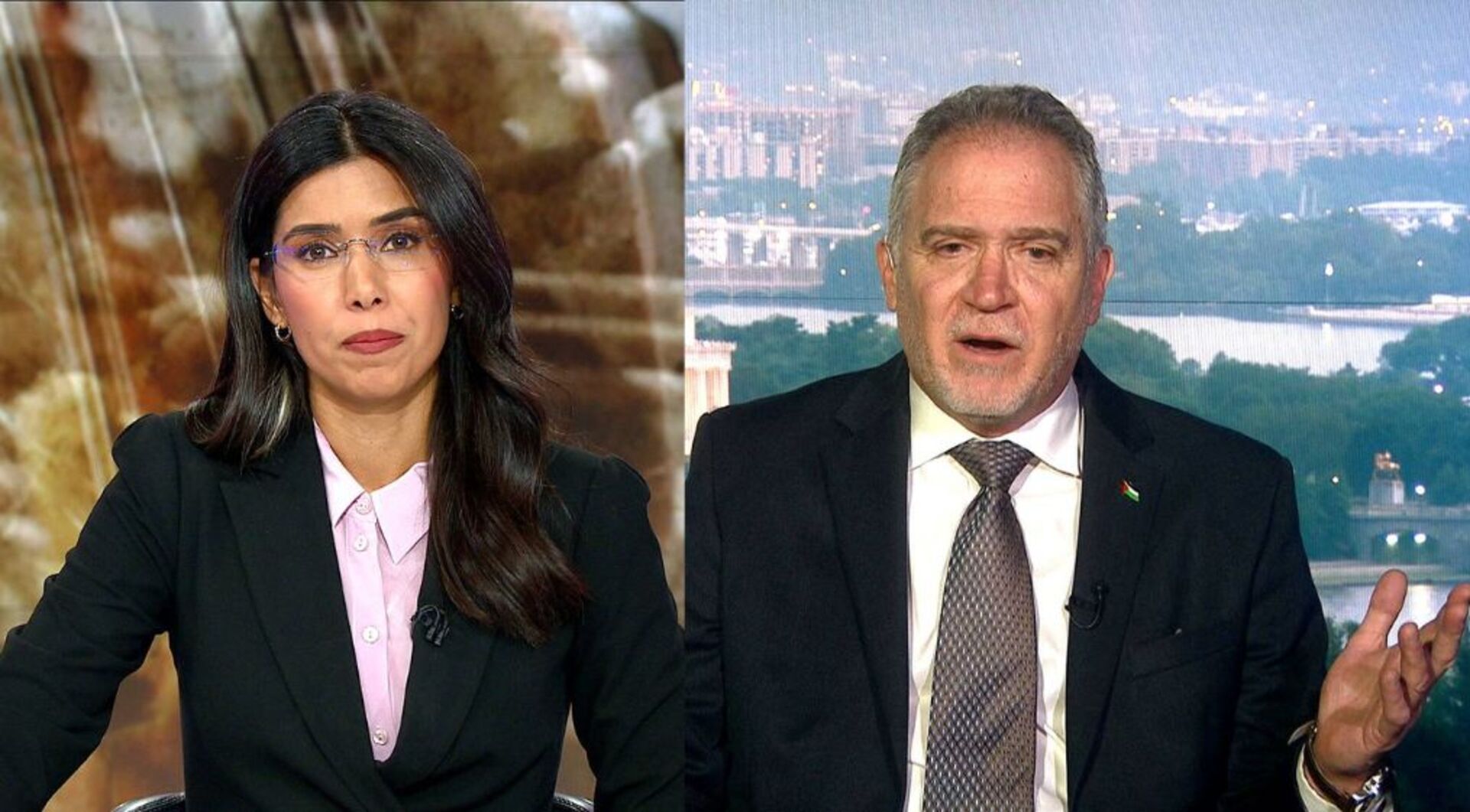
Ending Palestinian suffering requires dismantling the apartheid system: Miko Peled
“Now I hear that Iran is trying to build up again, and if they are, we’re going to have to knock them down,” Trump said.
“We’ll knock them down. We’ll knock the hell out of them. But, hopefully, that’s not happening.”
In recent weeks, Israeli officials and their US allies have shifted the focus to Iran’s missile programme, arguing it should be dealt with before it poses a threat to Israel.
When asked whether the US would back an Israeli attack targeting Iran’s missile programme, Trump said, “If they will continue with the missiles, yes. The nuclear? Fast. OK? One will be: Yes, absolutely. The other is: We’ll do it immediately.”
Iran has ruled out negotiating over its missile programme, and it has denied seeking to build a nuclear weapon.
Israel, meanwhile, is widely believed to have an undeclared nuclear arsenal.
Bromance festival
Since the early days of Israel’s genocidal war on Gaza, US media reports have suggested that the US president, first Joe Biden, then Trump, was angry or frustrated at Netanyahu.
But the US military and diplomatic support for Israel has never been interrupted.
Ahead of Netanyahu’s visit, similar reports emerged about a potential rift between him and Trump.
Nonetheless, the two leaders put on a show of brotherly romance on Monday.
19:29
Netanyahu meets Trump in Florida amid talks on Gaza, Iran and regional tensions
Trump called Netanyahu a “hero”, stressing that Israel may not have existed without his wartime leadership.
“We’re with you, and we’ll continue to be with you, and a lot of good things are happening in the Middle East,” Trump told Netanyahu.
“We have peace in the Middle East, and we’re going to try and keep it that way. I think we will be very successful in keeping it that way. And you’ve been a great friend.”
The US president also highlighted his efforts to secure a presidential pardon for Netanyahu, who is facing corruption charges in Israel.
The Israeli prime minister announced that the US president will be awarded the Israel Prize, which is normally given to Israeli citizens.
“I have to say that this reflects the overwhelming sentiment of Israelis across the spectrum,” Netanyahu said.
“They appreciate what you’ve done to help Israel, and to help our common battle against the terrorists and those who would destroy our civilisation.”
Netanyahu has notably not been pardoned.
Trump calls for Israel-Syria rapprochement
One area where Trump appeared to press Netanyahu was Syria.
Trump said Netanyahu is “going to get along” with Syria, lauding Syrian President Ahmed al-Sharaa.
Since the fall of former President Bashar al-Assad last year, Israel has expanded its occupation of southern Syria beyond the Golan Heights, seizing large areas in Jabal al-Sheikh. The Israeli military has also been carrying out raids, reportedly abducting and disappearing people in the country.
The new Syrian authorities have stressed that they do not seek conflict with Israel, but talks to reach a security agreement between the two countries have stalled.
0:59
‘A tough neighbourhood'’: Trump says Gaza rebuilding to start soon
“We do have an understanding regarding Syria,” Trump said. “Now, with Syria, you have a new president. I respect him. He’s a very strong guy, and that’s what you need in Syria.”
Netanyahu was non-committal on Israel’s approach to Syria.
“Our interest is to have a peaceful border with Syria,” he said. “We want to make sure that the border area right next to our border is safe — we don’t have terrorists, we don’t have attacks.”
On renewed war in Lebanon: ‘We’ll see about it.’
Since the start of the truce in Gaza, Israel has intensified its attacks in Lebanon, leading to fears that it may re-launch its full-scale war against the country.
Earlier this year, the Lebanese government issued a decree to disarm Hezbollah, but the group pledged to hold onto its weapons to defend the country against Israel.
On Monday, Trump did not rule out renewing the conflict in Lebanon.
“We’ll see about it,” the president said when asked whether he would support more Israeli strikes in Lebanon.
“The Lebanese government is at a little bit of a disadvantage, if you think of it, with Hezbollah. But Hezbollah has been behaving badly, so we’ll see what happens.”
Most United Nations Security Council (UNSC) members have slammed Israel’s recognition of Somaliland at a meeting convened in response to the move, which several countries said may also have serious implications for Palestinians in Gaza.
The United States was the only member of the 15-member body not to condemn Israel’s formal recognition of the breakaway region of Somalia at the emergency meeting in New York City on Monday, although it said its own position on Somaliland had not changed.
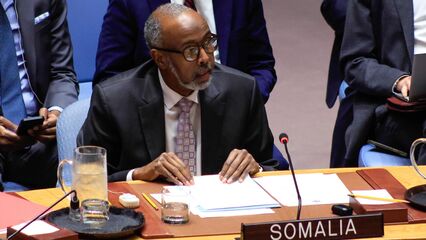
Addressing the UNSC, Somalia’s UN ambassador, Abu Bakr Dahir Osman, implored members to firmly reject Israel’s “act of aggression”, which he said not only threatened to fragment Somalia but also to destabilise the wider Horn of Africa and the Red Sea regions.
In particular, Osman said that Somalia was concerned the move could be aimed at advancing Israel’s plans to forcibly “relocate the Palestinian population from Gaza to the northwestern region of Somalia”.
“This utter disdain for law and morality must be stopped now,” he said.
The emergency meeting was called after Israel last week became the first and only country to recognise the self-declared Republic of Somaliland as an independent and sovereign state.
Al Jazeera’s Gabriel Elizondo, reporting from UN headquarters in New York, said that “14 of the 15 council members condemned Israel’s recognition of Somaliland”, while the US “defended Israel’s action but stopped short of following Israel’s lead”.
Tammy Bruce, the US deputy representative to the UN, told the council that “Israel has the same right to establish diplomatic relations as any other sovereign state”.
However, Bruce added, the US had “no announcement to make regarding US recognition of Somaliland, and there has been no change in American policy”.
Israel’s deputy ambassador to the UN, Jonathan Miller, told the council that Israel’s decision was “not a hostile step toward Somalia, nor does it preclude future dialogue between the parties”.
“Recognition is not an act of defiance. It is an opportunity,” Miller claimed.
Many other countries expressed concerns about Israel’s recognition of Somaliland, including the implications for Palestinians, in statements presented to the UNSC.
Speaking on behalf of the 22-member Arab League, its UN envoy, Maged Abdelfattah Abdelaziz, said the group rejected “any measures arising from this illegitimate recognition aimed at facilitating forced displacement of the Palestinian people, or exploiting northern Somali ports to establish military bases”.
Pakistan’s deputy UN ambassador, Muhammad Usman Iqbal Jadoon, said at the meeting that Israel’s “unlawful recognition of [the] Somaliland region of Somalia is deeply troubling”, considering it was made “against the backdrop of Israel’s previous references to Somaliland of the Federal Republic of Somalia as a destination for the deportation of Palestinian people, especially from Gaza”.
China and the United Kingdom were among the permanent UNSC members to reject the move, with China’s UN envoy, Sun Lei, saying his country “opposes any act to split” Somalia’s territory.
“No country should aid and abet separatist forces in other countries to further their own geopolitical interests,” Sun Lei said.
Some non-members of the UNSC also requested to speak, including South Africa, whose UN envoy, Mathu Joyini, said that her country “reaffirmed” Somalia’s “sovereignty and territorial integrity” in line with international law, the UN Charter and the constitutive act of the African Union.
Comparison with Palestinian recognition
In addition to defending Israel’s decision, US envoy Bruce compared the move to recognise Somaliland with Palestine, which has been recognised by more than 150 of the UN’s member states.
“Several countries, including members of this council, have unilaterally recognised a non-existent Palestinian state, yet no emergency meeting has been convened,” Bruce said, criticising what she described as the UNSC’s “double standards”.
However, Slovenia’s UN ambassador, Samuel Zbogar, rejected the comparison, saying, “Palestine is not part of any state. It is illegally occupied territory… Palestine is also an observer state in this organisation [the UN].”
“Somaliland, on the other hand, is a part of a UN member state, and recognising it goes against… the UN Charter,” Zbogar added.
The self-declared Republic of Somaliland broke away from Somalia in 1991, after a civil war under military leader Siad Barre.
Political and military signals have intensified in Yemen’s already complex theatre. In an unusually short period of time, three successive statements were issued within a single context, beginning with an official Yemeni request from President Rashad al-Alimi, the head of Yemen’s Presidential Leadership Council, the governing body of the internationally recognised government. This was followed by an operational response from the Saudi-led coalition, and then a political message by theSaudi minister of defencethat defines the moves on the ground and the directions they take.
What happened cannot be interpreted as an isolated move, nor as part of a routine truce. The sequence suggests an arrangement that uses Yemeni legitimacy as the political framework for a Saudi move aimed at restraining the expansion of an ally advancing eastward, while at the same time reducing the Houthis’ chances of exploiting any rift within the opposing camp. This is why the weight of the three statements exceeded their words, as they moved the crisis from an open tug-of-war to a clear path based on an official request, then a field response, then a political message that sets the limits of movement and defines its direction.
The names of Yemen’s governorates may seem like marginal details to a non-Arab reader, but Hadramout and al-Mahra are exceptions. Hadramout represents economic depth for Yemen with its oil and gas resources and related infrastructure, and also has a vital border crossing with Saudi Arabia, making it part of the equation of both border security and trade. Al-Mahra, due to its border location with Oman and Saudi Arabia, controls ports, crossings and movement routes that affect regional security and the local economy. This location makes any tension in the east a quintessential border issue, not merely a local crisis, and any large-scale instability there will not remain confined within Yemen, as it impacts the country’s economy, raises border sensitivity within the region, and stirs concerns about the stability of trade routes.
For this reason, Riyadh views the east as an area it seeks to neutralise from chaos as much as possible. With the expansion of the United Arab Emirates-backed Southern Transitional Council (STC) and its forces towards Hadramout and al-Mahra, the issue has shifted from a limited field movement to a test of the limits of the coalition itself, and to a direct question about who has the right to manage security and resources in areas that cannot bear a prolonged conflict.
The first step came through a statement attributed to a government source about a request by the chairman of the Presidential Leadership Council to take military measures to protect civilians in Hadramout and support the armed forces in imposing calm. The importance of this wording is that it moves the matter from being disputes between forces within the same camp (the STC is a member of the Presidential Leadership Council) to a level of escalation that threatens civilian safety and stability, thus requiring action from the supporting partner.
This request gives the coalition a clearer political justification for intervention, as it moves in response to a request from the head of an internationally recognised governing body. Internally, the request sends a message no less important, as the presidency does not want to become a mere facade covering up imposed facts, and it seeks to affirm the idea that controlling the field happens through the state, even if it seeks regional support to achieve that.
The second statement came through the coalition with an urgent call for the STC to withdraw from Hadramout and al-Mahra, hand over camps to the “Nation’s Shield” forces, and enable local authorities to carry out their duties, with a warning against directly dealing with any military movements that contravene de-escalation efforts. This content does not merely aim to reduce escalation, but rather outlines executive steps: withdrawal, then handover, then reinstating the local authority.
The mention of the “Homeland Shield” forces in the statement is striking because the coalition is not merely calling for vacating positions, but is also proposing an alternative party to take them over. This reduces the likelihood of a security vacuum and gives Riyadh a practical tool to manage the eastern file away from the logic of multiple forces. As for the phrase “direct engagement,” it is the most explicit warning, as it increases the cost of any attempt to test the coalition’s boundaries or impose a new reality by force.
The third statement by Saudi Defence Minister Prince Khalid bin Salman Al Saud, addressed primarily to the Yemeni people, affirmed that the kingdom’s intervention came in response to a request from the legitimate government and in support of restoring the state and preserving Yemen’s security. It stressed that the “Southern issue” is a fair political cause that cannot be ignored, and that it was incorporated into the political solution track through the Riyadh Conference and Riyadh Agreement, ensuring southern participation in governance. He then called on the STC to ”heed to reason” and respond to Saudi and Emirati mediation efforts to end the escalation and hand over the camps peacefully.
This framing works in two directions; it grants the STC political recognition of the Southern cause, while setting strict boundaries for its pursuit, as Riyadh – according to the statement – distinguishes between the justice of the cause and the use of force to change control maps in resource and border areas. At the same time, it leaves the STC with a practical exit through peaceful handover instead of an open confrontation.
What does this mean for the Southern Transitional Council?
This sequence puts the STC to a direct test. The request came from the head of the legitimate authority of which the STC is part, the operational statement from the coalition set a ceiling to its movements, and the political framing from the Saudi defence minister provided a way out via peaceful handover. In this context, an organised response would allow the STC to present any withdrawal as an engagement in de-escalation, while retaining its political discourse and influence in its traditional areas of control. Procrastination or direct defiance, however, raises risks, as it could lead to greater political and diplomatic pressure and portray it as the party obstructing the de-escalation process in a highly sensitive area. Moreover, the three messages redraw the boundaries of expansion within the same camp, as arrangements for influence in certain centres or areas differ from attempts to reshape influence in eastern Yemen by force.
Houthis are watching
The Houthis, an armed group with their own government backed by Iran, which control Yemen’s capital Sanaa and northwestern Yemen, are monitoring any rift among their opponents and seek to exploit it. This is why the rapid coordination between the Yemeni presidency and the coalition sends a signal to Sanaa rulers that the opposing camp is capable of managing its disputes in sensitive areas, and that betting on internal fighting as a path to the east may not be guaranteed. Additionally, establishing security arrangements around resource areas reduces the chances of politically benefitting from their chaos and complicates any future push towards them.
Regional mediation under pressure
The phrase “Saudi–Emirati mediation” in the coalition’s statements and those by the Saudi defence minister appears highly sensitive because Abu Dhabi’s relationship with the STC is not merely one of political communication, but one of sponsorship, funding, and support that grants it freedom of movement and a constant backer. When the UAE appears as a mediator alongside Saudi Arabia, it sends two opposite messages at the same time: it gives the STC the feeling that it’s protected, while placing Abu Dhabi in a tight corner because mediation entails a practical commitment to halt escalation, not just a declaration of intent.
This turns the mediation into a test of the alignment of calculations within the coalition itself, and a direct measure of Abu Dhabi’s readiness to respect its partner Riyadh’s approach in an issue that Saudi Arabia considers a threat to its border security and strategic interests. But the question remains: will Abu Dhabi succeed in pushing the STC towards de-escalation, or will the political cover remain in place while developments on the ground move in a different direction?
Where are we heading?
It is more likely that Saudi Arabia is pushing towards a short-term settlement that includes a phased withdrawal, an organised handover of camps, and security arrangements that prevent any single party from imposing its control in the directorates of Hadramout and al-Mahra. This path maintains a minimum level of stability and reduces the chances of clashes within the camp opposing the Houthis. If it falters, limited deterrent tools will emerge aimed at enforcing the declared ceiling, while keeping the mediation channel open to avoid a full-scale explosion.
The three statements have raised the cost of turning eastern Yemen into an open arena of dispute, but they have not closed the scene.
In my view, what will determine the direction is not the statements alone, but the behaviour of the parties in the following days: will the STC choose a settlement that saves face, or will it bet on time? And will the “security alternative” arrangements succeed in reducing friction, or will they generate new local sensitivities?
And one final question concerning the Houthis: will they see this containment as a deterrent that reduces opportunities to invest in disputes, or will they see it as a chance to test the limits of movement?
The answers will become clear soon, because events are still moving quickly, and because eastern Yemen has become either a benchmark for stability or a gateway to broader chaos.