The inclusion of Italian rapper Ghali in the cast of performers at the opening ceremony of the Milano Cortina 2026 Winter Olympics has led to a dispute in Italy.
The artist, born in Milan to Tunisian parents, has been criticised in Italy because of his comments on Israel’s genocidal war on Gaza.
Al Jazeera Sport takes a look at the latest example of sport and politics colliding and why this case has hit the headlines.
Who is criticising Ghali’s inclusion at the Winter Olympics?
Members of Italy’s right-wing League party, part of Prime Minister Giorgia Meloni’s government, have criticised the choice of Ghali to perform at the event in the San Siro stadium on February 6.
What is Ghali criticised for saying about Israel?
Ghali was at the centre of a political spat two years ago during the popular Sanremo song contest, when he called for a “stop to the genocide” in reference to Israel’s genocidal war on Gaza.
A League party source called Ghali a “pro-Palestinian fanatic” who hated Israel and the centre-right, in comments to the Italian media.
Is Ghali’s Winter Olympics opening ceremony role set to be controversial?
Sport Minister Andrea Abodi said he did not expect Ghali to use the Olympic stage to make a political point.
“I am not embarrassed to disagree with Ghali’s views and the messages he has sent, but I believe that a country must be able to absorb the impact of an artist who has expressed an opinion that we do not share, which will not be expressed on that stage,” he said.
What other names will be alongside Ghali to open the Milano Cortino Games?
Ghali, who has not commented on the dispute, is likely to appeal to a younger audience more than other performers at the opening ceremony, who will include tenor Andrea Bocelli and US pop singer Mariah Carey.
Franco-Malian pop star Aya Nakamura was the target of racist abuse online when it emerged that she would sing at the opening of the Summer Olympics in Paris in 2024.
Cuba’s President Miguel Diaz-Canel has denounced what he called an attempt by his United States counterpart, Donald Trump, to “suffocate” the sanctions-hit country’s economy.
Trump signed an executive order on Thursday threatening additional tariffs on countries that sell oil to Cuba, the latest move in Washington’s campaign of pressure on Havana. The order alleged that the government of communist-run Cuba was an “unusual and extraordinary threat” to US national security.
In a social media post on Friday, Diaz-Canel said that under “a false and baseless pretext”, Trump plans “to suffocate” Cuba’s economy by slapping tariffs “on countries that sovereignly trade oil” with it.
“This new measure reveals the fascist, criminal and genocidal nature of a clique that has hijacked the interests of the American people for purely personal ends,” he said, in an apparent allusion to Secretary of State Marco Rubio, a Cuban American and a known anti-Cuban government hawk.
1:04
Now Playing
01:04
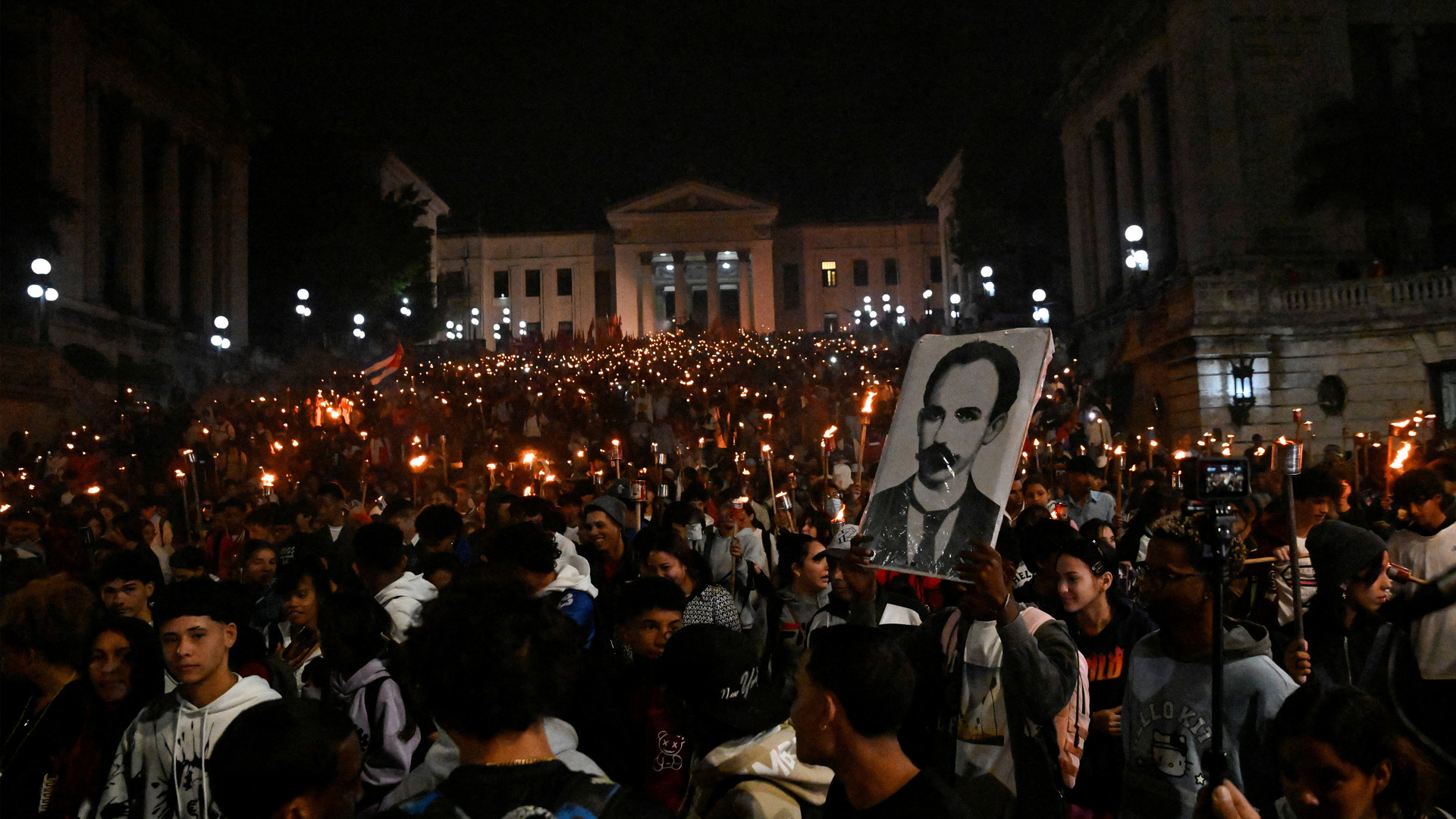
March to honour Cuban national hero expresses solidarity against Trump
Next
01:39
Israeli strikes on Gaza: Several children among 31 Palestinians killed
02:59
US journalists arrested for covering anti-ICE protest at church
00:30
Video shows Israeli attacks as Gaza ceasefire deaths pass 500
00:50
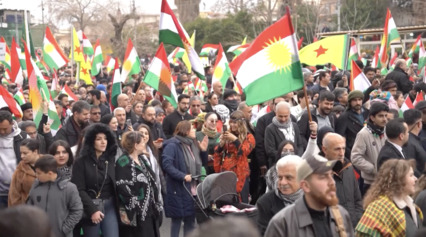
Iraqi Kurds rally for Syrian Kurds after fighting in northern Syria
Cuba, which is suffering rolling electricity blackouts blamed on fuel shortages, was cut off from critical supplies of Venezuelan oil after the US abducted Venezuela’s President Nicolas Maduro and his wife in a bloody military night raid on the capital, Caracas, earlier this month. At least 32 members of Cuba’s armed forces and intelligence agencies were killed in the January 3 attack.
The US has since taken effective control of Venezuela’s oil sector, and Trump, a Republican, has issued threats against other left-wing governments in the region, promising to stop oil shipments previously sent to Cuba.
Cuba’s Foreign Minister Bruno Rodriguez on Friday declared an “international emergency” in response to Trump’s move, which he said constitutes “an unusual and extraordinary threat”.
Venezuela’s government also condemned the measure in a statement on Friday, saying it violates international law and the principles of global commerce.
Reporting from Cuba’s capital, Al Jazeera’s Ed Augustin said Trump’s announcement “is a massive psychological blow”, noting that analysts describe it as the “most powerful economic blow the United States has ever dealt the island”.
Days after Maduro’s abduction and transfer to the US, Trump urged Cuba to make a deal “before it is too late,” without specifying what kind of agreement he was referring to.
In a post on social media, Trump suggested Rubio could become the president of Cuba. “Sounds good to me!” he wrote on his Truth Social platform.
‘There’s no solution’
In Havana, residents expressed anger at Trump’s tariff threat, which will only make life harder for Cubans already struggling with an increase in US sanctions.
“My food is going bad. We haven’t had electricity since 6am,” Yenia Leon told Al Jazeera. “You can’t sleep. You have to buy food every day. There’s no solution to the power situation,” she said.
“This is a war,” Lazaro Alfonso, an 89-year-old retired graphic designer, told The Associated Press news agency, describing Trump as the “sheriff of the world” and saying he feels like he is living in the Wild West, where anything goes.
A man sells vegetables on the street during a blackout in Havana on January 22 [Norlys Perez/Reuters]
Alfonso, who lived through the severe economic depression in the 1990s known as the “Special Period” following cuts in Soviet aid, said the current situation in Cuba is worse, given the severe blackouts, a lack of basic goods and a scarcity of fuel.
“The only thing that’s missing here in Cuba … is for bombs to start falling,” he said.
Meanwhile, Mexican President Claudia Sheinbaum said she would seek alternatives to continue helping Cuba after Trump’s announcement following a decision this week to temporarily halt oil shipments to the island amid heightened rhetoric from Trump.
Mexico became a key supplier of fuel to Cuba, along with Russia, after the US sanctions on Venezuela paralysed the delivery of crude oil to the island.
Sheinbaum said cutting off oil shipments to Cuba could trigger a “far-reaching humanitarian crisis” on the island, affecting transportation, hospitals and access to food. She did not say whether Mexico would cut shipments of oil or refined products to Cuba, which she said accounted for 1 percent of Mexico’s production.
“Our interest is that the Cuban people don’t suffer,” Sheinbaum said, adding that she had instructed her foreign minister to contact the US State Department to better understand the scope of the executive order.
Mexico supplied 44 percent of Cuban oil imports and Venezuela exported 33 percent until last month, while some 10 percent of Cuban oil is sourced from Russia. Some oil is also sourced from Algeria, according to The Financial Times figures.
0:42
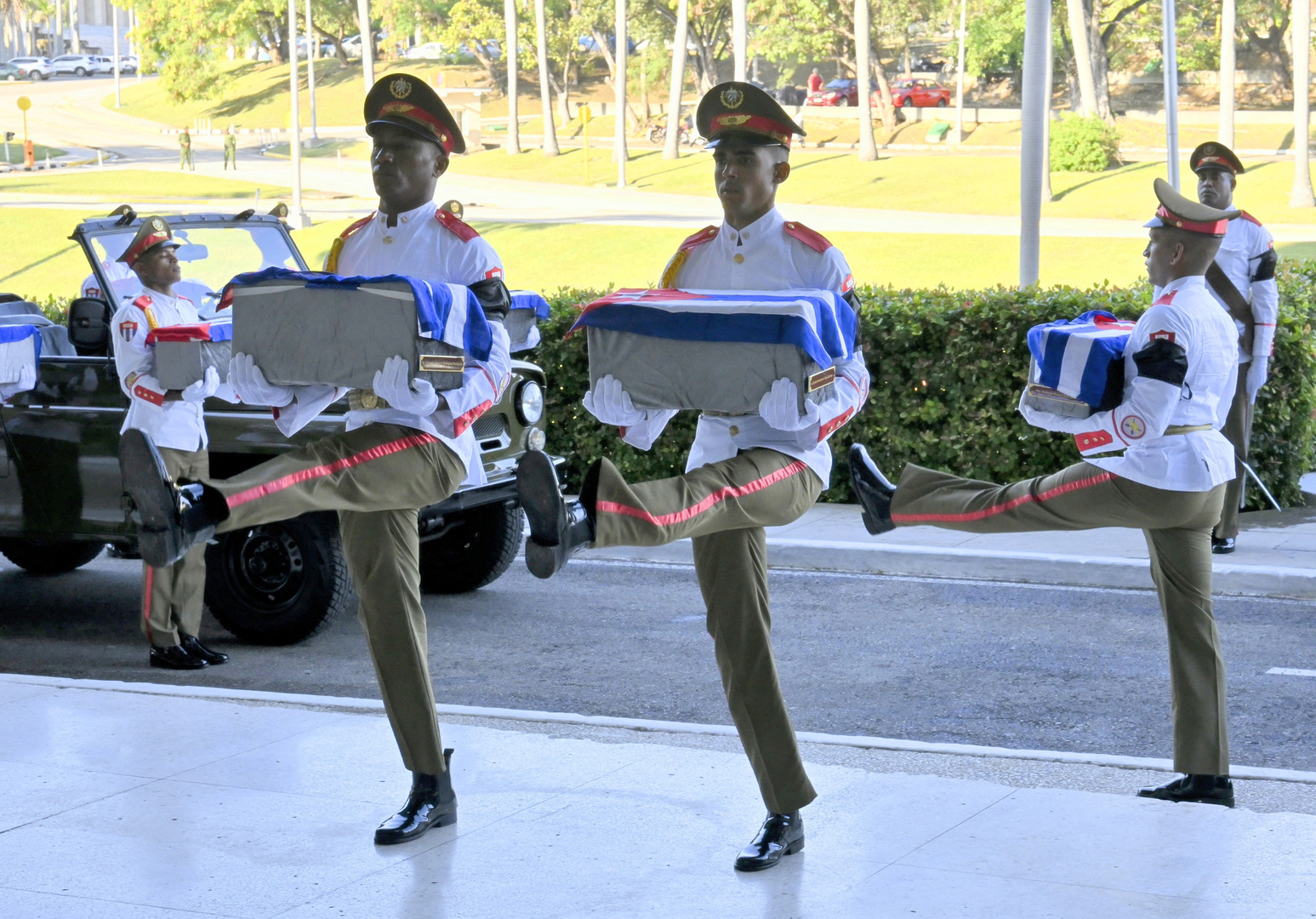
Cuba receives remains of soldiers killed during Maduro capture
In November last year, a senior United Nations expert said the long-running US sanctions on Cuba must be lifted as they are “causing significant effects across all aspects of life”.
The US imposed a near-total trade embargo on Cuba in 1962, with the goal of toppling the government put in place by Fidel Castro after he took power in a 1959 revolution. Castro himself was the target of numerous assassination attempts by the US’s Central Intelligence Agency, or CIA.
Alena Douhan, special rapporteur on the negative impact of unilateral coercive measures on human rights, said the “extensive regime of economic, trade and financial restrictions” against Cuba marks the longest-running unilateral sanctions policy in US history.
She noted that there are shortages of food, medicine, electricity, water, essential machinery and spare parts in Cuba, while a growing emigration of skilled workers, including medical staff, engineers and teachers, is further straining the country.
The accumulative effect has “severe consequences for the enjoyment of human rights, including the rights to life, food, health and development”, Douhan said.
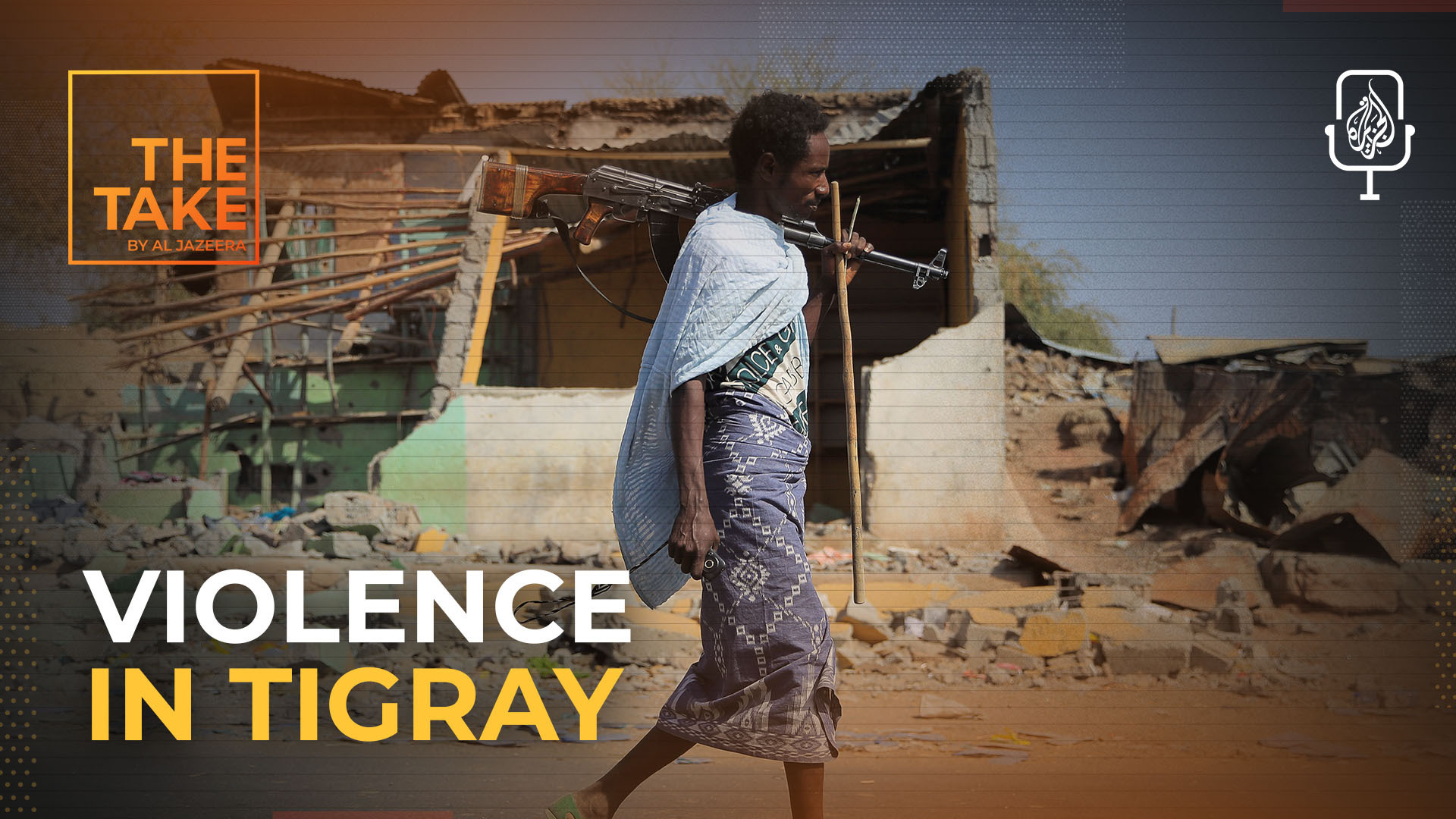
One person has been killed and another injured in drone strikes in Ethiopia’s northern Tigray region, a senior Tigrayan official and a humanitarian worker said, in another sign of renewed conflict between regional and federal forces.
The Tigrayan official on Saturday said the drone strikes hit two Isuzu trucks near Enticho and Gendebta, two places in Tigray about 20km (12 miles) apart.
The official said the Ethiopian National Defence Force launched the strikes, but did not provide evidence.
A local humanitarian worker confirmed the strikes had happened. Both asked not to be named, the Reuters news agency reported.
It was not immediately clear what the trucks were carrying.
TPLF-affiliated news outlet Dimtsi Weyane posted pictures on Facebook that it said showed the trucks damaged in the strikes. It said the trucks were transporting food and cooking items.
Pro-government activists posting on social media said the trucks were carrying weapons.
49:18
Now Playing
49:18
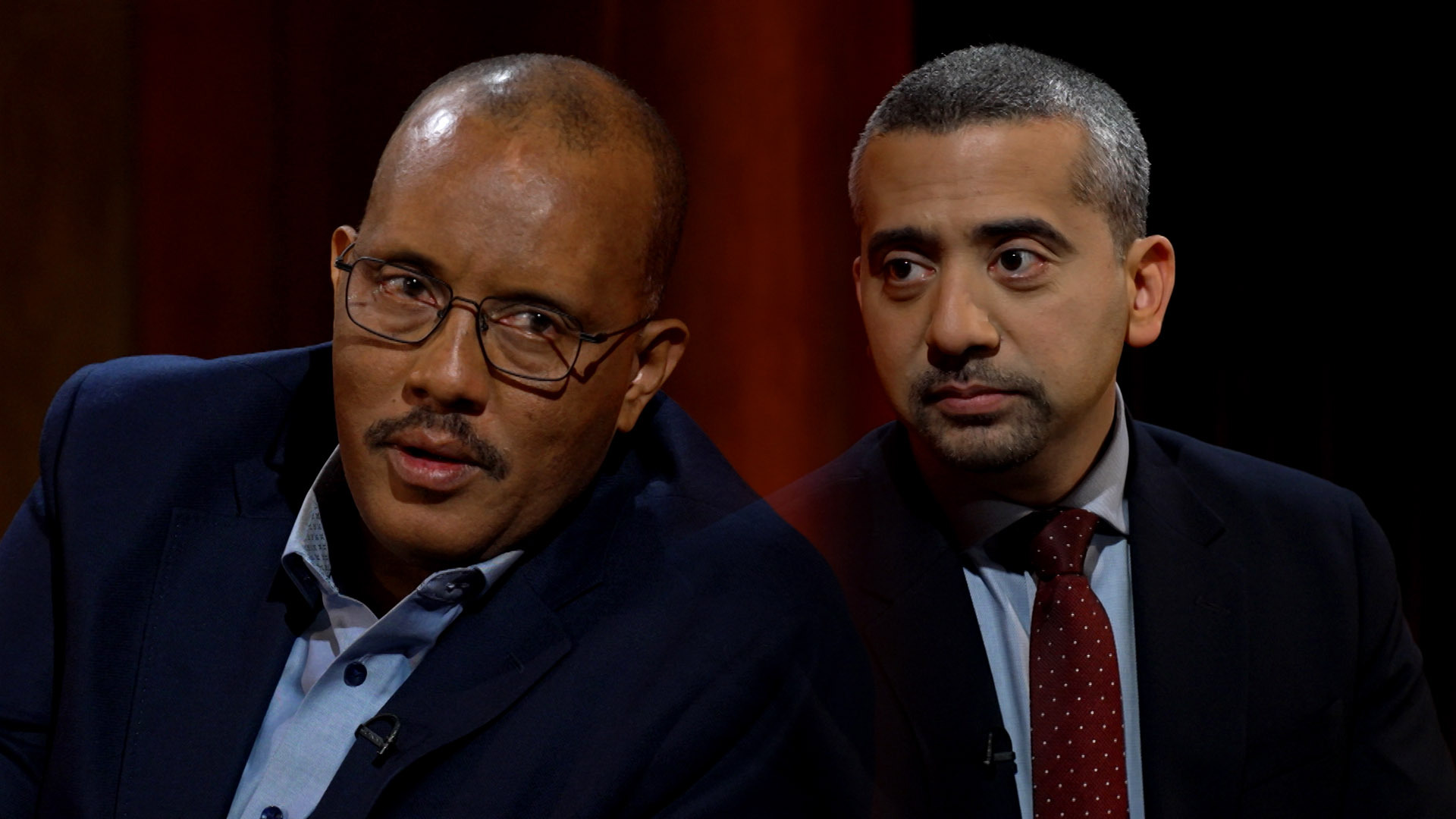
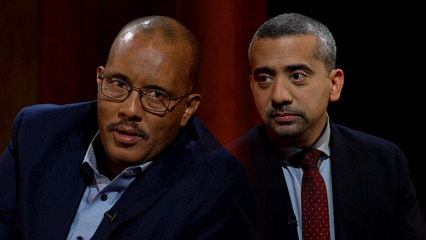
Is war between Ethiopia & Eritrea inevitable?: Mehdi Hasan & Getachew Reda
Next
01:39
Israeli strikes on Gaza: Several children among 31 Palestinians killed
02:59
US journalists arrested for covering anti-ICE protest at church
00:30
Video shows Israeli attacks as Gaza ceasefire deaths pass 500
00:50
Iraqi Kurds rally for Syrian Kurds after fighting in northern Syria
Ethiopia’s national army fought fighters from the Tigray People’s Liberation Front (TPLF) for two years until late 2022, in a war researchers say killed hundreds of thousands through direct violence, the collapse of healthcare and famine.
Fighting broke out between regional and national forces in Tsemlet in the disputed territory of western Tigray earlier this week, an area claimed by forces from the neighbouring Amhara region.
Tension has been brewing over the presence of troops from Amhara and the neighbouring country of Eritrea in Tigray, violating a peace deal in November 2022 that ended the war.
Last year, the head of Tigray’s interim administration established by Addis Ababa was forced to flee Mekele, the regional capital, amid growing divisions within the TPLF, which controlled all of Ethiopia before being displaced by Prime Minister Abiy Ahmed.
Addis Ababa accuses the group of forging ties with neighbouring Eritrea and “actively preparing to wage war against Ethiopia”.
Earlier this week, national carrier Ethiopian Airlines cancelled flights to Tigray, where residents rushed to try to withdraw cash from banks.
21:06
Will Tigray be caught in another devastating war?
The Tigray war ended in 2022, but disagreements have continued over a range of issues, including contested territories in western Tigray, and the delayed disarmament of Tigray forces.
The province is also suffering the effects of United States President Donald Trump’s funding cuts to the United States Agency for International Development (USAID) last year, which was once Ethiopia’s largest source of humanitarian aid.
Humanitarian organisations say up to 80 percent of the population is in need of emergency support, and funding shortfalls are placing a strain on the health system.
The African Union’s chairperson, Mahmoud Ali Youssouf, on Friday urged all parties to “exercise maximum restraint” and “resolve all outstanding issues through constructive dialogue”.
He emphasised the importance of preserving the “hard-won gains achieved under the AU-led Permanent Cessation of Hostilities Agreement (COHA)” signed in Pretoria in 2022.
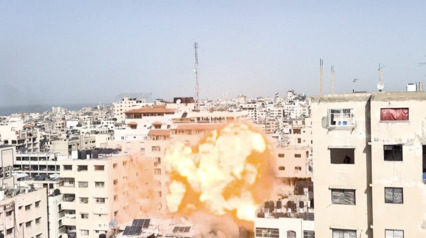
At least 31 Palestinians, including at least six children, have been killed in Israeli attacks on Gaza City and Khan Younis in the Gaza Strip since dawn, according to medical sources speaking to Al Jazeera.
The violence comes a day before Israel is due to reopen the Rafah crossing, which links Gaza with Egypt, on Sunday for the first time since May 2024.
Gaza’s Government Media Office says more than 500 Palestinians have been killed by Israeli forces since a United States-brokered ceasefire in Gaza came into effect on October 10.
Israel’s genocidal war on Gaza has killed at least 71,769 people and wounded 171,483 since it began in October 2023. An estimated 1,139 people were killed in Israel during the Hamas-led, October 7, 2023 attacks, with about 250 taken captive.
31 UpdatesAuto-updates
4m ago
(15:00 GMT)
Photos: Deadly Israeli attacks across Gaza
Smoke and fire rises from the Gath shelter, housing displaced Palestinians, after an Israeli air strike in the west of Khan Younis, southern Gaza Strip [AFP]A man reacts while sitting amid the rubble of Sheikh Radwan police station in Gaza City following an Israeli air strike [AFP]Rescuers carry the body of a victim amid the debris of Sheikh Radwan police station in Gaza City following an Israeli air strike [AFP]
19m ago
(14:45 GMT)
Hospital worker describes ‘devastating’ scenes after strikes
A medical official at Nasser Hospital said the scenes inside the facility are “devastating” following Israeli air strikes on Khan Younis.
Speaking to Al Jazeera, Mohammed Saqer said the hospital has received about 30 wounded people, in addition to seven bodies, most of them children.
He said the hospital’s ICU is full, with large numbers of children currently on ventilators.
Saqer warned that a severe shortage of medical supplies is making it increasingly difficult for staff to provide appropriate healthcare, as the hospital struggles to cope with the scale of casualties.
34m ago
(14:30 GMT)
Medical supplies running out in Gaza, health official warns
Munir al-Bursh, the director-general of the Palestinian Ministry of Health in Gaza, has called for the immediate opening of border crossings.
Speaking to Al Jazeera, he also called for the entry of medical supplies and the facilitation of evacuations for wounded Palestinians to receive treatment outside the Gaza Strip.
Al-Bursh warned the health situation in Gaza is extremely dire, noting that medical supplies are rapidly running out.
Advertisement
49m ago
(14:15 GMT)
Nearly half of kidney patients dead as closure of Rafah crossing blocks treatment
Dr Muhammad Abu Salmiya, director of Gaza City’s al-Shifa Hospital, has told Qatar’s state news agency, QNA, that nearly 50 percent of dialysis patients in Gaza died while awaiting treatment abroad or the arrival of essential medical supplies during the two years of war, while enduring the absence of more than 70 percent of required medications.
He noted that the complex operates only 34 dialysis machines serving about 750 kidney failure patients, an insufficient capacity that worsened after Israeli attacks destroyed hospitals providing specialised renal services, including the Indonesian Hospital in northern Gaza.
Abu Salmiya warned that continued delays in reopening the Rafah crossing, or severe restrictions on patient travel, would further deepen the crisis and pose grave risks to patients requiring transplants or specialised care unavailable in Gaza.
He called for facilitating patient travel and expanding medical evacuation. The prolonged closure of the Rafah land crossing has severely affected Gaza’s population, with Israeli authorities preventing the entry of humanitarian and medical aid.
According to the Ministry of Health, the closure has led to the deaths of more than 1,000 patients and wounded individuals awaiting treatment abroad, while nearly 20,000 others remain in urgent need of medical evacuation.