|
Friday, August 26, 2022
BHRN Message


Rohingya crisis: plight of Myanmar’s displaced people explained in 30 seconds by Kaamil Ahmed
One million Rohingya remain in Bangladesh refugee camps and the persecuted group has little hope of returning to Myanmar

It has been five years since Myanmar’s military launched a campaign of massacres that killed about 7,000 Rohingya in a single month and compelled 700,000 to flee for the Bangladeshi border.
Since the first major military operation against the Rohingya minority in 1978, which forced out 200,000, the Rohingya have been collectively stripped of their citizenship and targeted by increasing violence and discrimination that culminated in the “clearance operations” that began on 25 August 2017. Those operations were years in the planning, according to military documents uncovered by the Commission for International Justice and Accountability and sent to the international criminal court.
One million Rohingya have been left to live in shelters in Bangladesh designed only to be temporary – made of bamboo and tarpaulin that offer little resistance to regular fires and flooding.
More than 100,000 have been moved to Bhasan Char, a remote island camp in the Bay of Bengal, while a fence was built around the rest of the camps, stopping Rohingya moving without permission. Rohingya are not allowed to work and Rohingya-run education centres for secondary-level children have been closed.
No other country has helped Bangladesh by taking refugees in, and a return to Myanmar is a remote prospect. The military coup of 2021 means the country is no safer than it was five years ago and the country has done nothing to improve conditions or indicate that it would recognise the Rohingya as citizens. Many of their villages have been turned into military bases or simply swallowed by the vegetation.
Why Sri Lanka’s collapse looms large over Bangladesh by Shafquat Rabbee
Dubbed by pundits as a development “miracle”, Bangladesh is slated for graduation from the status of “Least Developed Country” to “Developing Country” by 2026.
Yet, suddenly, the nation finds itself battling comparisons with Sri Lanka, which has just experienced an economic free-fall. Bangladeshi mainstream media and social media are flooded with speculations about the country’s impending collapse like its fellow South Asian nation.
Everyone from the prime minister’s office and groups of eminent economists to the American ambassador in Dhaka has chimed in to argue why they believe Bangladesh is still far removed from a Sri Lanka-like cataclysmic implosion.
They may be only partly right.
Bangladesh’s GDP is about the size of the Pakistani and Sri Lankan economies combined. Bangladesh’s foreign currency reserves are $39bn, more than twice the $18bn of those two neighbours together. According to the finance ministry, Bangladesh’s total debt-to-GDP ratio stands at just over 31 percent, compared with 119 percent for Sri Lanka. Bangladesh has a higher per capita GDP than India and is outperforming other major South Asian nations in key socioeconomic metrics.
Given the above backdrop, why are Bangladeshis concerned about their country sliding, like Sri Lanka, into an economic collapse?
The answer lies not so much in economic statistics but in three key similarities between the countries that may have evaded the eyes of some external experts. These are: authoritarianism under dynastic rule; corruption and cronyism; and debt-fuelled vanity projects.
Like the Rajapaksa family, the Sri Lankan political dynasty that steered the country into its recent wilderness of despair, Bangladesh has been ruled for the past 14 years by the Awami League party, led by the family of Prime Minister Sheikh Hasina. While the Rajapaksas were at least democratically elected several times – including as recently as in 2019 – Hasina returned to power in 2018 via an election where the country’s security apparatus allegedly stuffed ballot boxes the night prior to the vote. The ruling Awami League won 96 percent of the seats, a result as lopsided as is usually the case for the rulers of North Korea, Syria, and Cambodia.
Over the years, both the Rajapaksas and the Sheikh family have drawn their political legitimacy from their much-fabled wartime leadership. In 2009, then-President Mahinda Rajapaksa and his brother, defence minister Gotabaya Rajapaksa, were in charge when the Sri Lankan government decisively vanquished the Tamil Tiger guerilla fighters in Sri Lanka’s decades-old civil war. Likewise, Hasina’s father, Sheikh Mujibur Rehman, led Bangladesh’s war of independence against Pakistan half a century ago.
Selling their family’s wartime bravado to their impoverished and nationalistic audience, both the Sheikhs and Rajapaksas established de-facto fiefdoms, where almost every living member of their respective clans got positions of power.
The Rajapaksas ran Sri Lanka like a “family firm”. Before the brothers’ rule crumbled last month, Gotabaya was president, Mahinda prime minister and their third brother Basil was a cabinet minister. Their children also held ministerial positions – all simultaneously.
Prime Minister Sheikh Hasina’s family in Bangladesh has followed a similar template, though less formally. Her daughter Saima Wazed, seen by many as her heir-apparent, attends state functions and meetings with her mother. Sajeeb Wazed, the expatriate son of the prime minister, enjoys the title of ICT adviser, with de-facto oversight of the country’s lucrative digital technology transformation. The prime minister’s sister Rehana, nephews, nieces, cousins and their children are entrusted with key responsibilities ranging from managing propaganda organisations, diplomatic and donor relationships, military affairs, parliamentary memberships and running business conglomerates.
Such control over the state machinery and private businesses invariably breeds autocracy and disrespect towards public opinion and political opponents. That, in turn, spawns rampant corruption and cronyism. That’s what happened with the Rajapaksas in Sri Lanka, where protesters found opulence in the presidential palace at variance with the dire conditions of the country. That is also the reality in Bangladesh under the Sheikh family.
What about vanity projects?
The Rajapaksas built a $1bn port that rarely saw any ships, a $210m airport where hardly any planes landed and a 35,000-seat cricket stadium bearing Mahinda Rajapaksa’s name that seldom hosted any games. These are the poster children of Sri Lanka’s debt-funded excesses that sank the nation.
Bangladeshis are now busy comparing their own white elephants with Sri Lanka’s. While the government has introduced austerity measures, including power rationing, and police have fired upon – and even killed – those protesting against price hikes, Bangladesh is going ahead with the construction of a $140m cricket stadium bearing the prime minister’s name.
The Hasina government is busy constructing several multibillion-dollar mega projects, including a $12bn nuclear power plant in Rooppur, which is significantly more expensive than similar projects in other countries. When the World Bank declined to fund Bangladesh’s recently completed Padma Bridge, citing corruption, Bangladesh self-funded and completed the 6km (3.7-mile) long bridge after spending three times the initial budget ($3.8bn vs $1.2bn).
Within about a month of opening the Padma Bridge amid much jubilation, the country frantically wrote letters to the International Monetary Fund, World Bank and Asian Development Bank for loans to keep the economy afloat amid a balance of payment crisis due to rising oil prices.
It is possible the government acted prudently by pre-emptively talking to the lenders of last resorts. After all, the Bangladesh government must have seen in Sri Lanka what economic stress can do when an autocrat’s grand bargain of “less democracy, more development” fails.
Yet it is hardly surprising that the people of Bangladesh see eerie parallels with Sri Lanka, as the contrast between their dwindling personal finances and the corruption-prone vanity projects becomes sharper. Seeing the collapse of Sri Lanka’s debt-driven, dynastic authoritarianism, the Bangladeshis are not irrational in their worry: “Are we next?”
The views expressed in this article are the author’s own and do not necessarily reflect Al Jazeera’s editorial stance.
Thursday, August 25, 2022
Rohingya: ‘Kill us, but don’t deport us to Myanmar’ By Rajini Vaidyanathan
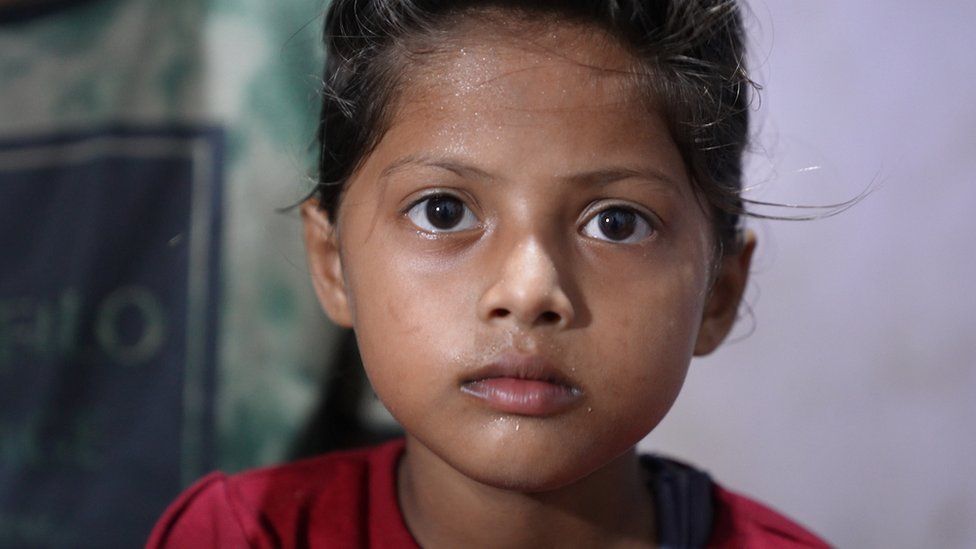
Yasmin is one among thousands of Rohingya children who are unable to get proper education
In her four fragile years, Yasmin has lived a life of uncertainty, unsure where she belongs.
Born in a refugee camp in Bangladesh, she is unable to return to her ancestral village in Myanmar. At the moment, a dingy room in India's capital, Delhi, serves as home.
Like hundreds of thousands of Rohingya people - an ethnic minority in Myanmar - Yasmin's parents fled the country in 2017 to escape a campaign of genocide launched by the military.
Many fled to neighbouring countries like Bangladesh and India, where they live as refugees.
Five years on, Rohingya Muslims - the world's largest stateless population, according to the UN - remain in limbo.
Yasmin's father, Rehman, was a businessman in Myanmar. As the military brutally attacked people, he became one of 700,000 Rohingyas who fled in a mass exodus.
After walking for days, Rehman and his wife Mahmuda made it to the refugee camps in Cox's Bazar, an area in south-eastern Bangladesh that is close to its border with Myanmar.
Here the couple lived in cramped conditions. Food shortages were common and they lived off rations from charities.
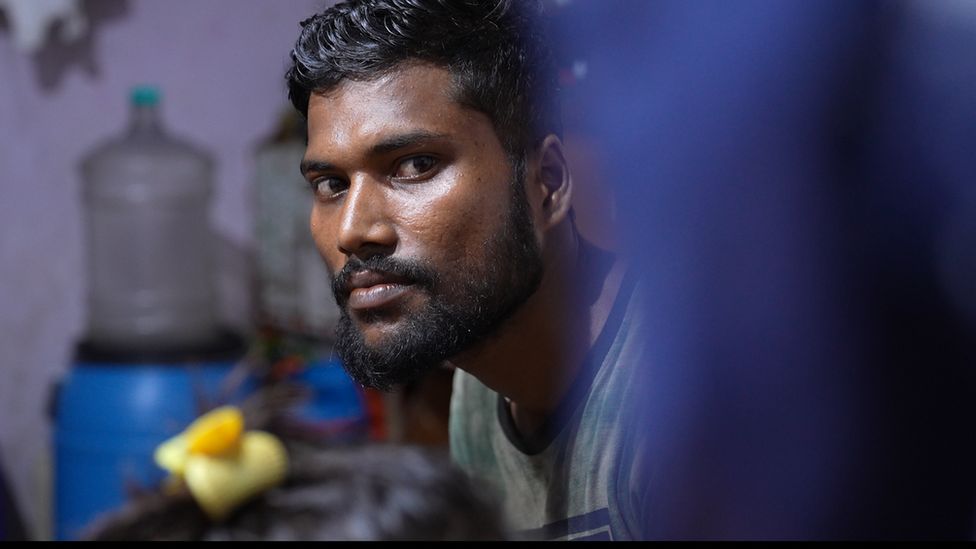
Rehman feared for his wife's safety so the couple fled to Bangladesh
A year after they reached Bangladesh, Yasmin was born.
The Bangladesh government has been pushing for Rohingya Muslims to return to Myanmar. Thousands of refugees have been moved to a remote island called Bhasan Char, which refugees describe as an "island prison".
Rahman felt that leaving Bangladesh would help his child have a better future.
And so in 2020, when Yasmin was just a few years old, the family crossed over into neighbouring India.
Estimates vary, but refugee organisations believe there are between 10,000 and 40,000 Rohingya refugees in India. Many have been in the country since 2012.
For years, the Rohingyas here have lived a modest life attracting little controversy. But after a federal minister tweeted this month that the refugees would be provided with housing, amenities and police protection, their presence in Delhi made fresh headlines.
GETTY IMAGES
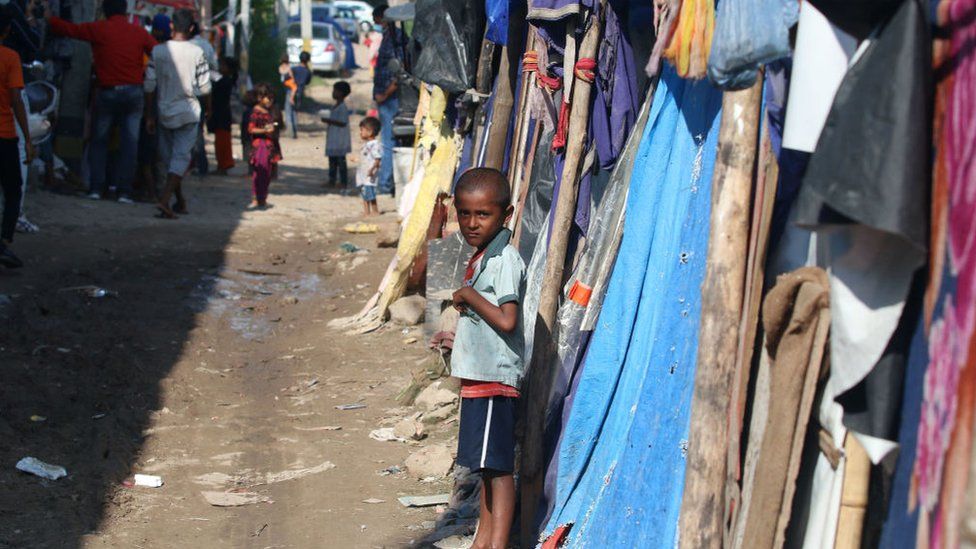
There are between 10,000 and 40,000 Rohingya refugees in India
Hours later India's ruling Bharatiya Janata Party (BJP) government denied it had offered these facilities to Rohingya Muslims, instead describing them as "illegal foreigners" who should be deported or sent to detention centres.
This apparent change of tone has left families like Rehman's disillusioned and desperate.
"The future of my child seems bleak," he said, as he sat on a rickety wooden bed frame with no mattress.
"The government of India doesn't want us either… but I'd rather they killed us than deported us to Myanmar."
No nation is willing to take in the hundreds of thousands of Rohingyas. Last week Bangladesh's Prime Minister Sheikh Hasina told the UN High Commissioner for Human Rights, Michele Bachelet, that the refugees in her country must return to Myanmar.
But the UN says its unsafe for them to do so because of the conflict in Myanmar. In February 2021, the Myanmar junta - who are accused of crimes against the Rohingyas - took control of the country in a military coup.
Hundreds of Rohingyas have made perilous journeys by sea to countries such as Malaysia and the Philippines to escape the atrocities perpetrated by the junta.
The number of refugees in camps in Bangladesh has grown to close to one million. Half of them are children.
Like Rehman, Kotiza Begum also fled Myanmar in August 2017, walking for three days without any food.
She and her three children live in a single room in a camp in Cox's Bazar. They have a plastic sheet as a roof, which offers poor protection from rain during the monsoons.
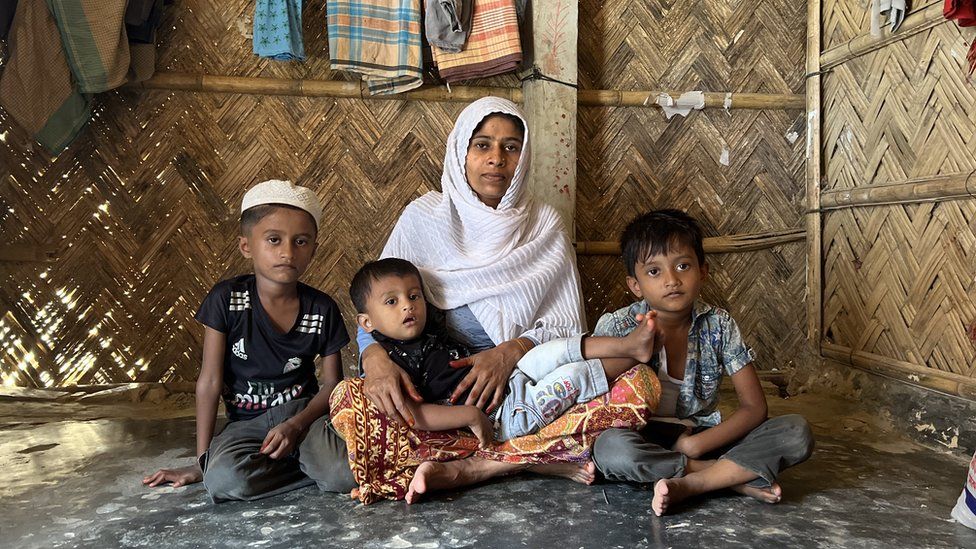
Kotiza and her three children live in squalid conditions in the camps
The horrors of what she left behind in her homeland are still fresh in her mind.
"The military entered our house and tortured us. As they opened fire, we ran. Children were thrown into the river. They just killed anyone in their paths."
Like others in the camps, Kotiza is reliant on food rations from NGOs and charities, which are often limited to the basics such as lentils and rice.
"I can't feed them the food they want, I can't give them nice clothes, I can't get them proper medical facilities," she says.
Kotiza says she sometimes sells her rations to buy pens for her children to write with.
According to a recent UN assessment, cuts in international funding have added to the challenges for a population that remains "fully reliant on humanitarian assistance for survival".
The UN said the refugees continue to struggle to get nutritious food, adequate shelter and sanitation, and opportunities to work.
And education - one of Kotiza's biggest priorities for her children - is also a big challenge.
There are concerns of a lost generation, who aren't getting decent schooling.
"The children go to school everyday, but there's no development for them. I don't think they're getting a good education," Kotiza says.
Children living in camps in Cox's Bazar are taught the Myanmar curriculum - the curriculum of their home country - and not the one taught in schools in Bangladesh.
While proponents of the programme say it's to prepare students for a return to their homeland one day, others fear it's a way to prevent the Rohingya refugee population from integrating with Bangladeshis.
"If they are educated, they can have beautiful lives. They can earn for themselves and live happily," says Kotiza.
GETTY IMAGES
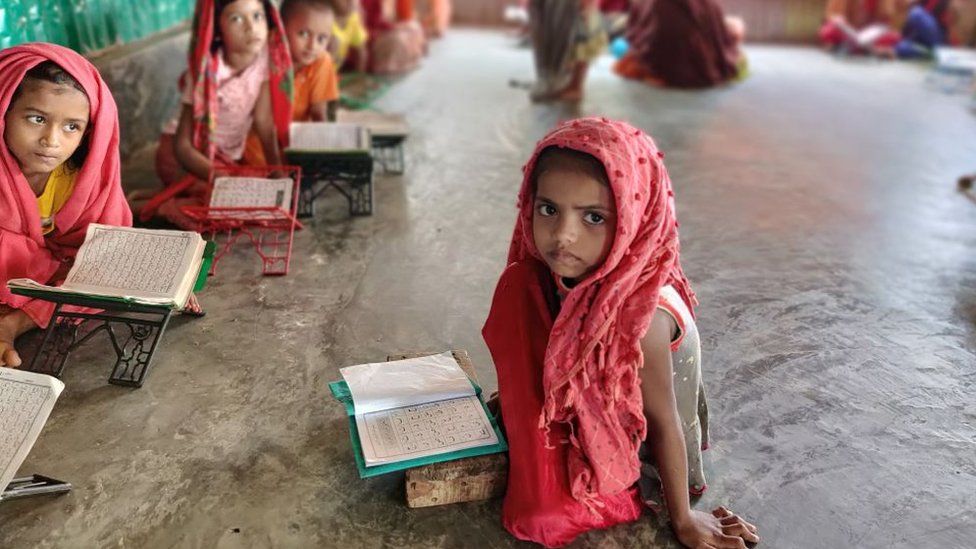
Hundreds of thousands of refugees, many of them children, live in camps in Cox's Bazaar in Bangladesh
It's a sentiment shared back in Delhi by Rehman, as he cradles four-year-old Yasmin in his arms.
"I dream of giving her a proper education and a better life, but I cannot,"
As Rohingyas around the world mark the fifth year since fleeing genocide, they still hope they will get justice - a case filed against the Myanmar military is still waiting to be heard at the International Court of Justice.
But more than that they dream of being able to return home.
Until things are safe for them to do so, refugees like Rehman are pleading with the world for more assistance and compassion.
"I am not here to steal, I'm here to save my life."
Subscribe to:
Posts (Atom)