|
|
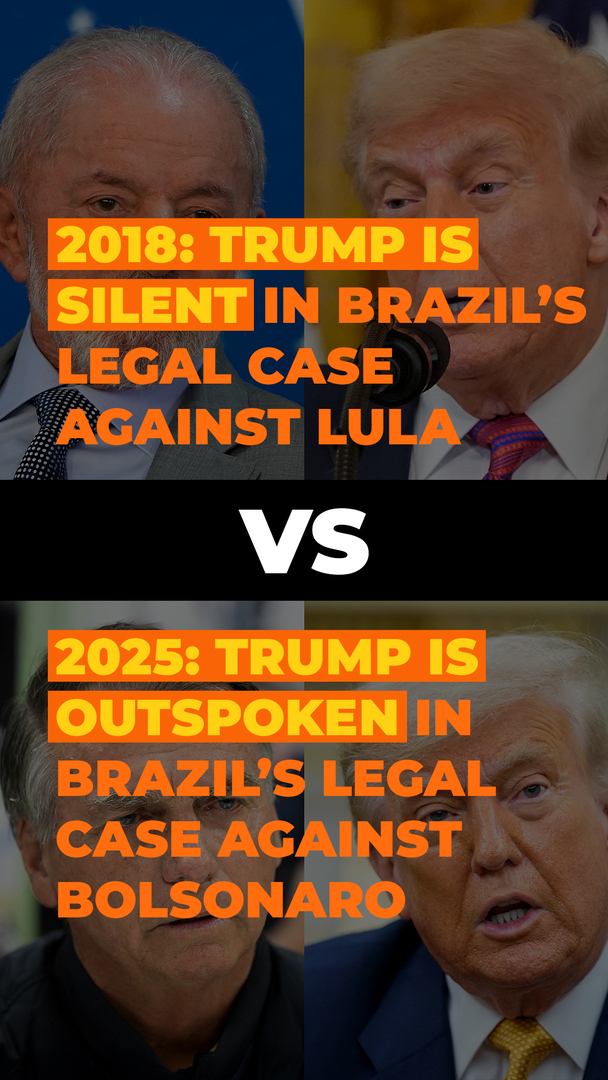
Brazil has criticised the United States Department of the Treasury’s decision to impose sanctions on Supreme Court Justice Alexandre de Moraes over alleged suppression of freedom of expression and the ongoing trial of former Brazilian President Jair Bolsonaro.
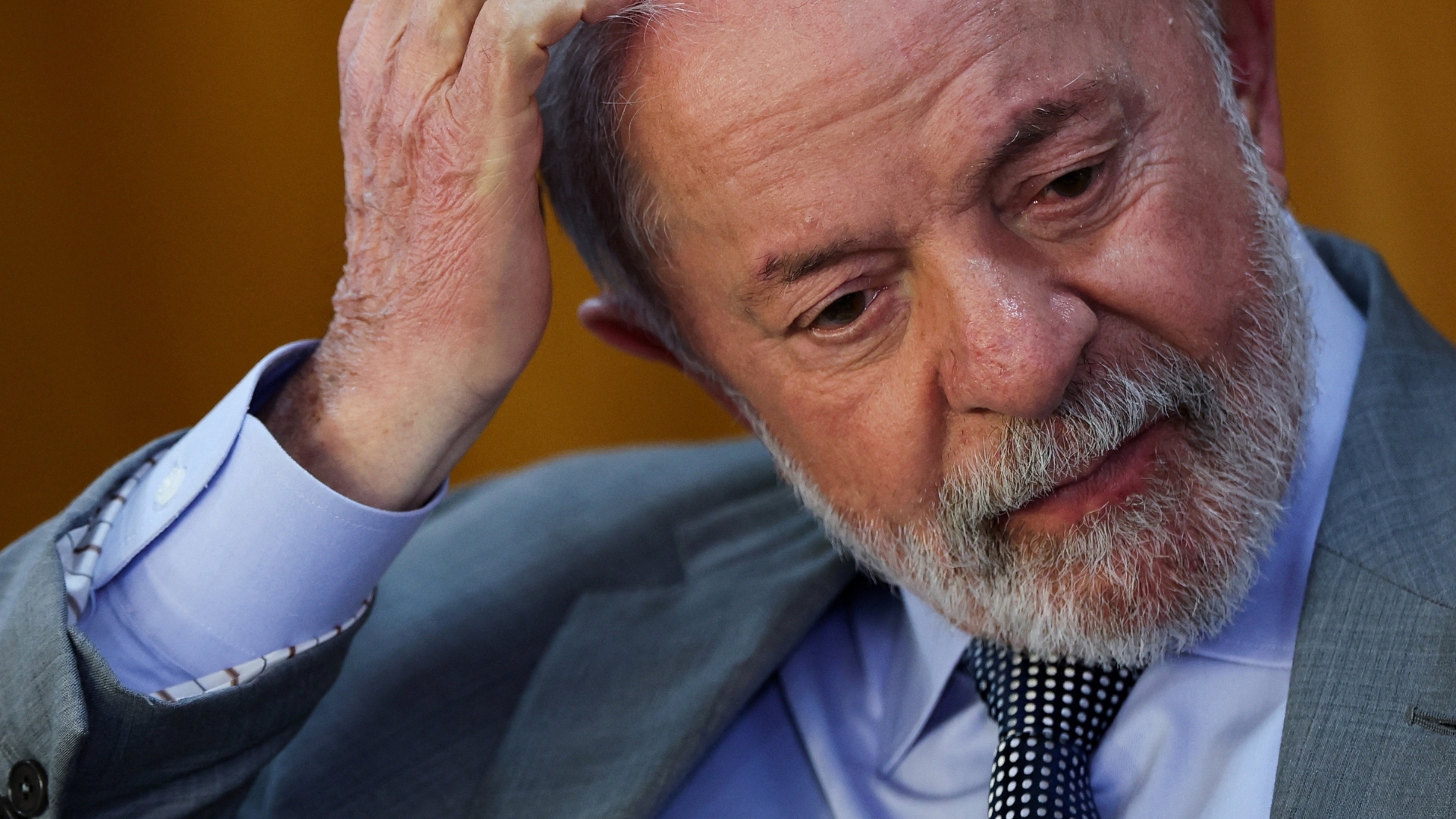
Brazil’s President Luiz Inacio Lula da Silva also released a statement on Wednesday condemning what he called the “US government’s interference in the Brazilian justice system”.
“The Brazilian government stands in solidarity with [de Moraes], who is the target of sanctions motivated by the actions of Brazilian politicians who betray our country and our people in defence of their own interests,” President Lula said, without naming Bolsonaro.
De Moraes is overseeing a case against the former president, who stands accused of masterminding a plot to orchestrate a coup and stay in power after his 2022 election defeat to Lula.
Announcing sanctions against de Moraes earlier on Wednesday, US Treasury Secretary Scott Bessent said the Brazilian Supreme Court justice had “taken it upon himself to be judge and jury in an unlawful witch-hunt”.
“De Moraes is responsible for an oppressive campaign of censorship, arbitrary detentions that violate human rights, and politicised prosecutions – including against former President Jair Bolsonaro,” Bessent said.


De Moraes was sanctioned under the Global Magnitsky Act, which allows the US to impose economic penalties against foreigners it considers to have a record of corruption or human rights abuses.
Bessent’s statement accused de Moraes of “serious human rights abuse[s]” for targeting opposition politicians – including Bolsonaro – journalists, newspapers, and US and international companies, including social media platforms.
The decision orders the freezing of any assets or property de Moraes may have in the US.
US President Donald Trump previously tied tariffs on Brazil to what he called a “witch-hunt” against his right-wing ally.
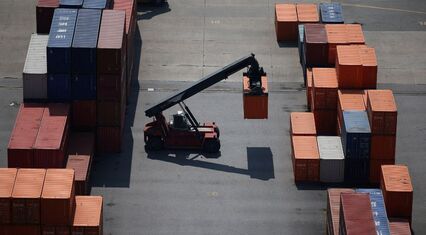
In a letter in mid-July announcing a 50-percent tariff on Brazilian goods, which will start on August 6, Trump opened the message with criticism of Bolsonaro’s prosecution. Trump has since softened the blow by excluding key sectors in Brazil, such as aircraft, energy and orange juice, from the heaviest levies.
“We’re not facing the worst-case scenario,” Brazilian Treasury Secretary Rogerio Ceron told reporters on Wednesday.
Responding to the 50-percent tariff in his statement on Wednesday, President Lula criticised Washington’s “unjustifiable” attempts to use “political arguments to validate the trade measures” against his country.
“The political motivation behind the measures against Brazil undermines national sovereignty and the historical relationship between the two countries,” he said.
On July 18, Brazilian police swooped on Bolsonaro’s home and political headquarters, while de Moraes ordered the former president to wear an ankle bracelet and stop using social media over allegations he courted interference in his trial from Trump.
Hours later, Washington imposed US visa restrictions on de Moraes, his family and other unnamed court officials, escalating tensions with the government of Latin America’s largest economy.
Bolsonaro has denied attempting to overthrow the government, but has acknowledged taking part in meetings aimed at reversing the election’s outcome.

It is not clear what triggered the fighting although sections of the border have long been contested.

At least four members of the South Sudanese security forces have been killed in fighting with the Ugandan army near the countries’ shared border, according to local officials, as tensions flare over disputed border demarcations.
Three South Sudanese soldiers were shot dead on Monday by Ugandan forces who retaliated after one of their soldiers was killed, Major General Felix Kulayigye, spokesperson for the Ugandan military, said on Wednesday. But Wani Jackson Mule, a local official in South Sudan’s Central Equatoria state, said he received the bodies of five soldiers.
Uganda has a history of involvement in South Sudan and has long provided military support to President Salva Kiir, including a deployment of special forces since March.
A spokesman for South Sudan’s military, Major General Lul Ruai Koang, said on Wednesday that military leaders from South Sudan and Uganda have agreed to an immediate ceasefire to enable an investigation of the latest border clash.
A statement from local authorities quoted local South Sudan army commander Henry Buri as saying the Ugandan forces “were heavily armed with tanks and artilleries” and targeted 19 “joint operation” forces. There was no comment from the Ugandan government.
An earlier statement by local county officials said there had been “loss of lives and injuries from both sides”.
It was not clear what triggered the fighting on Monday that South Sudan says occurred in Central Equatoria.
The clashes reportedly occurred in a remote part of northwestern Uganda known as West Nile when South Sudanese soldiers crossed into Ugandan territory, set up camp and refused to leave, according to Kulayigye. “We had to apply force.”
But there are opposing narratives.
Mule described the firefight as a “surprise attack” by Ugandan forces in territory South Sudan considers to lie within its land. Sections of the Uganda-South Sudan border have been contested for years.
Leaders from the two countries have set up a joint border demarcation committee whose work is ongoing, Kulayigye said. Officials from both countries have previously said they expect to reach a firm decision in 2027.
Although there have been sporadic border clashes over the years, an exchange of fire between the military allies is rare.
Uganda sent troops to support Kiir when civil war broke out in South Sudan in 2013, two years after it gained independence from Sudan.
The civil war between Kiir and his longtime rival Riek Machar lasted five years and killed about 400,000 people before a power-sharing agreement was reached in 2018.
Uganda again deployed special forces in March this year as Kiir moved once again against Machar, eventually placing him under house arrest and stoking fears of a renewed civil war.
That has all but buried the power-sharing deal and triggered conflict between the army and members of a militia from Machar’s Nuer ethnic community.
The Ugandan army has been accused of using chemical weapons, namely barrel bombs containing a flammable liquid that has killed civilians, against Nuer militias in South Sudan’s northeast – accusations Uganda has denied.
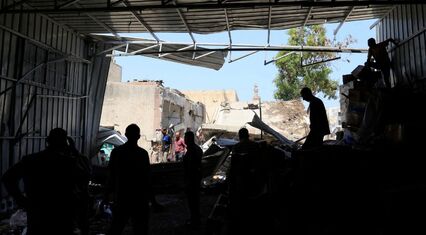
The Israeli military has launched a massive series of air strikes on several areas across Lebanon, in its latest near-daily violation of a ceasefire agreement with the Lebanese armed group Hezbollah last November.
Lebanon’s National News Agency reported at least seven air raids on towns in the Bekaa Valley and a mountainous region in Baalbek in the eastern and northeastern parts of the country, far from the southern border with Israel on Thursday. It also said more attacks targeted the Ghaziyeh area of south Lebanon, leading to a fire at a warehouse.
Israel’s Defence Minister Katz confirmed that Israel was launching what he described as a “violent renewed attack on the largest site for the production of precision missiles belonging to Hezbollah in Lebanon”, according to local broadcaster Channel 12.
“Every attempt by the terrorist organisation to recover, reposition, or threaten will be met with relentless force”, Channel 12 reported Katz as saying.
The Israeli raids targeted the outskirts of Brital town and Nasiriyah town in Tallet al-Sunduq area in the Bekaa Valley, as well as the vicinity of Jarmak area in Jezzine, and the areas of Mahmoudiya and Khardali.
The footage below, which has been verified by Al Jazeera, shows large plumes of smoke rising after the attacks.
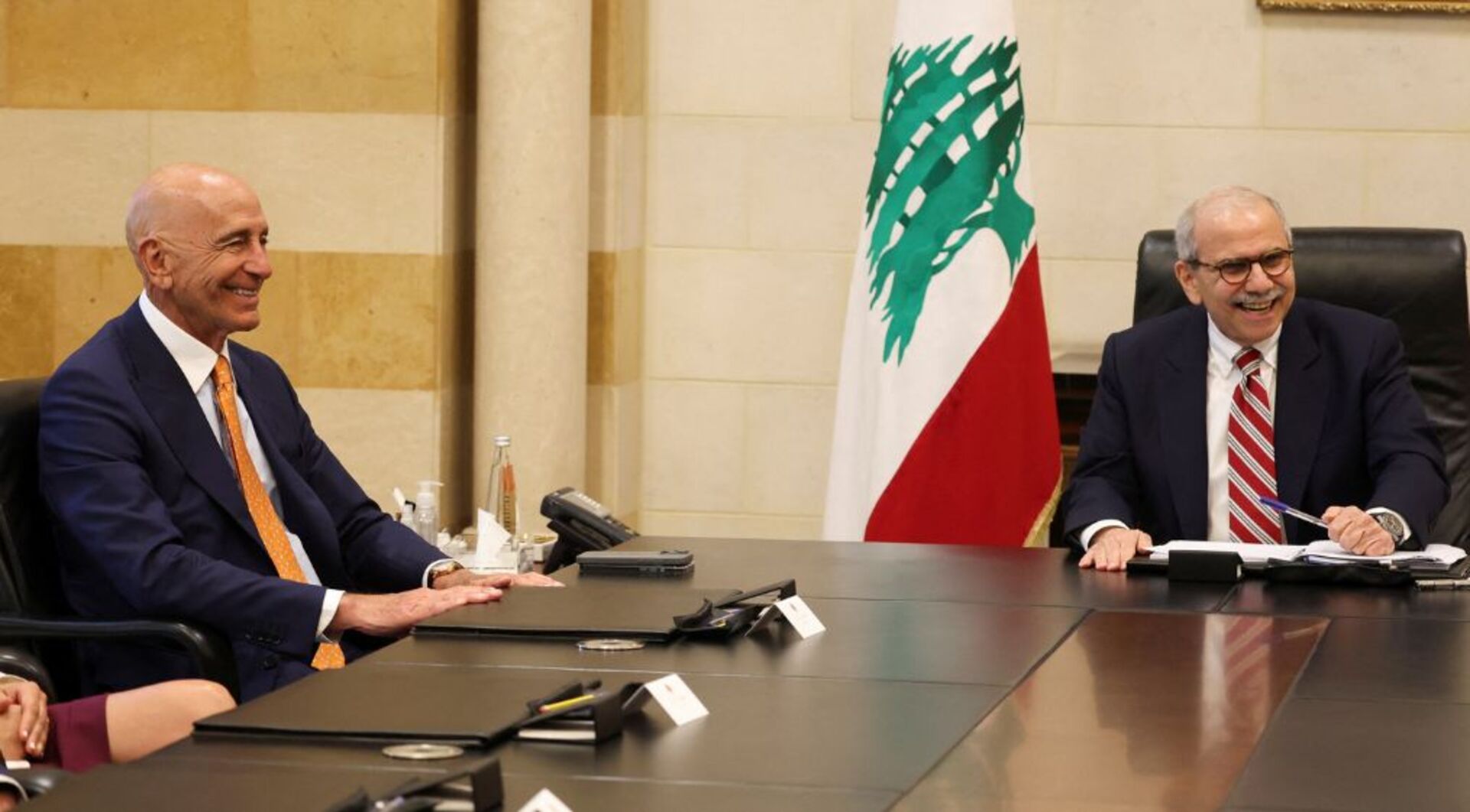
Earlier Thursday, Lebanese President Joseph Aoun reiterated calls for Hezbollah to hand over its weapons to the army, a move rejected by the group despite growing pressure from Israel’s main ally, the United States.
In a televised speech on Thursday at the Defence Ministry’s headquarters, Aoun said authorities were demanding “the extension of the Lebanese state’s authority over all its territory, the removal of weapons from all armed groups, including Hezbollah and their handover to the Lebanese army”.
He added it was every party’s duty “to seize this historic opportunity and push without hesitation towards affirming the army and security forces’ monopoly on weapons over all Lebanese territory … in order to regain the world’s confidence”.
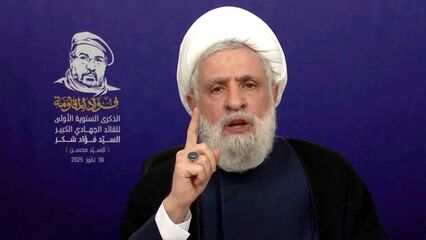
Aoun’s comments came a day after Hezbollah chief Naim Qassem dismissed calls for the group’s disarmament, saying that “anyone calling today for the surrender of weapons, whether internally or externally, on the Arab or the international stage, is serving the Israeli project”.
Hezbollah officials have said they will not discuss giving up the group’s remaining arsenal until Israel, with which it fought an all-out war recently, withdraws from all of Lebanon and ends its strikes.
“For the thousandth time, I assure you that my concern in having a [state] weapons monopoly comes from my concern to defend Lebanon’s sovereignty and borders, to liberate the occupied Lebanese territories and build a state that welcomes all its citizens”, said Aoun on Thursday, addressing Hezbollah’s supporters as an “essential pillar” of society.


The conflict between Israel and Hezbollah began on October 8, 2023, as the Lebanese group launched strikes in solidarity with the Palestinian group Hamas in Gaza, which was coming under Israeli attack. Although a ceasefire was reached last November, Israel has kept up its air attacks on Lebanon and has threatened to continue until Hezbollah has been disarmed.
Under the terms of the ceasefire, Hezbollah was to withdraw its fighters north of the Litani River, about 30km (20 miles) from the Israeli border. Israel, meanwhile, was meant to pull all of its troops out of Lebanon, but has kept them in five areas it deems strategic.
Aoun, in his speech, also demanded the withdrawal of Israeli troops, the release of Lebanese prisoners and “an immediate cessation of Israeli hostilities”.
“Today, we must choose between collapse and stability,” he said.
The ceasefire was based on a previous United Nations Security Council resolution that said only the Lebanese military and UN peacekeepers should possess weapons in the country’s south, and that all non-state groups should be disarmed.
However, that resolution went unfulfilled for years, with the Iran-backed political party and armed group’s arsenal before the latest war seen as far superior to the army’s, and the group wielding extensive political influence.

The US has been pushing Lebanon to issue a formal cabinet decision committing to disarm Hezbollah before talks can resume on a halt to Israeli military operations in the country, five sources familiar with the matter told the Reuters news agency.
Lebanon has proposed modifications to “ideas” submitted by the US on Hezbollah’s disarmament, Aoun said in his speech, and a plan would be discussed at a cabinet meeting next week to “establish a timetable for implementation”.
Under the Lebanese proposal, there would be an “immediate cessation of Israeli hostilities” in Lebanon, including air strikes and targeted killing, a full withdrawal of Israeli forces from southern Lebanon and the release of Lebanese prisoners held in Israel, the president added.
Aoun said Lebanon’s proposal also calls for international donors to contribute $1bn annually for 10 years to beef up the Lebanese army’s capabilities and for an international donor conference to raise funds in the coming months for the reconstruction of Lebanese areas damaged and destroyed during last year’s war between Israel and Hezbollah.
Lebanon, for its part, would implement the “withdrawal of the weapons of all armed forces, including Hezbollah, and their surrender to the Lebanese Army”, he said.
In the wake of Bangladesh’s mass uprising of 2024, the partition of India in 1947 has re-emerged as a subject of renewed political and his...