Friday, December 31, 2021

British Colonialism and How India and Pakistan Lost Freedom BY MAHBOOB A. KHAWAJA

 Irony of Historic National Freedom and Unspoken Tyranny of Imperialism

Do nations and civilizations grow out of the moral mire of military conquests, killings of innocent people, political cruelty and subjugation by imperialism? For more than 800 years, India as a Moghul Empire was an economically well integrated and politically viable entity and west European had strong trade and political relationships. After intrigued conspiracies and planned division, British invaded India in 1857, committing cold blooded massacres of two millions people mostly Muslims opposing the military invasion described just as a “Mutiny” in the British chronicle. Bahadur Shah Zafar – the last Moghul emperor was deposed over night in Delhi, his youngest son head was chopped-off and put on a breakfast plate to strangle the Shah and make him surrender unconditionally. Shah was hurriedly taken to Rangoon (Burma) and imprisoned in a garage and later on died and buried only to write poems in loss of his freedom and beloved country. Did the British overtake India to be a free country for democracy or to support the Hindu domination of futuristic India? British robbed Moghul India and became it became Great Britain and imagined India as an absolute entity of the British Empire.

Leaders like Gandhi and Nehru, Dr. Mohammad Iqbal, Mohammad Ali Jinnah and Liaquat Khan though educated in British intellectual traditions but articulated new mission and visions for national freedom as a revulsion against the British colonial political traditions and continuity of British Raj in India. Was this violent and ruthless indoctrination part of the British heritage or history-making efforts to besiege India forever? Lord Mountbatten, the last Viceroy made sure that Indians will remain loyal and committed subservient to the futuristic blending of so called celebrated national freedom after the 1947 partition into India and Pakistan. British failed to deliver the truth of national freedom to both nations in a universal spirit of political responsibility. Both nations continued to engage in military warfare, ethnic conflicts and hegemonic control to dominate each other by undermining their own future.

History could not have confined the tyranny and oppression of “divide and rule” of British imperialism against the will of the Indian masses. Canons of rationality clarify that national freedom granted to both new entities in August 1947 was a fake chronology of time and history. The so called national freedom perpetuated a hybrid socio-economic and political culture – part human- part vulture, British made no security arrangements to ensure communal peace and harmony which resulted in millions of people been killed in ethnic violence while migrating from one place to another.

Strange as it is, while British imperialism changed the Indian mindset and behavior within a century, but even after 75 years India and Pakistan remain glued to the British colonial systems to this day in thoughts, systems and governance. Does it not signal a naïve and void imagination of national freedom professed by both nations since 1947? They continue to interact with one another as the most hated enemy of time and history, wars, threat of nuclear arsenals, Kashmir dispute and worst of all lack of direct people to people communication or business relationships – all seem to be part of a highly ruptured and purging pursuit of national freedom.

Indian and Pakistani Leaders Follow Egoistic Agenda for the Future

The aerial view of New Delhi reflects an Islamic image of the city – grand New Delhi Mosque, nearby historic and beautiful Taj Mahal, Old Fort and lot more. To foreigners, it is does not look like the capital of Hindu India at all. If this inference has any reality, the future of India and Pakistan should have been collaboration and lasting friendship. India always wanted to subdue Pakistan and its national freedom. Pakistan’s bad luck entailed many military coups breaking its integrity and trust on freedom. Egoistic and foolish Generals created bogus and corrupt politicians claiming to be the leaders of future-making. They lacked the moral and intellectual capacity to imagine its future with a new generation of educated, intelligent and proactive people who could have contributed for a promising future of Pakistan.

India’s political agenda was intact when in December 1971, East Pakistan was disintegrated and Bangladesh was created by Mrs. Indra Gandhi –the Prime Minister – a power conspirator in India. Pakistani governing elite would not dare to admit that it was Zulfikar Ali Bhutto and Genera Yahya Khan both major conspirators who led to the defeat of Pakistan. Even half a century later, Pakistanis still live in delusional and unarguable conclusion of that historic misfortune. As a graduate student, I met General PNK Choudry (the former Chief of the Indian Armed Force) forcibly retired by Mrs. Indra Gandhi and sent as an Ambassador (HC) to Canada. At a local Canadian university campus, we met when he was a guest speaker. Later on, I invited him for a class gathering with fellow students and lunch. During the summer while working at photo store, General Choudry comes in with two cameras on his shoulder and many times we had lunch together and walks and photography together. On weekends, at university library- often I got library books to share with him and we talked about global affairs and his own past and India-Pakistan. He denied any alleged conspiracy against Mrs. Gandhi to oust her and bring a military coup in India. My interaction with General Choudry continued for almost two years. After his diplomatic assignment, he was hired by McGill University as a lecturer and that is where he died in 1975. He was a simple, 6.5 ft approx tall person, humble and spoke openly and truthfully as I recall him. As an Indian top army General he may have been a tyrant but as a human being and a diplomat he was a decent person. He fought wars with Pakistan and knew most of the military establishments. Here is what he disclosed during many conversations and it should be alarming to Pakistanis if they deny it:

ZABhutto and Shekih Mujib were Appointed by Mrs. Indra Gandhi

Prior to the defeat and surrender of East Pakistan in 1971, Zulfikar Ali Bhutto had direct contact with Mrs. Gandhi and wanted India’s help to become the next leader of Pakistan. India was looking for such an opportunity and wanted East Pakistan to become a new entity- Bangladesh. Sheikh Mujib Rehman was nationalist but was enthusiastic for a new homeland except to become the next elected leader of Pakistan. Bhutto-Yahya Khan were competing for power even without elections. ZA Bhutto wanted political power even if Pakistan was defeated, otherwise Sheikh Mujib-Yahya could have become the next governing leaders. Bhutto was a power hungry individual without any political capacity to be a leader. Mrs. Gandhi helped both – ZA Bhutto and Sheikh Mujib and the price was the defeat and surrender of Pakistan. Mrs. Gandhi appointed Bhutto as the next President, Martial Law Administrator and Prime Minister of Pakistan and Sheikh Mujib ur Rehman as the next President of Bangladesh. Some Pakistani would blame General Niazi for the surrender but in reality it was Yahya-Bhutto and the Pakistani Generals who should have faced full accountability and perhaps firing squads for their treachery and dishonesty to national freedom and integrity of Pakistan. None of this ever happened in Pakistan. To see more, please view the articles by this author: “Pakistan: Leaders who Stabbed the Nation” (2009), “Pakistan: Leader or Criminals.” (2014); “Pakistan: Reflections on the Turbulent 69th Independence Day”, “Pakistan: How to change the culture of political corruption and rebuild the Future.” (2014), and “Pakistan and India’s leader mark freedom from British Colonial Rule but Masses look for a Navigational Change.” (2020).

To General Choudry, if the whole Pakistan was captured by India except the Sindh province, ZA Bhutto would have gladly become the Chief Minister of Sindh to co-exist with India. He disclosed, there were five or six “soft hearted” Pakistani Generals willing to align and not to challenge India’s plan for Bangladesh. Shocking as it is, future Pakistani leaders never held anyone accountable for the crimes against the nation. Were ZA Bhutto and Yahya Khan more important than the existence, national freedom and integrity of One Pakistan? Dr. Ishtiaq Qureshi (Editor Urdu Digest) wrote “Skoote –Dahaka Say Purdah Uttha Hey” (1972), in which he described the details how Bhutto and Yahya khan betrayed Pakistan and stabbed the nation. Dr. Qureshi was imprisoned by the Bhutto Government. This truth remains unacknowledged and districted by the Pakistani governing elite even to this day. Are the Pakistanis still living in any rational denials of their own chapter of history? Moral and intellectual corruption is rampant in both countries. Masses are systematically compelled to bribe officials to get the basic services and official necessities of nationality ID, passports, driver license and lot more in life. The national freedom has changed from the enlarged scope of corruption and exploitation – the legacy of the British imperialism. Both India and Pakistani neo-colonialists look for escape from reality and are allergic to see the mirror of the present and future. Allama Iqbal (pioneer of Pakistani national freedom) did not live to see his dream come true of Pakistan. Mahtama Gandhi was murdered by a Hindu extremist, Nehru died a natural death. Mohammad Ali Jinnah passed away in a broken ambulance on a Karachi street, and Liaquat Ali Khan (first PM) was murdered by the then Pakistani politicians. Mrs. Gandhi was killed by his Sikh bodyguard. Sheikh Mujib was murdered by his military commander and Bhutto was hanged for killing a political opponent.

Are there any Glimpse of Hope for People-Oriented Change for the New Generations?

India has its multiple problems of socio-economic and political diversity. It is unable to counteract the national freedom movement of Sikh Nation for an independent Khalistan. Kashmir was never a part of British Indian dominion and its masses continue to seek freedom from India occupation and violations of their basic human rights. Muslim, Christian and other minorities are oppressed under Hindu-controlled India. Pakistani miserably failed to take proactive initiatives to support the freedom movement for the people of Kashmir. The old service men-led elite could not imagine new and creative strategies to organize international conferences or effectively communicate to the Western world to share the aspirations of the Kashmiri masses.

The degeneration of the Indian-Pakistani moral and intellectual culture is well in progress. The essence, meaning and purpose of historic British colonial systems are operative across all public affairs, policies and practices in India and Pakistan. The armed forces, the civil service and legal jurisprudence all remain under the sinister influence and disfigured reality of the two so called free nations. Police still beats the protesters and open fire on peaceful demonstrators, be in New Delhi, Kashmir or Islamabad. National freedom does not empower futuristic societies to establish political absurdity, immoral and intellectual decadence and political injustice. Common people in both countries are besieged in obsolete systems of political governance except rich landlords and affluent compete the elections and gain power. There is no change for the people in the colonized landscape except enlarged scope of moral and intellectual corruption guised as freedom. If you will question both elite having many common values of the British Raj, they would deny if there is anything wrong with their thinking, role play and management of public affairs. The new and young generation who could not imagine a new sustainable future are vanishing fast and migrating to Europe and America in search of better opportunities. The old generations of landlords and retired civilian-military officials manage the governing bodies whereas people of new and educated generation are deprived of any practical participation and migrate to Europe and North America and never return to their home countries. The hub of political culture is divided and delusional about national freedom and a sustainable future-making. There are no wars for the people of the sub-continent to fight but they are fighting wars on several fronts without reason- known and unknown. The compelling realities across the beleaguered sub-continent demand new thinking, new visionary leadership, men of new ideas and plans to deal with the unwarranted exploitation of masses, communal deaths, and deliberate destruction of the historic culture and millions of people looking for change and a new beginning of cordial borders and relationships.

Dr. Mahboob A. Khawaja specializes in international affairs-global security, peace and conflict resolution with keen interests in Islamic-Western comparative cultures and civilizations, and author of several publications including the latest: One Humanity and the Remaking of Global Peace, Security and Conflict Resolution. Lambert Academic Publications, Germany, 12/2019.

Ohio Muslim community shocked after ‘spy’ identified

 When Khalid Dada, a young undergraduate student at Ohio State University, began interning at the Ohio chapter of the Council on American-Islamic Relations (Cair), he never expected someone he admired to be identified by the organisation as a "spy". 
How an FBI informant destroyed the fabric of an entire community
Read More »

Romin Iqbal, Cair-Ohio’s legal and executive director who had been leading the chapter since 2006, was someone Dada would see at the office daily. He knew him as a lawyer people trusted, who was deeply involved in the community and who helped those in trouble get out of bad situations.

When Cair revealed that Iqbal was allegedly recording and sharing information around its advocacy work with the Investigative Project on Terrorism (IPT), a group identified as part of an "Islamophobia network" in the US, the community in Columbus, Ohio, felt shocked and betrayed. 

"This was the man who you went to when the FBI knocked on your door, and now this man has been accused of working for a group planning around hate for Islam," Dada told Middle East Eye. "This is a community issue, not just a Cair-Ohio issue."

The allegations 

On 14 December, Cair-Ohio released a statement saying Iqbal had been sharing information with the anti-Muslim group and was terminated.

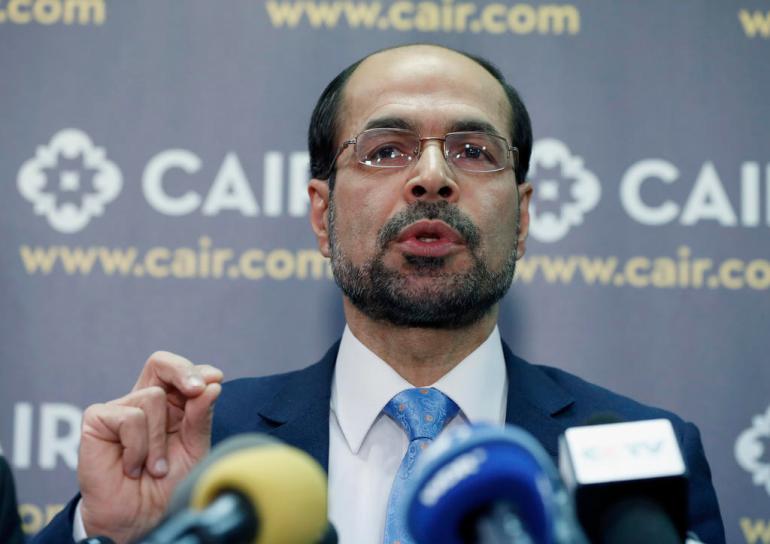
"For years, Mr Iqbal was secretly sharing confidential information about our civil rights work - including surreptitiously recorded conversations, strategic plans, and private emails - with anti-Muslim extremists," Nihad Awad, Cair's national and executive director said in a statement.

"He did this in violation of his ethical duties to the organization and his moral duty to protect the Ohio Muslim community."

A week later, Cair announced that a second individual, whose identity has yet to be revealed, confessed to working with IPT and was allegedly paid $3,000 a month, a total of more than $100,000 over more than four years, by the group's founder, Steven Emerson, to spy on a mosque in the US and "record prominent Muslim leaders". This individual was not a member of Cair. 

"One of Emerson's goals, we were told, was protecting the Israeli government by undermining Muslims engaged in political and human rights activism," Cair said.

Despite Muslims experiencing surveillance by the government in numerous ways for at least the past two decades, for the tight-knit Columbus community where Cair is a huge part of the Muslim experience, the news still came as a surprise.

Middle East Eye reached out to Iqbal but did not receive a response.

The IPT told MEE in a statement that it "has never and will never monitor the wider American Muslim community", but added that it would not hesitate to report on groups such as Cair, which it accused of conducting "radical Islamist activity".

Jana al-Akhras, an immigration attorney, has known Iqbal since she was a child, being involved with Cair from a young age. 

"The thing about Cair roles is that, in order to be productive, you need to know who the community is. In order to be helpful, you need to be involved. And he did that role very well," she told MEE.

'This was the man who you went to when the FBI knocked on your door, and now this man has been accused of working for a group planning around hate for Islam'
- Khalid Dada

After graduating from law school, she would often be contacted by university students asking where they could intern or work in research; she would always refer them to Iqbal. 

"I think the fear people have is coming more from a place of shock. When you know somebody for this long, it feels like the most unlikely thing that would happen," Akhras said.

"I think the thing people are scared of is what exactly is the information that was being funneled upwards. What exactly was it that he was looking for and why was he looking for it for so long?"

Iqbal's termination was followed by a third-party investigation conducted by a forensic expert retained by Cair-National. The Cair Columbus chapter discovered that a credit card administered by the former director was used to make purchases from gun retailers. It said it also found a package mailed to the office containing parts for an AR-15 rifle.

"When someone is in an organisation for 15 years and you find out later that 13 of those years included spying... what could you do in that situation?" asked Akhras.

"The answer is legitimately nothing, and I think that is the hard part."

Desperate for answers

A day after the Cair announcement, the Noor Islamic Cultural Center (NICC) was getting ready to host a fundraiser. The NICC leadership soon decided to cancel the event at its mosque and hold a community healing session instead. Many showed up, both in person and virtually, desperate for answers. 

Dr Ronney Abaza, the board chairman of NICC and a board member at Cair-Ohio, explained that this type of surveillance did not occur only in Muslim groups, but in all organisations. And one way to keep moving forward, he said, is for organisations not to allow "outliers", to prevent them from working collectively and cause suspicion among them.

Muslim Pro: How tech capitalism turns prayer data into profit
Read More »

"What we need to do is recognise that there may be one or two people here and there that are going to be spying on us, but that the vast majority of people who are dedicated and passionate about this work," Abaza said. 

"We don't have anything to hide. Our [mosque] leadership is not doing anything illegal or anything that should cause suspicion from our government.

"Our imam doesn't say anything in the khutbah [sermon] that he wouldn't say on the TV or in public with non-Muslims around."

What comes next?

In order to stop such surveillance, efforts need to be taken on the systemic level, rather than individually, according to Fatema Ahmad, the executive director at the Muslim Justice League.

Ahmad told MEE that hearing about such types of surveillance was frustrating and an awful reminder that US Muslims get no privacy.

She explained that groups such as IPT are sanctioned by the Internal Revenue Service (IRS), the tax service for the US government. What this essentially means is that the IRS qualifies IPT as a charitable organisation that can receive donations. 

"We need scrutiny on the fact that these anti-Muslim non-profit organisations exist and are getting this kind of money," she said.

The Muslim Justice League has pressured groups such as Fidelity Charitable, a big donor foundation in the US, to drop organisations like IPT from their institutions. 

"If the IRS won't do it, at least foundations should say 'we are not going to allow money to go to any institutions like this'," Ahmad said.

'We need scrutiny on the fact that these anti-Muslim non-profit organisations exist and are getting this kind of money'
- Fatema Ahmad, Muslim Justice League

"We have to look at why IPT exists and why they have a $3m budget where they are able to pay people to do something like this. And we have to look at what we can do about it."

But more locally, community members should be looking into what their safety protocols are, she added.

Activists, she said, must ask: "Who do you trust around you? What happens if someone comes to the mosque and they don't have a home to stay in? What do I do when I am suspicious of somebody in my community? How are we taking care of each other?"

She explained that community members should call on their mosque leadership to stop working with organisations who have conducted surveillance, or organisations who are anti-Muslim.

"We need to look at who we are partnering with, how we are advancing civil rights for our communities in ways that are principles and have integrity, and how we are going to push back on collaboration with law enforcement," she said.

"I think that is what people struggle with. And we need to take a hard look at that." 

US Muslims call for action as ‘spying’ incidents shake community

 Washington, DC – First, the major Muslim-American advocacy group reported that a “mole” had infiltrated the leadership of one of its state branches. Then, only days later, the organisation said a “spy” at a US mosque had passed information on to an “anti-Muslim” group.

The two incidents, revealed earlier this month by the Council on American-Islamic Relations (CAIR), have shaken Muslim advocates in the United States and renewed longstanding concerns about spying on the community.

Community members were shocked and saddened to learn about this specific situation, but a lot of people were also not surprised that an anti-Muslim hate group was targeting CAIR and spying this way,” said Whitney Siddiqi, community affairs director at CAIR-Ohio.

The CAIR chapter said on December 15 that it had sacked Romin Iqbal, its executive and legal director in the Columbus-Cincinnati area, for “egregious ethical and professional violations”.

CAIR accused Iqbal of handing confidential information to the Investigative Project on Terrorism (IPT), a group that the Southern Poverty Law Center (SPLC), a civil rights organisation that tracks hate groups in the US, has said was founded by an “anti-Muslim activist”.

Separately, CAIR’s national office in Washington, DC said on December 21 that another individual volunteering at a US mosque had come forward and said he was paid by Steven Emerson, IPT’s executive director, to provide information on the community.

“Community update: a second IPT ‘spy’ has voluntarily come forward, confessed and agreed to cooperate with us. He was not part of CAIR. He was an active volunteer in a large mosque who was invited to national community meetings & events,” CAIR said in a Twitter thread, without identifying the alleged spy or where he was volunteering.

Siddiqi said one of the aims of the spying is to create “fear and distrust in our own communities”, but she stressed that CAIR is moving forward “with transparency” and redoubling its efforts to battle Islamophobia.

“Again, we recognize the devastation of this news and it certainly takes time to process, but something positive to come out of this is the fact that we are strengthening our connections and our work to protect and defend Muslims,” she told Al Jazeera in an email.

Wider surveillance

In the two decades since the 9/11 attacks, Muslim Americans have faced instances of surveillance, a slew of discriminatory policies – including travel bans – as well as a rise in hate crimes, while spying programmes run by federal and local law enforcement agencies targeted their communities.

For example, between 2002 and 2014, the New York Police Department dedicated an entire unit to spy on the city’s Muslim population. According to the American Civil Liberties Union (ACLU), police mapped out where Muslim New Yorkers lived, recruited informants from within the Muslim community, and placed mosques under surveillance.

Now, the recent incidents involving CAIR have renewed concerns across the country. “It’s just really scary,” Nadia Ahmad, a law professor and Muslim-American activist based in southern Florida, told Al Jazeera.

The Family and Youth Institute, a Michigan-based research institution focused on mental health, recently released a toolkit on how to deal with the fallout of spying allegations, advising people to acknowledge the effects of the news and channel their energy “towards efforts in your community”.

“When spying is carried out by an individual who works for an organization that advocates for the civil rights of American Muslims, then the trauma, stress, and shock is overwhelming and the damage can last a long time,” the institute said.

IPT and its founder

CAIR said it found “conclusive evidence” that Iqbal – the former Ohio office official – “spent years secretly recording CAIR network meetings and passing confidential information regarding CAIR’s national advocacy work” to IPT.

In an email to Al Jazeera on Friday, Iqbal’s lawyer declined to comment on the allegations.

IPT rejects being labelled a hate group. It says it is a research organisation and a “principal source of critical evidence to a wide variety of government offices and law enforcement agencies”.

Emerson and other people associated with the group have testified as experts on terrorism at various US congressional hearings, including as recently as 2016. Pete Hoekstra, an ex-congressman and former senior fellow at IPT, served as ambassador to the Netherlands during the Trump administration.

Meanwhile, the group’s website is filled with anti-CAIR material, as well as articles slamming critics of Israel, and the organisation openly solicits tips on “terrorism-related information”.

“Mr. Emerson is not anti-Muslim, nor does he lead a ‘hate group,'” the group told Al Jazeera in an email on Friday.

IPT also said it “has never monitored and will never monitor the wider American Muslim community”, but “will not hesitate to uncover and publicly expose radical Islamist activity on American soil”.

But a 2011 report (PDF) by The Center for American Progress, a liberal US think-tank, accused Emerson and his group of pushing to portray Islam as violent.

“Such wildly over-the-top portraits of Islam as inherently radical require some creativity on Emerson’s part,” the report reads. “Proving he’s up to the challenge, Emerson boasts a history of fabricating evidence that perpetuates conspiracies of radical Islam infiltrating America through Muslim civil rights and advocacy organizations.”

The SPLC has also described Emerson as an “anti-Muslim activist”.

Israel connection alleged

CAIR has also accused IPT of “collaborating with” Israeli officials.

On Tuesday, the Muslim advocacy group shared screenshots it said showed an email exchange between Emerson and Israeli government officials who ask him for possible links between Students for Justice in Palestine, a student-led advocacy group active in American universities, and the Palestinian faction Hamas.

Al Jazeera was not able to verify the authenticity of the screenshots. The Israeli embassy in Washington did not respond to requests for comment on Thursday and Friday. CAIR has not said how it obtained the emails.

CAIR Executive Director Nihad Awad said in a statement on December 14 that “Emerson’s hate group was communicating with and providing assistance to Israeli intelligence with the office of then-Prime Minister Benjamin Netanyahu”.

CAIR Executive Director Nihad Awad has accused IPT of communicating with and providing assistance to Israeli officials [File: Alex Brandon/AP Photo]

“Let me say that again,” Awad wrote. “The Israeli government was collaborating with an anti-Muslim hate group.”

In a statement to Al Jazeera, IPT denied that Emerson or the organisation “has ever worked at the direction of any government, foreign or domestic; and has never received any funding from any government, foreign or domestic”.

‘Protect ourselves’

Activists have documented ties between right-wing, pro-Israel advocacy groups and organisations that perpetuate Islamophobia more generally over the years.

“There’s a definite connection between Islamophobia and activism [against] pro-Palestinian causes,” said Ahmad, the law professor, speaking in general terms. “And this is something that we have seen happening not just in the past few months or years, but for decades.”

Abed Ayoub, legal director of the American-Arab Anti-Discrimination Committee (ADC), a civil rights advocacy group, also said the alleged collaboration between Emerson and the Israeli government shows the overlap between anti-Palestinian sentiment and Islamophobia.

“This is a serious issue,” he told Al Jazeera.

Ayoub also likened the spying on Muslims to violent attacks on Arab-American civil rights organisations in the 1980s and 90s, including the assassination of ADC’s West Coast regional director Alex Odeh in a pipe bomb attack on his office in California in 1985.

The FBI probe into the bombing remains open. Numerous media reports have linked the attack to the Jewish Defense League, which the SPLC describes as a “radical organization that preaches a violent form of anti-Arab, Jewish nationalism”.

Ayoub added that the recent incidents highlight the need for vigilance in US Muslim and Arab communities – and called on federal authorities to investigate Emerson’s possible collaboration with the Israeli government.

“This exposes the extent to which [hate groups] go, and it’s something that the community needs to take seriously,” he said.

“It’s time we work to protect ourselves and have the right vetting processes in place, have the right security measures in place behind the scenes in our technology, and take these threats seriously. Everybody who does civil rights work is a target.”

SOURCE: AL JAZEERA

The Hague Ruling and South Asia's Water Future By: Habib Siddiqui

  If powerful states begin to treat treaties as optional and arbitration rulings as irrelevant, the world will slide toward a dangerous prec...