The death toll from devastating floods and landslides in Indonesia has risen to 442, according to a tally published by the national disaster agency, as desperate people hunt for food and water.
The National Disaster Management Agency (BNPB) on Sunday said 402 others were still missing as authorities raced to reach parts of hardest-hit Sumatra island, where thousands of people were stranded without critical supplies.
Another 402 people are missing in Indonesia’s three provinces of North Sumatra, West Sumatra and Aceh, according to the agency.
At least 600 people have died across Southeast Asia as heavy monsoon rains overwhelm swathes of Indonesia, Thailand and Malaysia. The deluges also triggered landslides, damaged roads, and downed communication lines.
People walk through mud and debris in Meureudu, in the Pidie Jaya district of Indonesia’s Aceh province [AFP]
The floods in Indonesia displaced thousands of people, with at least two cities on Sumatra island still unreachable on Sunday. Authorities said they deployed two warships from Jakarta to deliver aid.
“There are two cities that require full attention due to being isolated, namely Central Tapanuli and Sibolga,” BNPB head Suharyanto said in a statement.
The ships were expected in Sibolga on Monday, he said.
Desperate situation
The challenging weather conditions and the lack of heavy equipment also hampered rescue efforts.
Aid has been slow to reach the hardest-hit city of Sibolga and the Central Tapanuli district in North Sumatra.
2:32
Now Playing
02:32
Torrential rains in Southeast Asia: Three cyclones cause deadly flooding and landslides
Next
02:08
Indonesia floods death toll rises to 442 as people hunt for food and water
11:06
Netanyahu writes to Israeli president requesting pardon in corruption cases
02:36
Sudan’s war cripples economy, leaving many struggling to afford basic necessities
08:52
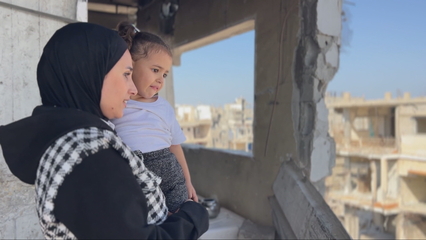
Palestinian mother in Gaza shares struggles of raising children in a warzone
Videos on social media show people scrambling past crumbling barricades, flooded roads and broken glass to get their hands on food, medicine and gas.
Some even waded through waist-deep floodwaters to reach damaged convenience stores.
The annual monsoon season, typically between June and September, often brings heavy rain, triggering landslides and flash floods.
A tropical storm has exacerbated conditions, and the flooding tolls in Indonesia and Thailand rank among the highest in those countries in recent years.
Climate change has affected storm patterns, including the duration and intensity of the season, leading to heavier rainfall, flash flooding and stronger wind gusts.
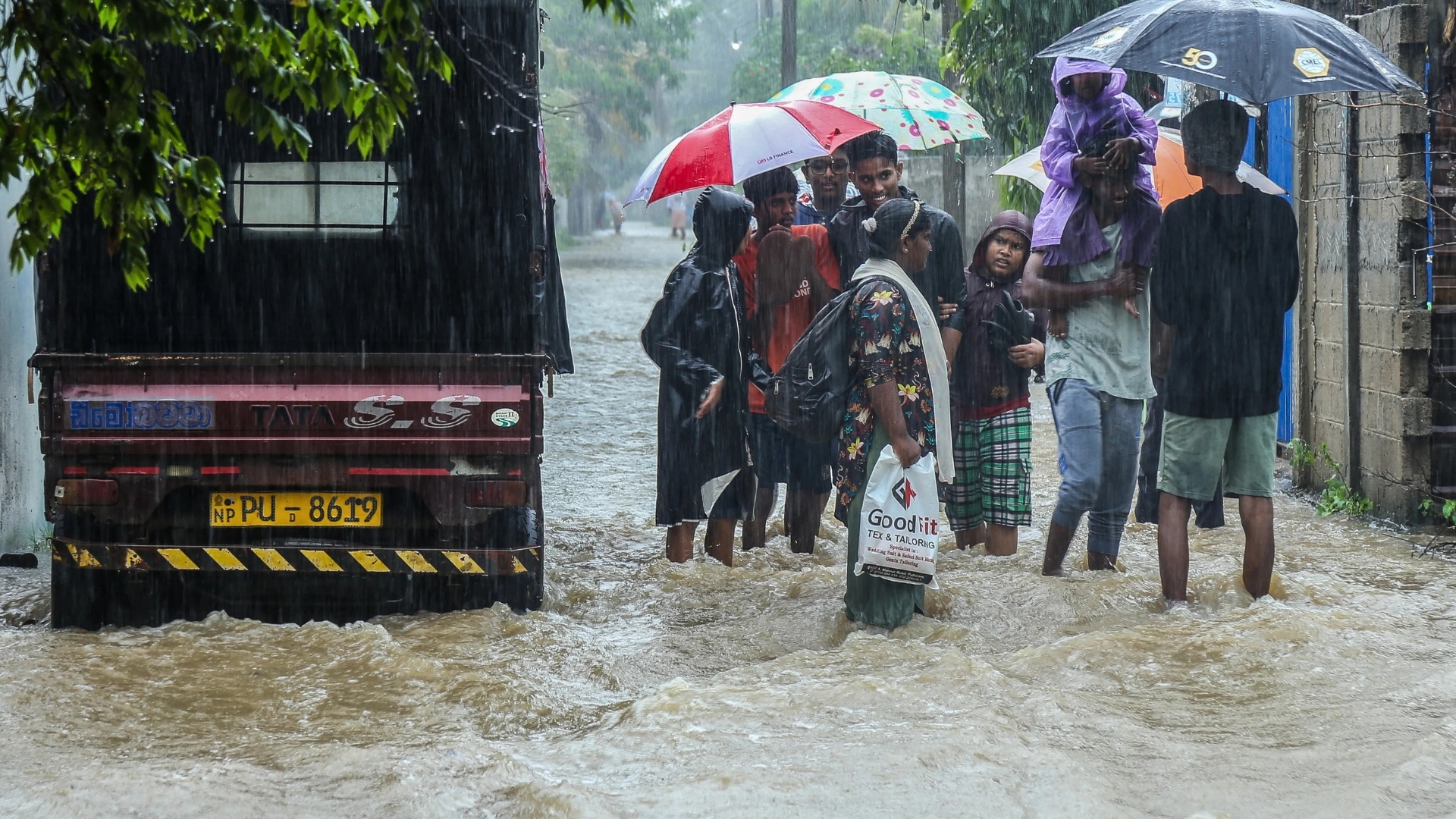
Devastating floods have swept through parts of capital Colombo as Sri Lanka reels from the aftermath of Cyclone Ditwah, with the death toll reaching 193 and 228 people still missing, according to the Disaster Management Centre (DMC).
The cyclone’s weeklong heavy rains triggered widespread flooding and mudslides across the island, with the full extent of destruction in the central region only now becoming apparent as relief workers clear blocked roads.
“Although the cyclone has left us, heavy rains upstream are now flooding low-lying areas along the banks of the Kelani River,” a DMC official said, as northern parts of the capital faced rising floodwaters.
In Wennawatte, a Colombo suburb, 46-year-old Selvi fled her flooded home carrying what possessions she could salvage. “My house is completely flooded. I do not know where to go, but I hope there is some safe shelter where I can take my family,” she told the AFP news agency.
As floodwaters receded in Manampitiya, 250km (155 miles) northeast of Colombo, the scale of destruction became visible.
“Manampitiya is a flood-prone town, but I have never seen such a volume of water,” said 72-year-old resident S Sivanandan, who described extensive damage to businesses and property.
The disaster has created urgent medical needs, with blood supplies critically low. Lakshman Edirisinghe, the blood bank chief, reported receiving only 236 units on Saturday against a daily requirement of 1,500. “Because of floods and heavy rains, we were unable to conduct our mobile campaigns to collect blood,” he said, urging donors to visit blood banks.
Officials warn of continuing landslide risks as mountain slopes remain saturated with rainwater.
President Anura Kumara Dissanayake declared a state of emergency on Saturday and appealed for international assistance. India responded immediately with relief supplies and rescue helicopters, while Pakistan and Japan have also pledged support.
The cyclone has destroyed more than 25,000 homes, forcing 147,000 people into temporary shelters, with another 968,000 requiring assistance after being displaced. Military personnel are working alongside civilian responders in the huge relief effort.
This marks Sri Lanka’s deadliest natural disaster since 2017, when floods and landslides killed more than 200 people. The country’s worst flooding this century occurred in June 2003, killing 254 people.
Women and children ride on a boat after being rescued from a flooded area, following Cyclone Ditwah in Kelaniya, Sri Lanka. [Thilina Kaluthotage/Reuters]
A man with his belongings wades through floodwaters outside his house in Wellampitiya on the outskirts of Colombo. [Ishara S Kodikara/AFP]
A tree is uprooted in front of a residential building partially damaged by heavy rains in Colombo. [Eranga Jayawardena/AP Photo]
A man wades through a flooded road carrying a cat in Colombo. [Eranga Jayawardena/AP Photo]
Volunteers help carry an old woman to a boat as they shift her to a safe place from a submerged neighborhood in Colombo. [Eranga Jayawardena/AP Photo]
Sri Lankan authorities battled rising floodwaters in parts of the capital on November 30 after the powerful Cyclone Ditwah left a trail of destruction, killing at least 159 people across the country. [Ishara S Kodikara/AFP]
A man packs his belongings as he stands inside his house partially submerged in floodwaters after heavy rainfall in Kaduwela on the outskirts of Colombo. [Ishara S Kodikara/AFP]
A man walks on a flooded street as a woman stands at the entrance to her home in Colombo. [Eranga Jayawardena/AP Photo]
Landslide survivors cross a section of a road that is blocked by debris in Hanguranketha, Sri Lanka. [Lakshmen Neelawathura/AP Photo]
Senegal is at loggerheads with the International Monetary Fund (IMF) over a bailout it urgently needs to plug a gaping hole in its public finances. While the IMF wants the West African nation to undertake a painful restructuring before it will agree to a bailout, Senegal, which was recently downgraded to deep within “junk bond” status, is resisting this plan.
Earlier this month, credit rating agency S&P lowered Senegal to CCC+, citing the fragile country’s poor government finances. “Despite actions taken to boost growth and tax collection, the level of debt and size of the interest bill mean Senegal’s public finances remain precarious, particularly in the absence of a comprehensive official support programme,” S&P said on November 14.
Last year, the IMF suspended a $1.8bn funding package for Senegal after the government discovered $7bn in borrowing, which had been concealed by the previous administration.
Negotiations between Dakar and the IMF for a new bailout package are continuing as they hammer out what the government must do to restore public finances. But the two sides have so far failed to agree on a path forward.
How high is Senegal’s public debt?
In its latest rating review, S&P estimated Senegal’s public debt had risen to $42.1bn, or 119 percent of gross domestic product (GDP), at the end of 2024, making it one of the most indebted countries in Africa. That figure excluded about 9 percent of GDP in debt owed by state-owned enterprises (SOEs).
Since 2008, Senegal has leaned heavily on borrowing to fund infrastructure projects. But during the COVID-19 crisis and subsequent jump in global interest rates, which made debt more expensive, costs soared as income fell. In turn, Senegal’s fiscal pressures grew significantly.
To address its debt load, the government is now hoping to shrink the fiscal deficit – the amount by which public spending exceeds taxes coming into the public purse – from 12.6 percent of GDP in 2024 to to 5.4 percent by next year and narrowing to just 3 percent of GDP by 2027.
But S&P’s outlook is far less rosy. The agency is forecasting a fiscal deficit of 8.1 percent of GDP next year and 6.8 percent of GDP in 2027. As such, S&P estimates that the debt-to-GDP ratio will peak at 123 percent next year, before falling slightly in 2027.
3:14
Now Playing
03:14
Senegal financial crisis: Billions of debts uncovered
Next
02:36
Sudan’s war cripples economy, leaving many struggling to afford basic necessities
02:25
Hondurans vote amid deepening jobs crisis
02:16
Pope set to visit Lebanon: Christians hope for greater stability
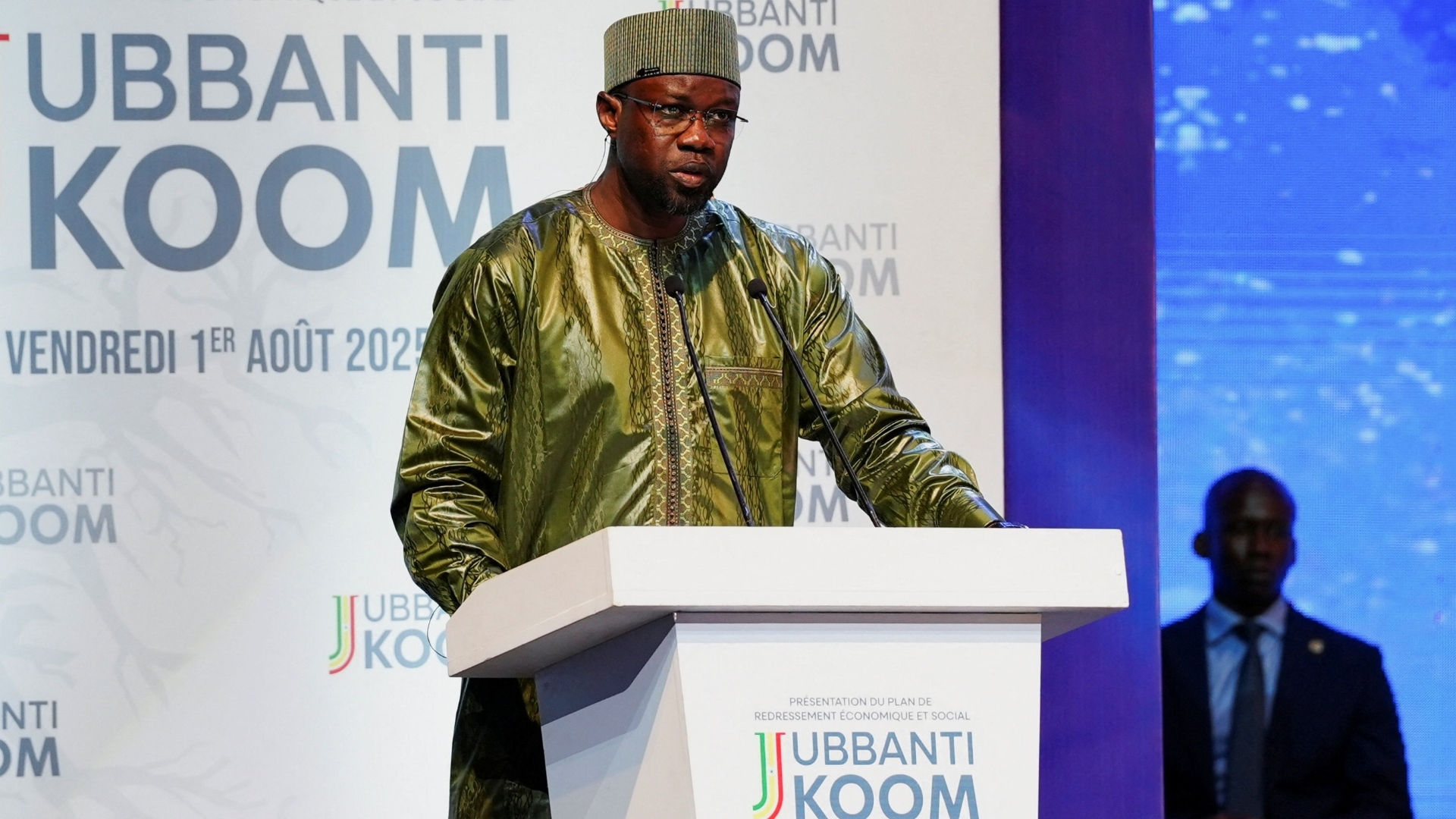
In March 2024, Bassirou Diomaye Faye won Senegal’s presidential election. He ran in place of the disqualified opposition figure Ousmane Sonko, who had been barred from the election over a libel case involving the then-tourism minister. But after the vote, Sonko became Faye’s prime minister.
In September 2024, the new Pastef party government ordered an audit of the country’s public finances. Senegal’s court of auditors discovered that the previous administration, under President Macky Sall, had significantly understated the level of public debt.
The court estimated that Senegal’s real debt-to-GDP ratio was closer to 100 percent, compared with the roughly 70 percent which had earlier been reported, revealing almost $7bn in undisclosed borrowing, which largely stemmed from not including the liabilities of SOEs.
The IMF endorsed the auditors’ assessment, calling it a “conscious decision” by the Sall administration to mask the true extent of Senegal’s debt. The IMF then suspended its $1.8bn loan package with Senegal, which it had approved in 2023.
IMF loan packages are typically paid over in tranches. By the time it pulled the plug on the Senegal programme, the IMF has already disbursed $700m of the full amount. The IMF’s executive board must now decide whether to continue with the arrangement. If its review goes against Dakar, the board could ask the government to repay the disbursed funds.
If its review is favourable, the IMF could decide to keep the programme in place and release the next instalment of funding soon.
For context, the IMF’s $1.8bn loan is equivalent to roughly half of Senegal’s 2024 deficit. The upshot is that it would provide essential funds for public spending. Without it, Senegal will face a big financing shortfall.
Presidential candidate Bassirou Diomaye Faye, backed by Senegalese opposition leader Ousmane Sonko, gestures after casting his vote in the presidential election at the polling station at Ndiaganiao in Mbour, Senegal, on March 24, 2024 [Abdou Karim Ndoye/Reuters]
Why hasn’t the IMF reached a decision about this yet?
On November 6, following a two-week visit to the West African nation, the IMF mission chief for Senegal, Edward Gemayel, said, “We’re engaged and determined to move as fast as possible to help.”
A few days later, Prime Minister Sonko revealed that Gemayel’s team had urged Senegal to carry out a restructuring – in which old debt is swapped for new debt with longer maturities, lower interest rates, or a reduced debt stock – so the country repays less. But these arrangements generally lead to reduced public spending and slower growth.
Countries that default on their debt typically struggle because they are forced to cut spending to stabilise their finances, leaving less money for public services and investment. Investor confidence also tends to fall, making it harder and more expensive for governments to borrow.
At a meeting of Pastef officials on November 8, Sonko, who has considerable influence over economic policy, said he had rejected the IMF’s proposal to restructure Senegal’s debt. But his decision to reject the IMF’s plan has left Dakar with few options to narrow his country’s fiscal gap.
Looking ahead, the prime minister will have to convince the Washington-based IMF to release its paused loan by presenting a credible fiscal plan that restores Senegal’s finances without resorting to a debt restructuring.
But Gemayel has already cautioned that the government’s 2026 budget is “very ambitious”, citing large tax increases. “We’ve never seen this before,” he said. “So, they need to be careful.”
What has the impact of this been on Senegal’s economy?
Sonko’s decision to reject the IMF’s restructuring plan has rattled investors. On Monday, November 10 – the first trading day after Sonko’s cabinet meeting – Senegal’s 2031-dollar bonds fell by 4 percent to $73.1. Elsewhere, its notes due in 2048 fell by 2.4 cents to $60.30.
“The bonds dropped as market players reacted to the IMF having requested a restructuring,” said Leeuwner Esterhuysen, an Africa analyst at Oxford Economics. “There’s clearly a high degree of debt distress and little prospect of IMF funding anytime soon.”
“It seems the Fund is making a new loan contingent on Dakar accepting a restructuring,” Esterhuysen told Al Jazeera. “For now, the government isn’t playing ball … which will extend the stalemate,” he said.
Another sign of market anxiety is that the cost of insurance against default – in the form of credit-default swaps – almost doubled in the days leading up to November 12, rising from 750 to 1,120 basis points, or 3.7 percentage points.
During a speech at a rally in Dakar on November 11, Sonko insisted, “Senegal is a proud nation. We will not be treated like a failed state. Mobilising tax revenue is better than accepting a debt restructuring.”
Since 2020, Zambia, Ghana, Ethiopia, and Chad have all been forced to restructure their debt. But the long and drawn-out process, and accompanying economic hardship, have made debt rewrites unpalatable for other African governments.
Kenya, another debt-strapped country, instead opted for costly trade-offs – tax hikes and subsidy cuts – last year. The measures were aimed at reducing Kenya’s budget deficit. But they also sparked deadly protests, highlighting the political risks associated with austerity.
An electoral billboard for the Senegalese presidential candidate Bassirou Diomaye Faye, backed by opposition leader Ousmane Sonko, in Dakar, Senegal, on March 20, 2024 [Luc Gnago/Reuters]
How has this affected the political situation in Senegal?
Sonko is opposed to an IMF-backed restructuring because “he doesn’t want to undermine his 2024 election campaign pledge to restore Senegal’s sovereignty”, said Paul Melly, a consulting fellow on the Africa programme at Chatham House.
Melly also noted that Sonko is contending with “tensions” between himself and President Faye. Earlier this month, it emerged that Sonko’s party rejected Faye’s attempt to lead a revamped coalition, a move viewed as an effort to consolidate power.
And though Sonko serves under Faye, he is widely viewed as a key power broker, often shaping policy on his own terms. “Sonko was never going to be a subordinate prime minister,” Melly told Al Jazeera.
As such, Senegal’s fiscal position represents a major political challenge for Sonko. He still wants to assert his “sovereignty” line, but may need to impose unpopular spending cuts to stay ahead of debt repayments.
2:37
How else could Senegal address its debt problem?
In recent weeks, the government has introduced new levies on tobacco, alcohol, gambling and widely used mobile money transfers. It has also made efforts to cut back on travel outlays and car purchases as part of its internal efforts to cut spending.
“It’s a tricky balance,” said Melly. “Expectations remain high even as the economic challenges are huge.”
If the government concedes to the IMF, “it may result in voter disillusionment at the next municipal elections in early 2027.” It may also result in civil strife.