Friday, July 31, 2026

TI: The week in Corruption in the USA and misc. news


What would you do with US$2.2 billion? Some help with the maths: that's close to Guinea-Bissau's entire annual economy. The number may sound familiar. It is how much money US President Donald Trump made in 2025, his first year back in the White House.

The largest single source of that income – US$1.4 billion – came from cryptocurrency ventures, including decentralised finance (DeFi), tokens and meme coins.

Trump at the Congressional picnic in May 2026 (Photo: White House)

Trump released this information in late June as a legally required financial disclosure report. The scale of the figure has shocked many and raised serious questions about an unprecedented conflict of interest for a US president.   

Rules are not the same for everybody 

The US has relied almost entirely on historical and cultural norms – rather than laws or enforceable rules – to curb executive conflicts of interest.

In the 1970s, then-US President Jimmy Carter put his peanut farm in a blind trust – an investment shielded from his view – to avoid conflicts in agriculture policy. In the late 1990s, before becoming president, George W. Bush sold his ownership interest in a professional baseball team. More recently, Presidents Barack Obama and Joe Biden held only treasury notes, mutual funds and other diversified assets to avoid conflicts. 

All these decisions were voluntary. US ethics laws do not extend to the President, the Vice President or their immediate families. However, the divestment from potentially conflicted assets had become so routine that no one prioritised the adoption of legally enforceable mandates. 

That custom ended with the election of Donald Trump.

Who's really benefiting? 

The timing of the financial disclosure report coincides with a strong presidential push for the US Congress to pass comprehensive but light-touch regulation of the US cryptocurrency markets. Critics warn that, in its current form, the bill would let Trump and his family continue with their lucrative crypto business.

The cryptocurrency assets are just one of many examples of Trump’s presidential conflicts. He recently touted Dell, a computer company, at a political speech that was widely reported in the media. He urged supporters to “go out and buy a Dell.” The President did not mention that he had recently purchased at least US$1 million in Dell stock. A CNN investigation found that Trump promoted at least 20 companies on Truth Social shortly after purchasing stock in those companies.  

The White House has strongly denied that Trump has ever used his office for financial gain. The President himself has repeated, in speeches and across legacy and social media, that his assets are in a trust that he does not control. The oversight of his businesses has been handed to his adult children.  

Cryptocurrency could not be more different from a peanut farm, but there is a more striking difference: Trump’s trust is not blind; it’s revocable, so he can see what he owns and reclaim control of it at any time. 

The one office that can't recuse itself 

US politicians have long benefited from large contributions to their political campaigns. Those conflicts are well documented and concerning but, compared to previous presidents, the US public has never witnessed enrichment on this grand scale. 

While other US public officials – judges, members of Congress and local legislators – can recuse themselves from specific decisions when conflicts of interest arise, the presidency is a unique office. He alone must sign or veto bills. He can nominate and fire cabinet officials, and otherwise directs the executive branch. In short, the president cannot recuse himself. Considering that context, it is counterintuitive to exempt the office from conflict-of-interest rules.

While unprecedented and shocking for a sitting president, the alarming takeaway is that most of Trump's conflicted actions are currently legal. 

Real-world harm 

Ignoring executive ethics standards has consequences for citizens. 

Trump’s crypto ventures included selling meme coins. He made upwards of US$600 million from the sale and pocketed the proceeds. The value of the coins then cratered, and buyers lost approximately US$3.8 billion. 

Representation of the $Trump meme coin (Photo: Jonathan Raa/NurPhoto via AFP)

The light-touch crypto regulation moving through Congress would provide a veneer of credibility to the industry without effective sector accountability, according to Transparency International US, our chapter in the country.  

The crypto bill omits any meaningful safeguards against illicit finance. In fact, one version of the bill includes language that precludes the US Treasury Department from “ever” issuing anti-money laundering obligations for DeFi platforms, a provision that could codify a safe haven for corrupt and criminal networks to exploit the US crypto market. 

What needs to change 

Trump may be the first president to ignore historical practice, but, if left unaddressed, he won’t be the last, warns Transparency International US. 

Beyond the immediate necessary fixes to the crypto bill, a good start to ethics reforms in the US would be to: 

  • Extend the ethics law mandates to the President, Vice President and their immediate families. 
  • Go beyond disclosure, mandate divestiture of single company and industry assets upon entering the office. 
  • Require placement of the proceeds in a blind trust, treasury notes or sufficiently diversified assets for the duration of the term. 
  • Ban presidential side hustles including the promotion of products or services for private self-enrichment purposes. 
  • Adopt independent enforcement mechanisms that include appropriate roles for subnational level and private actions. 

Relying solely on trust that public officials will act honourably now looks like a risky proposition. Trump has publicly recognised that he is not following historical norms. "I found out that nobody cared," the President told The New York Times in January, when he was asked about the limits on his family’s business ventures.  

The scale of Trump’s wealth and his readiness to break unwritten norms should be a wake-up call. US policymakers should enact clear rules and enforceable mandates that ensure current and future US leaders cannot easily violate the public trust with impunity. 

Recommended Reading
Stopping corrupt wealth from crossing borders

The rescheduled UK Illicit Finance Summit, now set for December, is a chance to secure coordinated global action against dirty money flows.

​​​​In an open letter, 76 civil society organisations, including 30 Transparency International chapters, are urging the UK government to use the extra time to build ambitious, measurable commitments shaped by those most affected by corruption.

With the UK also taking up the next G20 presidency, this opportunity must not be wasted. 

COP31's blind spot: mega-polluters, unchecked 

Oil hit US$100 a barrel again a few days ago, another reminder of the price of staying hooked on fossil fuels.

In November, Türkiye and Australia co-host COP31 in Antalya, where governments will negotiate what comes next for global climate action. Our new policy paper argues that COP31's credibility will depend as much on the integrity of its Presidency as on the ambition of the negotiations.

We call on the co-hosts to adopt public declarations of interest, transparent procurement and an open lobbying register – closing the gaps that have let industry influence erode trust at past COPs. 


CAIR-NJ Condemns Neo-Nazi Vandalism Targeting Synagogue

 The New Jersey chapter of the Council on American-Islamic Relations (CAIR-NJ), the nation’s largest Muslim civil rights and advocacy organization, today condemned the reported neo-Nazi vandalism targeting a synagogue in Lakewood, New Jersey, in what authorities are investigating as an antisemitic bias incident.

Nazi swastikas were discovered inside the synagogue, prompting an investigation by law enforcement. CAIR-NJ welcomed a thorough investigation into the incident and urged authorities to hold those responsible fully accountable.

In a statement, CAIR-NJ Public Affairs Director Naureen Akhter said:

“We strongly condemn this hateful act targeting a house of worship and stand in solidarity with the Jewish community in Lakewood and across New Jersey. Nazi swastikas are symbols of terror and genocide, and their use to intimidate worshippers is an attack not only on one faith community but on our shared values of religious freedom and human dignity. We urge law enforcement to conduct a full investigation and ensure those responsible are brought to justice.”

She noted that earlier today, CAIR’s Michigan chapter condemned the distribution of antisemitic flyers to homes in Berkley and Southfield.

Washington, D.C., based CAIR and the American Muslim community stand in solidarity with all those challenging antisemitism, systemic anti-Black racism, xenophobia, Islamophobia, white supremacy, and all other forms of bigotry. 

CAIR’s mission is to protect civil rights, enhance understanding of Islam, promote justice, and empower American Muslims.

END

CAIR Maryland Condemns ICE Arrest of Johns Hopkins Researcher


CAIR Maryland Condemns ICE Arrest of Johns Hopkins Researcher at BWI Airport, Seeks Due Process and Immediate Release


The Maryland office of the Council on American-Islamic Relations (CAIR), the nation’s largest Muslim civil rights and advocacy organization, today condemned the arrest and detention of a Johns Hopkins University public health researcher by U.S. Immigration and Customs Enforcement (ICE) agents at Baltimore-Washington International Thurgood Marshall Airport.

According to media reports, Dr. Fatima Ameaka, a researcher employed by the Johns Hopkins Bloomberg School of Public Health, was detained and taken into custody by ICE on July 28 while preparing to board a domestic flight for a personal trip.

The Department of Homeland Security reportedly claims that Dr. Ameaka entered the United States in 2023 on a visa that has since expired. She is being held in ICE custody while awaiting an immigration court hearing.

Johns Hopkins University has affirmed Dr. Ameaka as a respected member of its community, expressed deep concern about her detention and said it is working to ensure that she has access to legal representation.

SEE: Johns Hopkins Researcher Arrested by ICE at BWI Amid Increased Airport Enforcement

In a statement, CAIR Maryland Director Zainab Chaudry said:

“The arrest of a respected public health researcher while she was preparing to board a domestic flight is deeply alarming and reflects the Trump administration’s escalating campaign of intimidation against immigrant communities.

“Dr. Ameaka did not pose a threat to public safety. Treating people suspected of civil immigration violations like dangerous criminals, ambushing them in airports and subjecting them to prolonged detention is cruel, unnecessary and fundamentally at odds with the principles of due process and human dignity.

“Airports should not become hunting grounds where federal agents exploit travelers’ personal information to make arrests in secured locations. The reported collaboration between TSA and ICE raises serious civil liberties and privacy concerns for every traveler, particularly immigrants and members of communities already subjected to discriminatory surveillance and profiling.

“We call for Dr. Ameaka’s immediate release, full access to legal counsel and a fair opportunity to resolve her immigration case outside of detention. We also urge Maryland’s congressional delegation to investigate the expanded sharing of domestic travelers’ information between TSA and ICE and to demand transparency about how this enforcement program is being implemented at BWI Airport.

“No one should be disappeared into immigration detention merely for attempting to travel within the country. Our government must stop using fear, humiliation and incarceration as substitutes for a fair and humane immigration system.”

Immigration enforcement at U.S. airports has increased as TSA and ICE expand information-sharing practices. According to media reports, ICE sources said travelers without criminal records may be referred to immigration agents based on suspected civil immigration violations, including visa overstays.

CAIR Maryland urges travelers who believe their civil rights have been violated by immigration or law enforcement authorities to contact an attorney and submit a report to CAIR at CAIR.com/report

CAIR’s mission is to protect civil rights, enhance understanding of Islam, promote justice, and empower American Muslims.

END

CAIR Welcomes Hate Crime Charge for Alleged Assault Targeting Muslim Woman in Vermont

 The Council on American-Islamic Relations (CAIR), the nation’s largest Muslim civil rights and advocacy group, today called welcomed a hate crime charge for an alleged bias-motivated assault targeting Muslim woman in Vermont.

52-year-old Jonathan Strippe of Burlington is facing charges of simple assault, unlawful mischief and hate-motivated crimes after he allegedly assaulted a woman wearing an Islamic head scarf, or hijab, on Tuesday and made derogatory comments to her.

Strippe allegedly “assaulted the victim, damaged her cellphone and made several derogatory statements about her perceived race, religion and country of origin.”

SEE: Man charged with hate-motivated assault of woman wearing hijab in South Burlington

In a statement, CAIR Research and Advocacy Director Corey Saylor said:

“We welcome the decision to pursue a hate crime charge in this disturbing alleged bias-motivated assault. No one should be targeted because they wear religious attire or because of their faith or perceived background. We thank law enforcement for recognizing the alleged bias motivation in this case and urge prosecutors to pursue accountability. Unfortunately, this incident is part of a broader pattern of rising anti-Muslim harassment and violence that underscores the need for continued vigilance against hate.”

He noted that CAIR’s latest civil rights report documented 8,683 anti-Muslim bias complaints in 2025 – the highest number ever recorded by the organization since it began publishing civil rights reports in 1996.

Earlier this week, CAIR said it has documented 17 incidents targeting Islamic places of worship in May, June, and July to date. The 17 incidents represent 51 percent of the previous year’s total and a 183 percent increase over the same three-month period last year, during which CAIR documented six such incidents.

Yesterday, CAIR welcomed the filing of assault charges against an individual accused of threatening a New Mexico Catholic priest who publicly supported the proposed construction of a mosque in Albuquerque’s North Valley.

CAIR’s mission is to protect civil rights, enhance understanding of Islam, promote justice, and empower American Muslims. 

La misión de CAIR es proteger las libertades civiles, mejorar la comprensión del Islam, promover la justicia, y empoderar a los musulmanes en los Estados Unidos.   

END

Video: Mohammad Marandi vs Alan Dershowitz on Iran


https://www.youtube.com/watch?v=7Li7erGp46k


“YOU’RE The Evil Monster!” Mohammad Marandi vs Alan Dershowitz on Iran | Plus Netanyahu Spokesman

Several towns in Nepal under curfew after sectarian violence

 KATHMANDU, July 31 (Reuters) - Several towns in southeastern Nepal remained under curfew on Friday as the region grappled with lingering ​tensions after days of sectarian violence that erupted on ‌Sunday and left at least three people dead, authorities said.

Twenty-five people were injured in a late-night clash on Sunday between Hindus and Muslims in ​Diwanganj, a town in Nepal's Sunsari district bordering India, ​with officials saying the violence was triggered by a ⁠dispute over loud music and religious flags during a Hindu ​event.
Two men were shot and killed in Sunsari on Sunday ​and a third death was reported in neighbouring Siraha district on Thursday as sporadic clashes continued in the area. Police spokesperson Abi Narayan Kafle said ​the incidents were under investigation.
There was no violence on Friday, ​police said, but an indefinite curfew was in place in several towns ‌to ⁠prevent any recurrence.
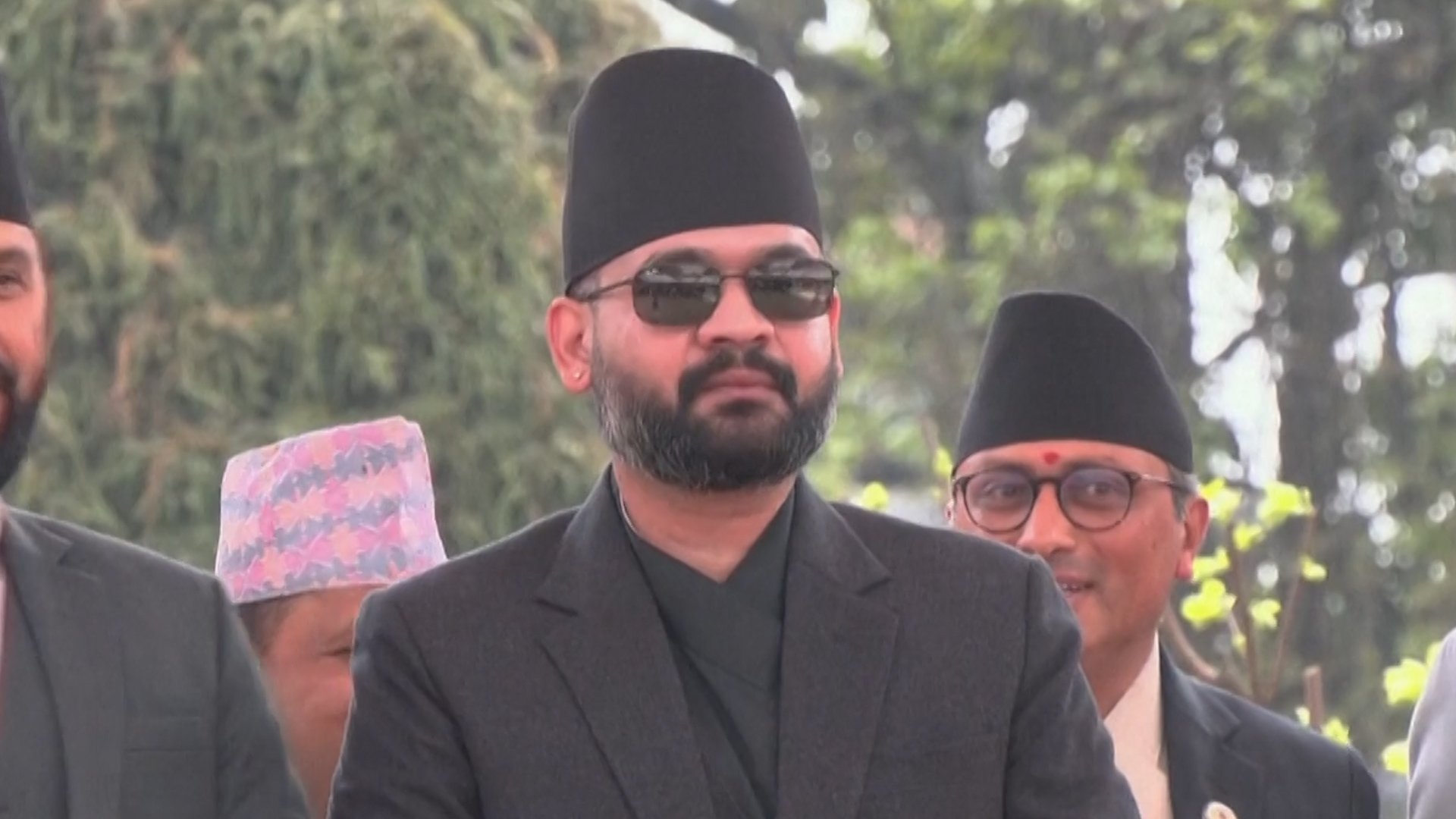
Nepal's Gen Z-backed Prime Minister Balendra Shah urged people on Thursday for calm and to remove the "cloud of turbulence" from the Himalayan nation.
"The government will conduct a fair and impartial ​investigation into the ​violence and ⁠punish those responsible for the trouble in a transparent way," Shah said in a rare, televised ​address to the nation.
The country's Home Minister Sudan ​Gurung ⁠met the families of the two killed in Sunsari and agreed to provide about $6,660 in relief to each late on Thursday, the ⁠government ​said in a statement.
Gurung was also expected ​to go to Siraha on Friday and meet the family of the third ​person who was killed.
Item 1 of 6 Smoke and fire rise from a mall after it was vandalised following a clash between two communities in Siraha, Nepal, July 30, 2026. Picture taken with a mobile phone. REUTERS/Stringer

Nepal’s PM urges calm as three people killed after Hindu-Muslim unrest

 Nepal’s Prime Minister Balendra Shah has called for calm after clashes between Hindu and Muslim groups in the country’s south have left three people dead.

Shah, who has rarely appeared in public since taking office in March, broke that silence on Thursday with his first major address to the nation. He urged citizens to act responsibly and help “remove the clouds of unrest”.

Recommended Stories

list of 3 itemsend of list

The violence began Sunday in a village in Sunsari district, near the Indian border, after a dispute between some Hindus and Muslims over loud music and religious flags during a Hindu procession, officials said. Police opened fire to disperse the crowd, killing two men, according to police spokesman Abi Narayan Kafle. A third man died Thursday during a protest in nearby Siraha district, despite a curfew being in place.

Authorities have imposed curfews across Sunsari and neighbouring districts to prevent further clashes.

“I, on behalf of the government, sincerely appeal to the citizens, civil society, religious communities, all respected leaders, all political parties and responsible media, to exercise patience and restraint and maintain peace, harmony, brotherhood and national unity,” Shah said.

He promised a “completely fair and transparent” investigation, adding that those responsible would be brought to justice.

Police say they are working to restore order. “We have kept all police officials in the field on alert and are trying to protect public property and prevent any conflicting situation with minimal use of force,” Kafle told the AFP news agency.

Hindus make up about 80 percent of Nepal’s population, but the country’s south has sizeable Muslim populations.

India’s parliamentary panel seeks fresh Bangladesh ties amid China concerns, water disputes

 An Indian parliamentary committee has called for a diplomatic reset with Bangladesh, urging deeper engagement with Prime Minister Tarique Rahman’s administration while addressing concerns over China’s growing footprint.

The Committee on External Affairs, chaired by Shashi Tharoor, presented its 15th Action Taken Report to the Lok Sabha on Jul 30, recommending a “robust engagement” with Dhaka after the return of an elected government.

The panel welcomed India’s high-level representation at the swearing-in ceremony of the new administration, saying the political transition offered an opportunity to build a stable and mutually beneficial partnership rooted in the shared legacy of 1971.

A major focus of the report was Bangladesh’s growing economic alignment with China.

The committee flagged Beijing’s expanding presence in Bangladesh, including a $370 million expansion project at Mongla Port, and warned of possible trade distortions for India if Chinese goods enter its market through Bangladesh.

The panel expressed particular concern over Bangladesh’s potential accession to the Regional Comprehensive Economic Partnership (RCEP), which could create a free trade framework between Dhaka and Beijing.

It warned that Chinese fabrics and manufactured goods could potentially reach Indian markets through transshipment or value-addition loopholes under SAFTA rules.

The committee recommended stricter rules-of-origin checks to protect Indian industries.

The concerns come amid deeper Dhaka-Beijing engagement. During Tarique’s recent visit to China, Chinese Premier Li Qiang and President Xi Jinping backed Bangladesh’s application to join RCEP.

During the visit, Bangladesh and China signed 13 memoranda of understanding covering trade expansion, a dedicated Chinese Economic Zone in Chattogram, Mongla Port modernisation and possible cooperation on Teesta River projects.

The Indian panel also highlighted the urgency of renewing the 1996 Ganges Water Treaty before it expires in December 2026.

It urged New Delhi to complete its internal assessment, including reviews of hydrological data, climate projections and consultations with West Bengal and Bihar, so formal negotiations with Bangladesh can begin without delay.

The report reviewed India’s development cooperation with Bangladesh as well. Twelve pre-execution Line of Credit projects were removed after joint reviews, while eight ongoing connectivity projects involving railways, power transmission and road expansion were prioritised for completion within a fixed timeline.

On security, the committee recommended completing unfenced sections of the India-Bangladesh border and using smart technologies alongside regular coordination between the Border Security Force (BSF) and Border Guard Bangladesh (BGB).

The report said a stable, democratic and inclusive Bangladesh was vital for regional security and recommended restarting structured parliamentary exchanges and expanding educational and skill-development programmes between the two countries.

Source: https://thefinancialexpress.com.bd/national/indias-parliamentary-panel-seeks-fresh-bangladesh-ties-amid-china-concerns-water-disputes

US envoy Sergio Gor leads delegation to Rohingya camps in Cox's Bazar


US envoy Sergio Gor leads delegation to Rohingya camps in Cox's BazarUS special envoy Sergio Gor visits Rohingya camps. Photo: Collected

A high-level United States delegation led by Special Envoy for South and Central Asia Sergio Gor visited Rohingya refugee camps in Cox's Bazar on Friday to assess the condition of displaced people from Myanmar living in the camps.

The 14-member delegation, which includes US Ambassador to Bangladesh Brent T. Christensen, arrived at Cox's Bazar Airport at around 12:00pm before travelling directly to the Rohingya camps in Ukhiya.

According to officials of the Refugee Relief and Repatriation Commission (RRRC), the delegation first visited World Food Programme (WFP) projects at Rohingya Camp 4 to observe ongoing humanitarian assistance.

The delegation is also scheduled to visit Extension 8W camp and Camp 6 to inspect the living conditions of the displaced Rohingya and review relief operations.

Following the camp visits, the US delegation is expected to hold a meeting with the Refugee Relief and Repatriation Commissioner and other officials at North End Coffee Restaurant in Ukhiya.

The delegation is scheduled to depart for Dhaka later in the evening after concluding its visit.

The visit comes amid continued international efforts to support humanitarian assistance for more than one million Rohingya refugees sheltered in camps in Cox's Bazar and to seek a durable solution to the protracted crisis.

MN/ 

Appeal for Information on a Family Lost in the Shantahar Tragedy (1971)

 My classmate, Cadet Arshad Jamal, is one of the few survivors of the horrific massacre of the Bihari community in Shantahar on April 17–18, 1971, during the War of Liberation. His father (Abdul Ahad) — shown seated at the center in the photograph — had passed away three months before the turmoil engulfed East Pakistan, spared from witnessing the unspeakable violence that would soon claim so many lives.


Arshad himself — shown standing in the picture — survived only because one of our cadetmates, Ruhul Rabban (Baten), risked everything to save him. Ruhul Rabban sheltered Arshad and his immediate younger brother Kokab (not shown in the picture below) for two months (in his village home, 80 km from Naogaon/Shantahar), protecting them until in May when Pakistan military sheltered them. He and Kokab later lived with close relatives in Dhaka. Then after the fall of Dhaka, they took shelter in Dhaka Cantonment, managed by Indian Army and were taken as POWs — part of a group that included civilians seeking refuge alongside Pakistani military personnel.

Arshad’s older brother (Manzar) — seated beside their father — also survived the Shantahar tragedy and later settled in Karachi, where he passed away of natural causes. One of Arshad’s sisters, Tahera — standing in the middle among her sisters — was in Dhaka during the Holocaust and survived; she too later died in Karachi. Another older brother, Zubair Ahmed, who was in Dhaka, serving PIA, also survived.

But the fate of the rest of his family remains shrouded in uncertainty and grief.

Arshad fears that his mother — seated in the photograph — and his two sisters, Shanaz (about 22 years old at the time, a B.Com student at Eden Girls' College, Dhaka, shown standing beside him) and Sarwarnaz (then 16 years old, shown standing at the corner), as well as his youngest brother Nayyer (about 8 years old and not pictured), may have been killed during the violence. Yet he has never been able to confirm what truly happened to them.

For decades, Arshad has been searching — desperately, tirelessly — for any trace of his lost family in Bangladesh. Their disappearance remains an open wound, a story unfinished, a grief without closure.

If you have any information about the Abdul Ahad/Jamal family of Shantahar — survivors, witnesses, neighbors, or anyone who may have known them — please contact me. Even the smallest detail may help bring long‑awaited answers to a man who has carried this burden for more than half a century.

Thank you.

Habib Siddiqui

From Tehran to Riyadh: How Israel Draws the Red Lines America Can’t Cross by Jamal Kanj

 Israel dragged America into another war, then sat back on the spectator bench and watched U.S. taxpayers foot the bill. Borrowed money burned into bombs. Billions more bled out at gas stations and in inflation, all to reopen a strait that was open before Donald was duped into fighting Benjamin’s war. Now Benjamin Netanyahu watches from a safe distance, gloating as missiles fly between the U.S. forces and Iran in a war he spent years pushing Washington to fight.

At home, flag-draped caskets of American soldiers arriving home from a war Israel instigated and American soldiers carried out. In Congress, Secretary of War Pete Hegseth stood before the Senate requesting more money to keep the war running. Lawmakers asked to sign the check for a war they never voted to authorize, fought for aims Washington did not set, with no accounting of when — or how— it ends.

In occupied Palestine, Israeli Finance Minister Bezalel Smotrich tells a settler conference that “Israel has no interest in joining the campaign . . . a confined campaign between Iran and the United States, is the correct [situation] and best for us [Israel].” In layman language, let’s sit and watch Americans die and pay for our war.

Exhibit A: the U.S. military is depleting its own missile-defense stockpiles defending its bases across the region, while Israel hoards its interceptors in reserve. Israel isn’t spending down its stockpile. It’s waiting for the moment American stocks run dry and the Gulf states are left exposed. When that moment comes, Israeli interceptors will become prized leverage, offered to the UAE and the rest of the Gulf at a price.

Last Sunday on Fox News, Netanyahu outlined to America his goals for the war against Iran. A foreign prime minister, on American airwaves, essentially setting the terms and the finish line for an American war, fought by American pilots, funded by American taxpayers, and now apparently concluded at Israel’s discretion. Whatever Trump negotiates, whatever Washington decides, Netanyahu has already told America it doesn’t matter. He isn’t waiting to end the war on Israel’s terms. He’s informing it.

But it is not only America’s war policy that runs through Tel Aviv. It is diplomacy and commerce too. When Washington signed a civilian nuclear cooperation agreement with Saudi Arabia, and the deal was announced, ink dry, both governments on record. Within a day, President Trump reversed course, declaring the agreement was contingent on Saudi normalization with Israel.

Israeli officials do not even try to be diplomatic on how they run Washington policy. Before Trump added the new condition, Israel’s Culture and Sports Minister, Miki Zohar, told Army Radio that “Israel has been clear with the United States about its red lines.”  Those are the words of a government that understands it holds a veto pen, set red lines, and where America listens.

Think about it, an Israeli minister speaks openly of red Ines over an American commercial and strategic agreement with one of the world’s largest oil exporters, a country central to Gulf security architecture Washington has spent decades building. It did not matter that the Saudi deal serves American energy and strategic interests. It mattered only that Tel Aviv had not yet signed off.

The issue isn’t whether Israel tries to shape American war strategy, or whether its leaders draw red lines Washington isn’t allowed to cross. The real question is why American leaders, across the political spectrum, permit a strategically insignificant country to wield such extraordinary influence over the foreign policy of the world’s only superpower.

Israeli red lines prompted America’s Israel-first loyalists to abruptly discover the agreement was a nuclear proliferation threat. For decades, they have defended, excused, or ignored Israel’s undeclared nuclear arsenal. Yet the prospect of a Saudi civilian nuclear program suddenly provokes moral outrage. The issue was never stopping nuclear proliferation. It was about sequencing. They would be willing to kosher a Saudi civilian nuclear program the day after, not before, it recognizes Israel.

If Arab capitals want an American relationship that serves their own security and economic interests, they need to stop mistaking proximity for leverage. For years the strategy has been to buy access, funneling billions to powerful intermediaries like Jared Kushner, treating him as the private door into the Oval Office. But Kushner is no neutral broker. He is an Israel-first advocate who built his post-White House fortune partly on Arab capital while shaping Middle East policy on Israel’s behalf and now uses his wealth to finance Jewish-only colonies built on stolen Palestinian land.

The United Arab Emirates lived this irony in hard numbers. Kushner sold Abu Dhabi on the Abraham Accords with a promise attached: normalize with Israel, and the most advanced American fighter jet in the world would follow, a $23 billion sale of fifty F-35s. The UAE delivered its half instantly, recognition, embassies, open skies. Washington delivered Israel every benefit of that deal. The jets never came. Years of “technical requirements,” stalled reviews, and quiet reversals later.

Trump wants to sell Saudi Arabia the promise of a commercial agreement, but deliver Israel an immediate recognition. The Arab cow gets milked for capital, investment, and diplomatic goodwill, and when the moment comes to deliver, the payoff is led instead to the Israeli altar. Every dollar spent courting Kushner, every concession made in good faith, has purchased not access but the illusion of it, never enough to collect on.

Arab regimes must understand that neither buying access to the president through Israel-first loyalists like Kushner, nor hosting the American bases that fight wars designed in and for Tel Aviv, will change U.S. policy — not while Israel holds the lobby power to dictate red lines American leaders dare not cross.

Jamal Kanj (jamalkanj.com) is the author of Children of Catastrophe: Journey from a Palestinian Refugee Camp to America, and other books. He writes frequently on Palestine/Arab world issues for various national and international publications.

Eid days are state holidays now in the state of California

  California now officially recognizes Eid al-Fitr and Eid al-Adha as state holidays. On Monday, Gov. Gavin Newsom signed AB 2017, the Calif...