Friday, January 3, 2025

Israeli Settler Violence in 2024 Highest Since the UN Began Keeping Track


About 1,400 incidents of Israeli settler violence were recorded

The UN’s Office for the Coordination of Humanitarian Affairs (OCHA) said Wednesday that 2024 marked the worst year for Israeli settler violence in the West Bank and East Jerusalem since it began keeping track of such incidents nearly 20 years ago.

OCHA said it recorded about 1,400 incidents of settler violence in 2024, which amounts to nearly four attacks per day. The incidents involved “physical assaults, arson attacks, raids on Palestinian communities, and the destruction of fruit trees.”

Israeli settlers have been increasingly emboldened since the current Netanyahu government took power in December 2022. The coalition government, which includes extremist settlers, released a statement when it was first formed that said it would make West Bank settlement expansion a priority.

The genocidal war in Gaza has also served as a distraction from the situation in the West Bank, which settlers have taken advantage of. Amid the increased settler violence, the Netanyahu government has approved major Israeli land grabs in the occupied territory.

OCHA also said 2024 marked the second deadliest year for Palestinians in the West Bank since it began recording casualties, following 2023, which was the deadliest year. Most of the dead were killed by the Israeli military.

“More than 480 Palestinians, including 91 children, have been killed across the West Bank, including East Jerusalem. Most of them were killed by Israeli forces,” OCHA said.

The office added that Palestinians from the West Bank “killed 35 Israelis, including three children, either in the West Bank or in Israel.”

The incoming Trump administration is expected to be incredibly supportive of Israel’s plans to continue stealing land in the West Bank. President-elect Donald Trump’s pick to serve as ambassador to Israel, Mike Huckabee, is an outspoken proponent of Israel completely taking over the occupied territory, which he calls “Judea and Samira.”

During a visit to a West Bank settlement in 2017, Huckabee said, “I think Israel has title deed to Judea and Samaria. There are certain words I refuse to use. There is no such thing as a West Bank. It’s Judea and Samaria. There’s no such thing as a settlement. They’re communities, they’re neighborhoods, they’re cities. There’s no such thing as an occupation.

Suspect in Las Vegas Cybertruck Bombing Was US Army Green Beret


Matthew Alan Livelsberger was a decorated combat veteran who had been deployed to Afghanistan, Ukraine, Tajikistan, Georgia, and Congo

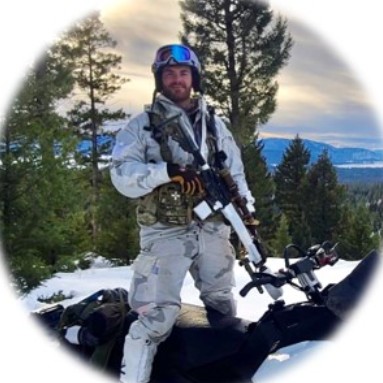
The suspect in Wednesday’s Tesla Cybertruck bombing that occurred outside a Trump hotel in Las Vegas has been identified as 37-year-old Matthew Alan Livelsberger, an active duty US Army Green Beret.

Livelsberger was identified as the person who rented the Cybertruck, and his IDs and credit cards were found in the vehicle, but the body was burned beyond recognition, and authorities say they’re still waiting on a DNA test to confirm his identity.

The Cybertruck was blown up using firework mortars and gas canisters, a crude explosive for someone with Livelsberger’s military experience to use. The body had a gunshot wound to the head, which authorities say was self-inflicted. Since Cybertrucks can be self-driving, some have speculated he could have been dead before arriving at the Trump hotel if the bomb was detonated using a timer.

Las Vegas Sheriff Kevin McMahill said he was “comfortable calling it a suicide with a bombing that occurred immediately after.” No one else was killed in the blast, and seven people nearby sustained minor injuries.

The bombing occurred just a few hours after Shamsud-Din Jabbar, another US Army veteran, plowed a truck into a crowd in New Orleans, killing 15. The FBI has said there’s no “definitive link” between the two incidents, though there are some similarities.

Photo of Livelsberger from his Linkedin account

Both Livelsberger and Jabbar used the app Turo to rent the vehicles they used, and both men had previously served at Fort Bragg in North Carolina, but the fort is one of the largest military bases in the world by population size.

The FBI said Jabbar declared his loyalty to ISIS before the New Orleans attack, but there’s no indication Livelsberger was motivated by anything ISIS-related.

Livelsberger was a decorated combat veteran who had been in the Army for 20 years. The US Army said he had been deployed to Afghanistan twice and also served in Ukraine, Tajikistan, Georgia, and Congo.

The motive for the Cybertruck bombing is unclear. Using a Tesla vehicle in front of a Trump hotel suggests it could have been meant to be symbolic since Tesla CEO Elon Musk has been a major supporter of the president-elect, but a family member of Livelsberger said he was very pro-Trump.

“He loved Trump, and he was always a very, very patriotic soldier, a patriotic American. It’s one of the reasons he was in Special Forces for so many years. It wasn’t just one tour of duty,” his uncle, Dean Livelsberger, told The Independent.

Posts from social media suggest Livelsberger was pro-Ukraine and may have been involved in helping recruit military contractors for the conflict. On his LinkedIn account, Livelsberger commented on a post advertising a 30-day contract in Ukraine for a tactical combat casualty care instructor.

“I’ve got a top 18D [Special Forces medical sergeant] recently ETSd who is looking for just this opportunity, sent him your way,” Livelsberger.

A Facebook photo believed to be from 2016 appears to show Livelsberger wearing a shirt that says, “Slava Ukraini,” which translates to “Glory to Ukraine” in English.

Ryan Routh, who was arrested in September 2024 for allegedly trying to assassinate Trump, was staunchly pro-Ukraine and helped recruit for Ukraine’s foreign legion, suggesting his motive was Trump’s calls to end the war in Ukraine.

Thursday, January 2, 2025

India: Over 400 Christian Leaders Urge President Murmu, PM Modi to Address Anti-Christian Violence

 New Delhi: Over 400 senior Christian leaders and 30 church groups on Tuesday (December 31) have issued an urgent appeal to President Droupadi Murmu and Prime Minister Narendra Modi, calling for immediate action to address the surge in violence against Christians.

The appeal comes after at least 14 incidents of violence, threats, and disruptions targeted Christian gatherings across the country during the Christmas season, the leaders and church groups wrote in a press release.

The signatories, including prominent Christian leaders such as Thomas Abraham, David Onesimu, Joab Lohara, Richard Howell, Mary Scaria, Cedric Prakash S.J., John Dayal, Prakash Louis S.J., Zelhou Keyho, E.H. Kharkongor, Allen Brooks, K. Losii Mao, Akhilesh Edgar, Michael Willams, A.C. Michael and Vijayesh Lal, expressed deep concern over the alarming trend of rising intolerance and hostility.

They pointed to troubling statistics, including over 720 incidents of violence targeting Christians reported to the Evangelical Fellowship of India and 760 cases recorded by the United Christian Forum between January and November 2024.

The appeal highlights systemic concerns, including the misuse of anti-conversion laws, growing threats to religious freedoms, escalating hate speech, and exclusionary policies denying Dalit Christians Scheduled Caste status. The leaders also urged the prime minister to take a visible role in fostering peace and reconciliation in Manipur, where violence has resulted in over 250 deaths, 360 destroyed churches, and thousands displaced since May 2023.

The Christian leaders called on the president and prime minister to take concrete steps to address the situation, including ordering swift and impartial investigations into incidents targeting religious minorities, issuing clear guidelines to state governments on protecting constitutional rights to religious freedom, initiating regular dialogue with representatives of all faith communities, and protecting the fundamental right to freely profess and practice one’s faith.

The appeal emphasises that inclusivity and harmony are vital for India’s moral fabric, economic prosperity, and social unity.

Surviving 2024 in Gaza

 Hassan Abo Qamar


When I was a child, I dreamed of travelling the world, exploring new cultures and learning new things. I yearned for a journey of discovery. Living in Gaza felt like sitting in the stands, watching the world’s achievements – its development, progress and technological marvels – unfold from afar without being able to participate.

It was both a sanctuary and a cage – its regular rhythm comforting yet repetitive, its streets too familiar, its horizons too narrow for the aspirations I carried within me. I cherished its warmth and closeness, but the pull of life beyond its borders was irresistible. I was ready to leave the moment an opportunity came my way.

This year, I did embark on a journey, but not the one that I had dreamed of. Instead of a trip of carefree exploration abroad, I found myself on a journey navigating a genocidal war and a struggle for survival within the narrow strip of Palestinian land I call home. Along the way, I learned a lot – about myself and my inner world.

The “journey” began in January. While most people welcomed the new year under skies filled with fireworks, songs and joy, my sky delivered evacuation orders. Crumpled papers fell on us carrying a message written in Arabic: “Nuseirat camp is too dangerous. Move south for your safety.”

I never thought leaving home would be that difficult. I had always thought of myself as someone who did not have a strong connection to home or homeland. But I was wrong. Leaving felt like abandoning a part of my soul.

My family and I made our way to Rafah to stay with my aunt who gave us a warm welcome. Even though I felt some comfort there, in my mind, all I could think about was my home. So I greeted February, the “month of love”, feeling incredibly homesick and realising just how much I loved the house I had grown up in.

In mid-February, the Israeli military withdrew from Nuseirat, and we hurried back home. It was one of the best moments of the war – and of my entire life – to find my home still intact. Its front door was broken, our belongings were stolen and rubble from the bombing of our neighbour’s home had crashed inside. But it was still standing.

Although destruction surrounded us, the rubble of our neighbourhood still felt warmer than any safe place elsewhere in the world would have. For the first time in my life, I – the grandson of refugees – felt I belonged somewhere. My soul, my identity – they all belonged here.

The joy of being back home was soon overshadowed by the reality of war. March came and brought in the holy month. For Muslims, Ramadan is a time of spiritual peace, prayer and togetherness. But this year, it was filled with loss, separation and deprivation. There were no shared meals or family gatherings, no mosques to pray in – only their rubble.

Instead of tranquillity, we experienced relentless bombardment and terror. The bombs fell without warning, each explosion shattering any sense of safety we may have had. We were being punished, treated as “human animals” – as their defence minister had said – for an unknown crime.

In April, Eid al-Fitr came and went, stripped of the joy that defines this cherished Muslim holiday. There was no children’s laughter to wake us in the morning, no bustling preparations or decorations to welcome guests. Death was the only visitor in Palestinian homes in Gaza.

Then May rolled in and with it an opportunity I had been waiting for my whole life. My family managed to gather enough money to pay an Egyptian company to help me leave Gaza. The process was riddled with uncertainty. There were rumours of scams, bribes and rejections.

The thought of escaping the relentless horror around me was intoxicating. I wanted freedom, but it came at a cost. I was to leave my whole family behind and my home with an uncertain prospect of ever coming back.

To outsiders, this might seem like a simple choice: follow your dreams, take the chance and leave! But for me, it was anything but easy.

One late afternoon, I was sitting with my sister Aya on our rooftop under a sky filled with spy planes when I came to realise the true weight of my decision. Aya, just 15 years old, was full of energy and hope, her light brown eyes shining with ambition. “I want to learn programming like you,” she said with excitement. “I want to start my own business like you. I want to improve my English like you.”

How could I leave her and my family in the midst of war? Did I deserve a better life while Aya stayed behind, struggling to eat, to sleep, to dream? How could I live a life elsewhere, knowing my sister faced nightmares alone? How could I abandon the very land that had made me who I am?

In that moment, I realised my soul would never be free if I abandoned Gaza now, if I dismissed it as a place of rubble and ruin. I realised my identity was tied to this place, this struggle.

When I first told my family that I wanted to stay, they refused to accept it. They insisted I leave to survive, fearing for my safety. After a long back and forth, they eventually respected my decision, but their fear never fully went away.

A few days later, the Israeli army occupied the Rafah crossing, cutting off access to the outside world. I did not regret my decision.

As the Israeli army continued to attack civilian areas all over Gaza, displacing hundreds of thousands of people, it was our turn to host relatives. We welcomed them not as displaced people but as our family. It is our duty to share and stand with each other in times of need. By the fall, we were 30 people in our house.

Over the summer, we began to feel the growing impact of restrictions not only on humanitarian aid but on all paid goods. Basic food items disappeared from markets. Aid organisations struggled to distribute food.

It was increasingly clear that those who survive the bombings would face a different, slower death through starvation. Food rationing became so severe that survival turned into a cruel competition. Life felt more like a jungle where only the strongest could survive.

In the fall, hunger was made worse by the rain and wind. We saw people forced to live in tents overcome by misery.

In November, a family tragedy struck. My eight-year-old cousin Ahmad, who was like a little brother to me, fell from the third floor of our building and suffered a brain haemorrhage. The thought of losing him was overwhelming.

We rushed him to Al-Aqsa Martyrs Hospital, which was overcrowded with the wounded from air strikes and lacked the necessary equipment to perform brain scans. We tried to go to two nearby hospitals, only to be told they too could not do anything for him. By nightfall, we managed to find a medical centre that could help him, but it was far away. Sending him in an ambulance after dark was a huge risk – the vehicle could be targeted by a drone like so many had been. It was a choice between two deaths.

We decided to hang onto hope and sent Ahmad in the ambulance. Even in the darkest of days, miracles happen. Ahmad arrived safely, underwent the necessary surgery and survived. He began to recover although he still needs physical therapy that he cannot receive in Gaza.

As we worried and cared for Ahmad, December came. Soon we heard unexpected news from Syria: The brutal regime there had collapsed. I felt extremely happy.

In Gaza, we have stood in solidarity with the Syrian people for a long time. We know the suffering of war and oppression, and we were genuinely happy to see the Syrian people finally free. Their liberation was the first time we witnessed justice prevail, which gave us a sense of hope. It reminded us that one day, we too might experience that kind of relief, in a liberated homeland where we are no longer afraid for our lives.

As the year drew to a close, we followed carefully the news about ceasefire talks, but 2024 is now ending without a moment of relief for us Palestinians.

This yearlong journey has left its mark on me: streaks of white in my black hair, a frail body, ill-fitting clothes, dark shadows beneath my eyes and a tired gaze that has lost its shine. But it is not just my physical appearance that has changed. This year has burned through my soul like wildfire.

But even ashes carry seeds. I feel that something new has emerged within me – a determination to stay behind, to persevere, to change, to withstand all attempts to erase my memories, my identity, my people.

The death and destruction have been overwhelming, but they have not managed to bring me down. If anything, I feel a deep desire to live – for many more years – in Gaza, in Palestine. I feel we owe a duty to the martyrs to resist, to stay on this land, to rebuild and to live. The responsibility of restoring our country rests on our shoulders.

I am no longer the man I once was, full of dreams of leaving Gaza and living an easy life far away. I will remain in my homeland, and I will continue to hold onto the belief that peace, no matter how fragile, can someday return to Gaza. I will continue to dream of a Palestine where its people can finally be free.

The views expressed in this article are the author’s own and do not necessarily reflect Al Jazeera’s editorial stance.

Israel’s war on Gaza: 12 months, 12 pictures

NOBEL PEACE PRIZE (for) PROFESSOR MAZIN QUMSIYEH, BETHLEHEM, PALESTINE

 Embargo – 1st  January, 2025

.
Nobel Peace Laureate, Mairead Corrigan Maguire, to-day nominated Professor Mazin Qumsiyeh for the Nobel peace prize.   Maguire said ‘I have great pleasure in nominating Prof. Mazin Qumsiyeh for the 2025 Nobel peace prize.  I have met professor Mazin and have followed his inspiring peace work for many decades.    Prof. Mazin Qumsiyeh is a life scientist, teacher and activist for peace, nonviolence and the sustainability of human and natural communities over the past 50 years.  Qumsiyeh was born in Beit Sahour, the Shepherds’ field on the outskirts of Bethlehem.  He got his formal education in Jordan and the USA in areas of biology and medical genetics.  Yet the pressures of the Israel occupation on his people and the pressure on the environment that culminated in genocide and ecocide ensured Qumsiyeh pursued a life focused on peace-making, non-violent resistance, service to people, and service to nature.
In the l990 he created peace groups like the Triangle Middle East dialogue and led the Palestinian American congress.  He activated and led a chapter of the American Arab anti-discrimination committee receiving the Raymond Jallow award for activism.  He organized a petition garnering over one million signatures supporting the right of Palestinian refugees.  He was the key founder of the Palestine right to return coalition.  (PRRC).  He organized what was at that time the largest demonstrations for Palestine in Washington DC with over 5000 attending (only in 2024 during the genocide in Gaza did larger demonstrations happen). 
He founded the Wheels of Justice bus tour promoting non-violence with justice.  Between 2000 and 2006 the tour team reached 48 states speaking at over 1200 colleges and universities over 400 schools and hundreds of community centers, churches and mosques.  (more background on prof. Qumsiyeh on;   www.//qumsiyeh.org   
He oversaw many conservation projects including formulating the national biodiversity strategy and action plan and creating a new protected area network and landscape for nature conservation.  But perhaps his most enduring legacy is the tens of thousands of children empowered in peacemaking and environmental stewardship including with the mobile educational unit.  More background is; 

Mairead Corrigan Maguire  (www.peacepeople.com)

A message from Justice for All


As we reflect on the ongoing genocide of the Rohingya and the increasingly challenging conditions in the refugee camps, Justice For All continues to stand alongside the survivors of genocide, amplifying their voices and pushing for change. Over the past months, we’ve sent delegations to Cox’s Bazar, Bangladesh, to witness firsthand the dire conditions faced by the Rohingya refugees, document their struggles, and to take action on their behalf.

Three delegations. One mission: to bring hope and change to the Rohingya people.

1. Founder & President’s Visit: A First-Hand Account of Survival and Resilience
Our founder and president, Imam Abdul Malik Mujahid, recently visited the camps and shared the heartbreaking stories of those who survived the genocide in Burma. One woman, Sister Noor Begum, told of walking for nine days with her five children after her husband was killed by the Arakan army. Her pain is not unique. Many others have lost loved ones, their homes burned down, and their lives forever changed.

Despite the unimaginable trauma, the Rohingya continue to show resilience. But they can’t do it alone. Burma Task Force, a coalition of 38 organizations led by Justice For All, has been fighting for the Rohingya’s rights and survival since 2012. 

2. Staff & Volunteer Delegation: Documenting the Ongoing Struggles
A recent delegation of Justice For All staff and volunteers returned from the camps with disturbing new reports. New arrivals told us of the massacres they witnessed, the dead bodies they passed, 400 in one lake for example, while fleeing to Bangladesh. Women who have been living in the camps for seven years shared the challenges they face daily in the camps: food insecurity, lack of education and sources of income, the threat of gang violence and human trafficking, and the ever-present danger of fire and landslides. Just days after the delegation returned, a devastating fire broke out in Camp #1W, killing a child and leaving thousands without shelter. For the Rohingya, fire is more than just a danger; it’s a trauma trigger, reminding them of the homes they lost in Burma.

We spoke to a psychologist in the camps, who explained that the psychological scars run deep. Many women, especially, live in constant fear of fire, assault, and harassment.

3. Upcoming February Interfaith Delegation: Uniting for Rohingya Rights

In February, an interfaith delegation will visit the camps to bring attention to the Rohingya’s plight and rally for international support. This interfaith approach is critical, as it demonstrates the unity and shared moral responsibility to protect and advocate for these survivors of genocide. We are committed to using our collective voices to demand justice and dignity for the Rohingya people.


You Can Make a Difference

While we continue to document the struggles and provide advocacy for the Rohingya people through informed policy recommendations, we need your support more than ever. These survivors have been through so much, but together we can help change their story.

Will you stand with us and make a life-saving donation today to support our ongoing efforts? Your contribution goes directly towards advocacy efforts and supporting the Rohingya’s fight for justice.

Donate Now
To Fight For Rohingya

Thank you for your continued support of Justice For All and the Burma Task Force. With your help, we can ensure that the Rohingya people are not forgotten and that they receive the protection and care they desperately need.

JazakAllahu Khayr,
Justice For All
Burma Task Force Delegation

Rohingya body rejects Myanmar repatriation claims

  The United Council of Rohingya, the elected representative body of Rohingya refugees in Cox’s Bazar, has strongly rejected Myanmar’s lates...