
Women from the
village of Say Thamar Kyi receive health care and reproductive health services
at a mobile clinic operating in areas affected by Cyclone Mocha, in Rakhine
state. © UNFPA Myanmar/Thein Zaw Win
03 July 2023
RAKHINE STATE, Myanmar – “We need more health-care services and
facilities in operation. I want my baby safe, this is all I need.” Nan Nwe, 40,
is pregnant and newly displaced in Sittwe, in Myanmar’s cyclone-battered
Rakhine State.
Cyclone Mocha was one of the most
powerful storms ever to hit Myanmar, affecting an estimated 3.4
million people. Howling winds tore homes to pieces, while torrential
downpours and a dangerous storm surge submerged areas along the coast, flooding
villages and leaving hundreds of thousands of vulnerable people without
shelter.
Many who were already displaced in camps and
displacement sites, stateless people, women and children, and people with
disabilities have lost their homes and access to basic services and clean
water. Health facilities and UNFPA-supported safe spaces for women and girls
have been extensively damaged or destroyed entirely by the storm.
Yoma Nandar, 21, is also from Sittwe, near where the
cyclone made landfall on 14 May. She asked, “When pregnant women need services
urgently, where do we go unless the services are available and in our reach?”
Twenty-six year old Nway Nway Soe is also pregnant and
lives in the path of the cyclone. She told UNFPA, “With the destruction of
roads and my nearest clinic and expensive transportation costs, I cannot go to
the city to receive antenatal care.”
To reach women and girls in even the most inaccessible
areas, UNFPA is supporting mobile clinics across nine villages in Sittwe
township, providing assistance such as health check-ups, prenatal and postnatal
care, family planning and psychosocial support. These clinics, already operated
by UNFPA partners before the cyclone, help ensure those grappling with the
crisis can receive critical sexual and reproductive health care.
Mounting needs as access and assistance are limited
Reaching people in need was already a challenge in
parts of both Rakhine and the northwest due to ongoing conflict and
restrictions on movement and supply transportation, and now roads and bridges
have been destroyed by flooding.
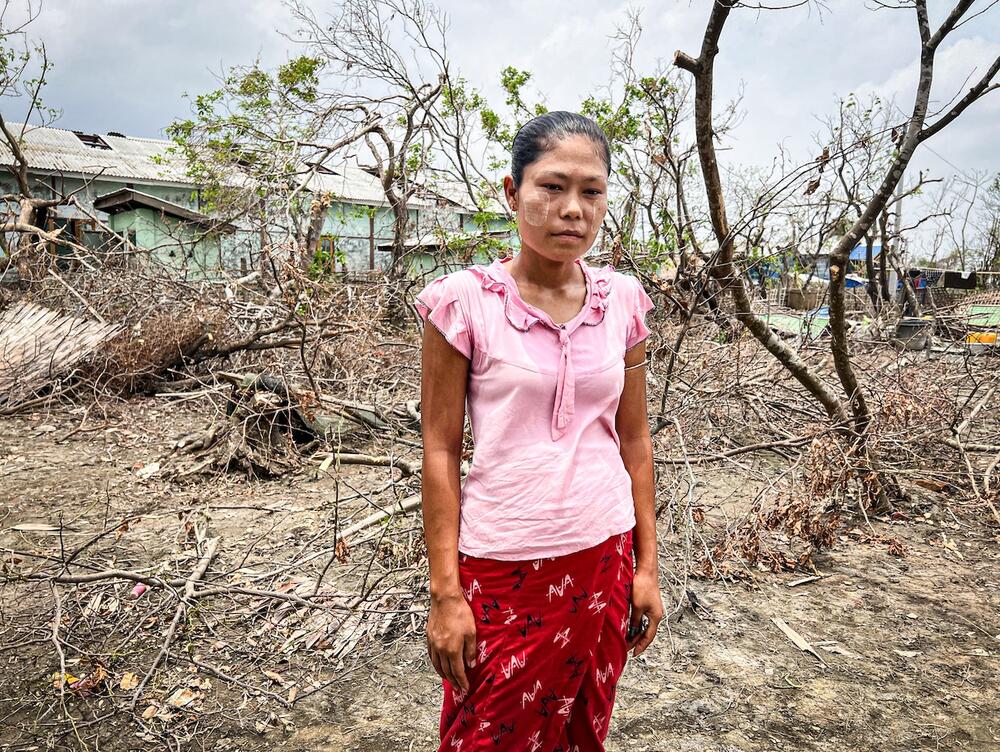 “I am so
lucky that this mobile clinic comes to our door for pregnant women like us.
There are many women who need urgent health care and support in affected
areas.” Nway Nway Soe, 26, from the village of Min Hla, in the Sittwe township
of Rakhine State. © UNFPA Myanmar/Thein Zaw Win
“I am so
lucky that this mobile clinic comes to our door for pregnant women like us.
There are many women who need urgent health care and support in affected
areas.” Nway Nway Soe, 26, from the village of Min Hla, in the Sittwe township
of Rakhine State. © UNFPA Myanmar/Thein Zaw Win
Ms. Nway was among those who
received assistance from one of the mobile facilities in Sittwe. “I’m so lucky
that this mobile clinic comes to our door for pregnant women like us,” she
said. “There are many women who need urgent health care and support in affected
areas.”
Over a month on from the cyclone,
humanitarian needs in cyclone-struck areas are enormous. Those affected include
some 432,000 women and girls of reproductive age, including over 20,700 who are
currently pregnant; around 2,300 of these women were due to give birth over the
past month, in the chaotic aftermath of the crisis.
Mya Khin, 37, from the Min Hla
village in Sittwe said: “I am nine months pregnant. My house was severely
damaged by the cyclone […] What I need most is quality health care for a safe
delivery. I am very happy that this mobile clinic is reaching us at this
critical time. I received the services and information that are important for
my pregnancy.”
Dr Win Zaw Tun, a medical officer
with the Myanmar Medical Association in Say Thamar Kyi village in Sittwe,
explained the gravity of the situation many are facing.
“Pregnant women can experience
many health-related issues unless services are available. Women with high-risk
pregnancies are more likely to [be in] critical condition. They need continuous
care and even early referral in case of emergency.”
Multiple and multiplying risks
The storm also disrupted
community support systems and services to prevent and respond to gender-based
violence. Most of the UNFPA-supported safe spaces for women and girls in
central and northern Rakhine have been damaged, while power outages,
dilapidated water and toilet facilities and overcrowded living conditions that
lack privacy, sanitation and proper lighting are exacerbating these
risks.
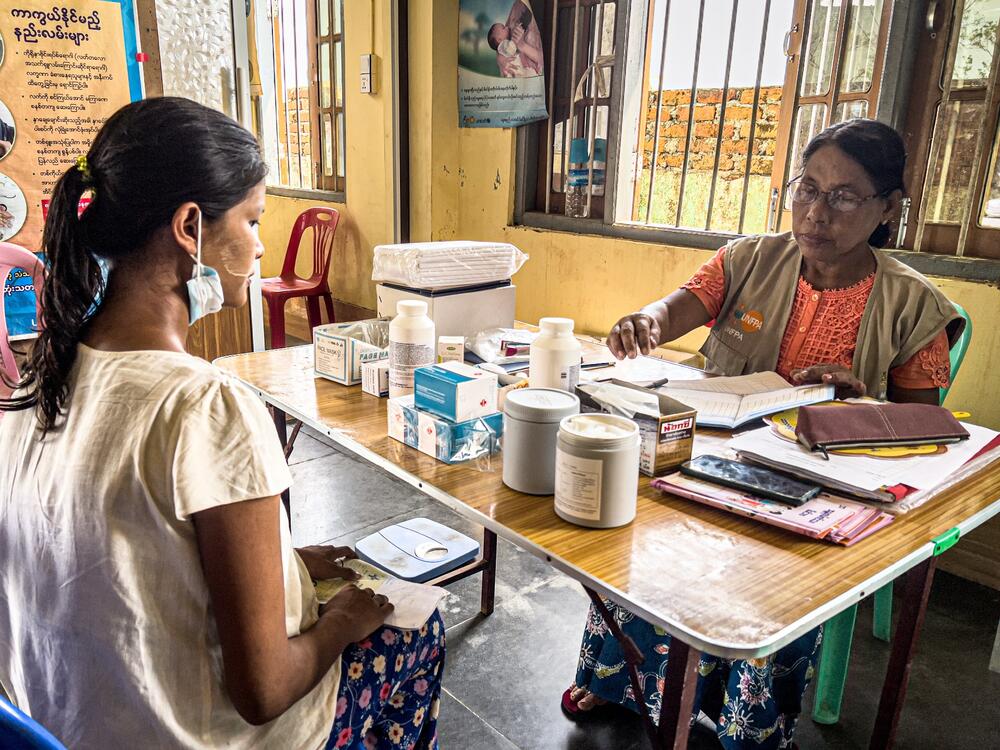 A woman in Sittwe, Rakhine state,
attends a UNFPA-supported clinic for a prenatal check-up. UNFPA and partners
have been providing essential support through existing services following the
destruction caused by Cyclone Mocha in Myanmar. © UNFPA Myanmar/Thein Zaw
Win
A woman in Sittwe, Rakhine state,
attends a UNFPA-supported clinic for a prenatal check-up. UNFPA and partners
have been providing essential support through existing services following the
destruction caused by Cyclone Mocha in Myanmar. © UNFPA Myanmar/Thein Zaw
Win
With the scale of the needs in
Myanmar, UNFPA urgently requires funding to support sexual and reproductive
health services, including gender-based violence response and mental health and
psychosocial support, rehabilitating health facilities, deploying trained
midwives and other critical cadres and procuring essential medicines, clean
delivery kits and dignity kits.
With the serious gaps in health
infrastructure, it is imperative to ensure emergency sexual and reproductive
health services to help prevent maternal deaths, sexual violence, unwanted
pregnancies and sexually transmitted diseases, including HIV.
Yet many, like Dr. Win and his
team, are committed to staying and supporting thousands in desperate need of
their help, whatever the conditions.
“Although our clinic building was
completely destroyed by Cyclone Mocha, we have made a tent to provide the
services,” he said. “Our life-saving services must not stop under any kind of
emergency.”


No comments:
Post a Comment