|

|
|
|
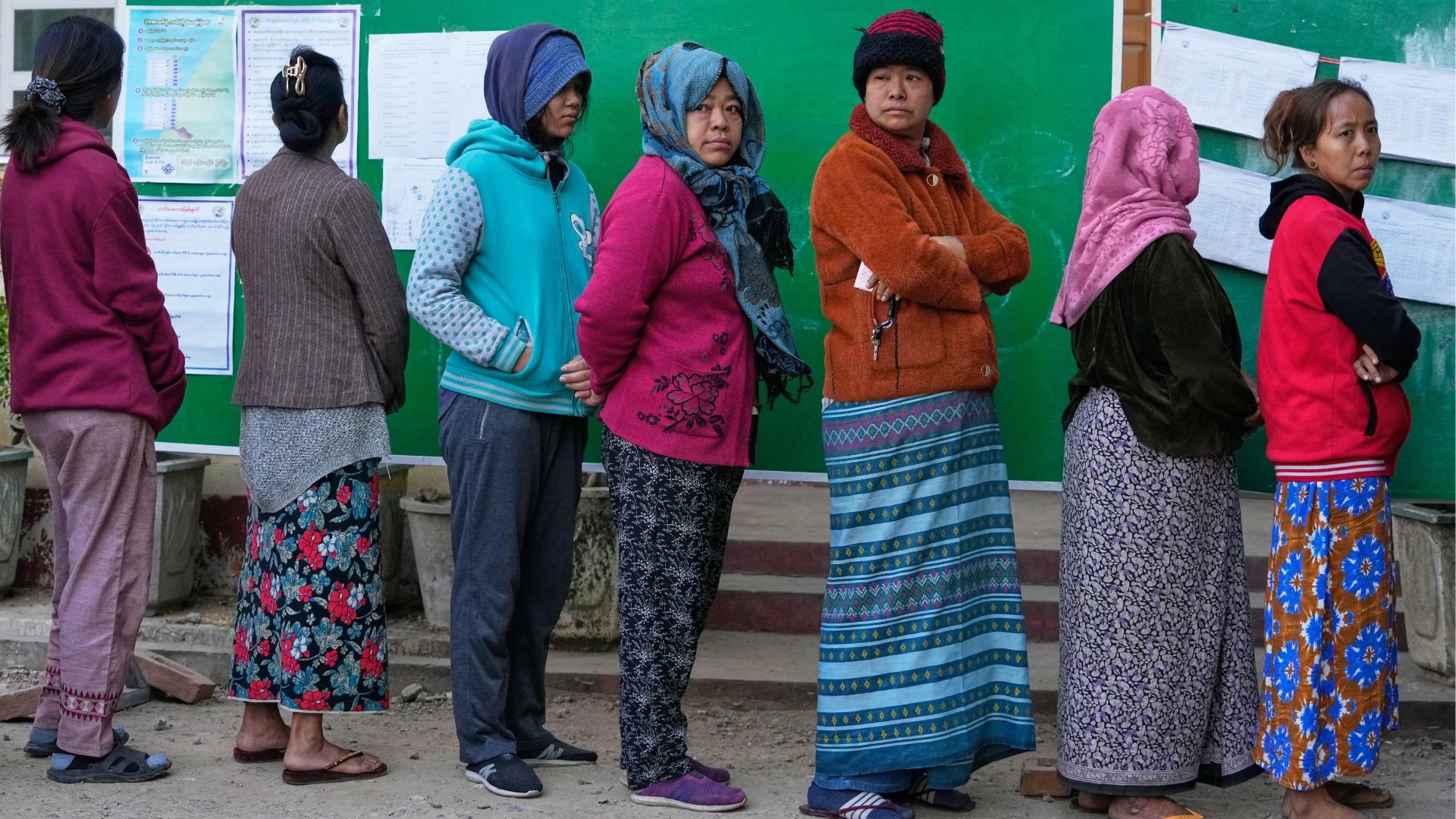
A total of 1,476 Myanmar nationals were sent home yesterday aboard three Myanmar naval vessels in the first phase of the repatriation programme.
At a press conference after today’s Cabinet meeting, government spokesman Fahmi Fadzil said Malaysia is awaiting confirmation from Myanmar on the date for the second phase.
The communications minister said those to be repatriated were identified by the Myanmar government, and their names were submitted to Malaysia through a diplomatic note dated Aug 13, reported Utusan Malaysia.
“The government expects to receive further information on the repatriation of the second group in the near future,” he said.
Fahmi said Prime Minister Anwar Ibrahim would continue discussions with the Myanmar government to facilitate the return of more Myanmar nationals currently in Malaysia after the second group had been repatriated.
He said the discussions were aimed at strengthening cooperation between the two countries while ensuring that the repatriation process was carried out in an orderly manner and in accordance with mutually agreed procedures.
“Malaysia and Myanmar are committed to addressing this issue through diplomatic cooperation and coordination between the relevant agencies,” he said.
The home ministry said that as of Aug 15, a total of 10,388 Myanmar nationals detained at immigration depots were undergoing identity, immigration status, and security background checks.
Of these, 5,000 had been finalised for the voluntary and phased repatriation programme.
The ministry said the programme was part of the government’s efforts to address the long-standing issue of Myanmar nationals residing in Malaysia illegally.
The UN refugee agency, UNHCR, has voiced concern over Malaysia’s decision to return 1,476 people to Myanmar amid an ongoing civil war and a dire human rights and humanitarian situation.
“We are concerned by these returns at a time when people sent back to Myanmar may face serious risks, and some within the group may be in need of international protection,” said UNHCR Assistant High Commissioner for Protection Edem Wosornu.
“This raises serious questions about whether decisions to return were genuinely free and informed,” she said. “UNHCR did not have access to the individuals to assess this.”
The Rohingya are a mainly Muslim ethnic minority group in Myanmar, a predominantly Buddhist nation where the military and various resistance groups are locked in civil war.
Myanmar’s military, which seized power in a coup in 2021, has repeatedly targeted the Rohingya community, notably in 2017, when a widely condemned military operation in Rakhine state forced several hundred thousand people to flee to other countries in Southeast Asia.
Today, more than a million Rohingya have settled in Cox’s Bazar, Bangladesh.
While UNHCR fully recognized Malaysia’s sovereign responsibility to manage asylum and migration, it urged authorities to ensure that returns are subject to robust safeguards, such as individual assessments and access to protection procedures.
Decisions to return must be voluntary and assessed outside detention settings, the agency noted.
Moreover, no one should be returned to a country where they may face persecution, torture or other serious threats to their life and freedom.
UNHCR stressed that until conditions in Myanmar allow for safe, dignified and sustainable returns, States must continue to provide access to asylum and uphold international protection obligations.
The UN agency highlighted the need for greater regional and international support towards achieving both a political solution and an end to hostilities in Myanmar.
Meanwhile, the UN's top humanitarian deplored an airstrike on a market in Rakhine state on Tuesday that killed and injured dozens of people.
“Civilians must be protected,” Emergency Relief Coordinator Tom Fletcher wrote in a post on social media, stressing that "international humanitarian law must be respected.”
UN Secretary-General António Guterres has strongly condemned the airstrike and called for those responsible to be held to account.
At least eight Palestinians have been killed in Israeli attacks on the Gaza Strip as Israel continues to violate a nearly year-old “ceasefire”.
Palestinian journalist Muhammad Abdel Aziz al-Najjar was among those killed on Wednesday, Gaza’s Government Media Office said without providing the location or the circumstances of the attack.
Al-Najjar was the 263rd journalist killed by Israel since October 2023, the office said.
Separately, six people were killed on Wednesday by an Israeli drone attack on a passenger van in Tal al-Hawa, a neighbourhood in southwest Gaza City, according to witnesses and medical sources.
The Palestine Red Crescent Society, a humanitarian group that runs ambulance and emergency services, said its crews took 13 wounded people to al-Quds Hospital.
Medical sources told Al Jazeera the injuries sustained by the victims of the attack were “critical”.
“Doctors say it’s difficult to save the lives of the wounded because the health system is decimated by years of Israeli attacks and the blockade,” said Al Jazeera’s Hind Khoudary, reporting from Gaza City. “The number of dead in the strike could rise in the coming hours.”
Earlier, the official Palestinian Wafa news agency reported an Israeli attack on a residential apartment near al-Shifa Hospital in Gaza City killed at least one woman.
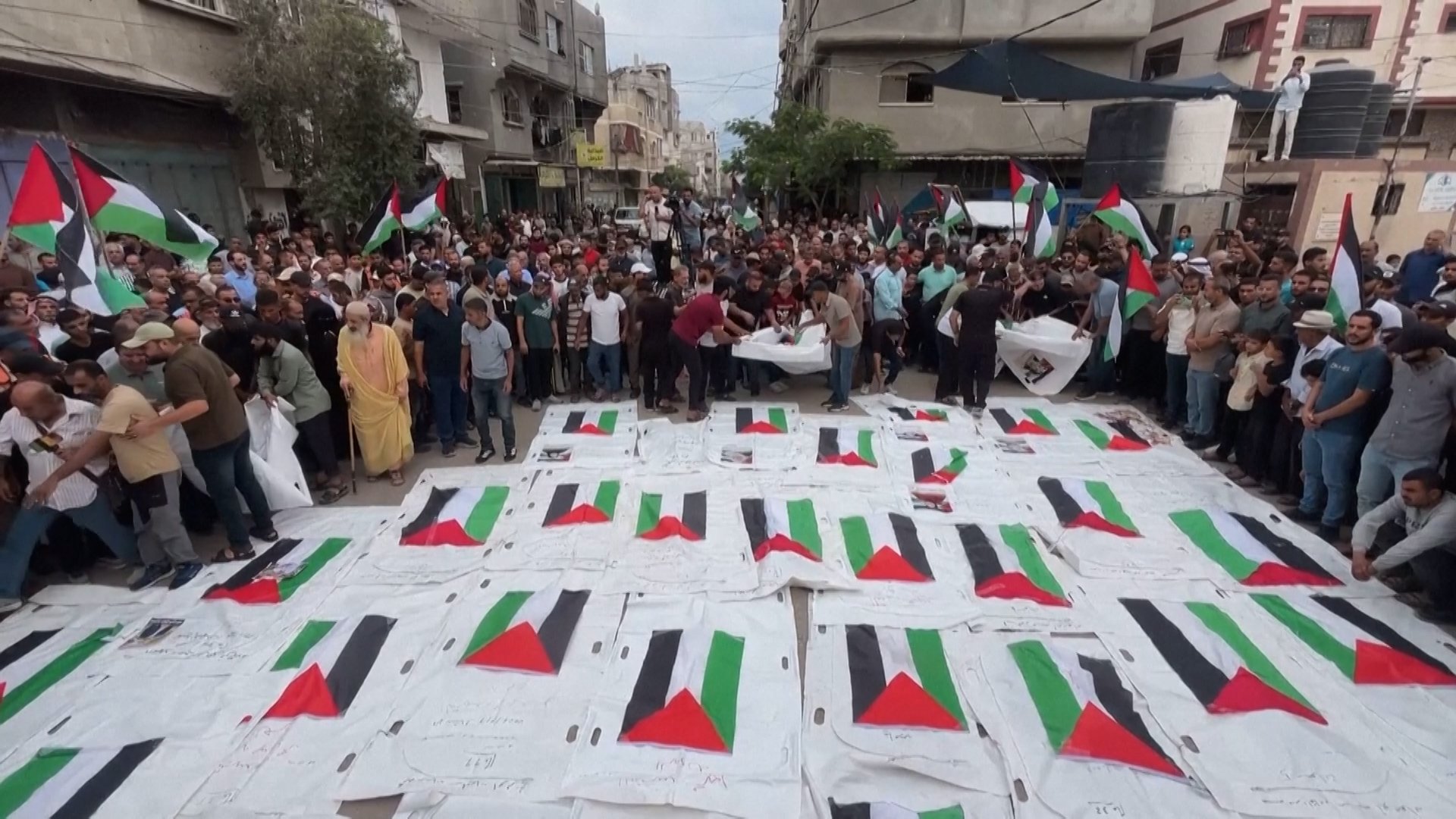
Elsewhere, four Palestinians, including two children, were wounded when an Israeli drone hit a shelter for displaced people in southern Gaza, according to local sources cited by Wafa.
Two other Palestinians were seriously wounded by Israeli forces southeast of Deir el-Balah in central Gaza, while Israeli tank fire was also reported in southern Khan Younis, in the southern part of the Strip.
The attacks came as the Ministry of Health in Gaza, which compiles casualty figures from hospitals across the territory, said in its latest daily update early on Wednesday that the bodies of at least nine people had arrived at hospitals during the last 24 hours.
Eight people were killed and one woman died from earlier wounds, bringing the number of people killed since the Israeli-Hamas October “ceasefire” to at least 1,431.

At least 5,026 people have been wounded over the same period, including 31 in the past 24 hours, the ministry said.
“There is supposed to be a ceasefire in Gaza, but the Israeli army’s violence is endless. Every day, Palestinians are killed, injured, and the humanitarian situation is deteriorating,” reported Khoudary, describing “terrifying” conditions for Gaza’s residents.
“Everyone inside the strip is afraid to go to the supermarket, to take their children to school, and to live their everyday lives,” she added.
Israel’s genocidal war against Palestinians in Gaza has killed at least 74,032 people since October 2023, with another 175,142 wounded, according to health officials.
In August, an analysis by the United Nations Satellite Centre found that the number of destroyed structures across Gaza has increased by nine percent since the “ceasefire” took effect.
About 82 percent of structures in Gaza, roughly 200,000 buildings, have been damaged, and about two-thirds of those have been destroyed since the start of the war, according to the UN.
I have ever been regretting my vote that elected Fetterman in the Senate race against Dr Oz. He betrayed us all. I was pulled into voting for him in a tight race by my family members who mistakenly believed that he would be an honorable person who cared about human rights. But as it turned out, honor and dignity are not in his DNA. He remains unabashed supporter, promoter and sponsor of genocidal crimes of the apartheid Israel. Shame on his voting records. Really disgusting. -HS
======
The United States Senate voted on Tuesday to stop a proposal that would have forced an official report into the deaths of nine Americans in the occupied West Bank. Lawmakers defeated the measure in a tight 47 to 53 decision.
Maryland Democratic Senator Chris Van Hollen sponsored the attempt, pointing out a “lack of accountability” from Israeli Prime Minister Benjamin Netanyahu’s government. He also cited that neither the current administration nor the previous one did enough for Palestinian-Americans.
“The Biden administration did not do enough to secure justice, and the Trump administration has not done enough,” Van Hollen said according to The Intercept. “And if we can’t get accountability and justice for American citizens, imagine how hard it is for Palestinian families who don’t have a U.S. passport to get justice and accountability when they are killed or their villages get razed.”
Partisan discipline held strong for almost every member on the floor. Only two senators crossed the aisle. Pennsylvania Democratic Senator John Fetterman voted against the measure, while Kentucky Republican Rand Paul chose to support it.
Fetterman is known as an ardent defender of Israel. Furthermore, one of the nine Americans killed in the West Bank is one of Fetterman’s constituents in Pennsylvania.
Macklemore has said that tickets for his Free Palestine tour, announced in the wake of the Ed Sheeran concert fallout, have sold out immediately.
The rapper announced last week that he will be joined by other musicians, who will be announced at a later date, at three October concerts held at Dublin’s 3 Arena, Paris’s Accor Arena and London’s Wembley Arena. All proceeds from the shows will go to organizations supporting Palestinians.
“We put these shows together fast and in community, believing that musicians can stand in solidarity with Palestine, use the stage to raise funds and show what collective action can look like.”
“When those in power try to silence our calls for liberation, art will always be a form of resistance. Dublin, Paris and London, thank you for showing up the way you did. The response to these shows is another reminder of how many people across the world are standing together for a free Palestine,” he added.
Earlier this month, Macklemore announced he had been dropped from the U.S. dates of Sheeran’s Loop tour over his pro-Palestine comments onstage. He claimed that Robert Kraft — the CEO of Kraft Group who owns Gillette Stadium — personally called Sheeran to say he would not be allowed to perform at the venue.
Sheeran faced backlash from fans and commentators for his response when he stated that he would not be drawn into a public debate about the Gaza war and that it was “the promoter’s decision” to remove Macklemore. The fallout continued when Sheeran’s other opening acts withdrew, while protesters gathered outside his first concert without Macklemore last week.
The United States has removed sanctions on the daughter of a Myanmar businessman accused of supporting the military-installed government. ...