The documentary film NAZA (an acronym for Nezek Agavi; “collateral damage” in Hebrew), written and directed by Yuval Abraham and Rachel Szor, has created a firestorm of controversy. Though few have actually seen the film, it reportedly contains interviews with 24 anonymous Israeli military and intelligence members who attest to the integration of artificial intelligence (AI) and automated surveillance into military targeting systems used by Israeli forces during the ongoing Gaza genocide.
They also allege government approval of operations in which thousands of Palestinian civilians were killed as “collateral damage.”
Since its premiere at Venice, where Abraham and Szor received a record 25-minute standing ovation, the filmmakers have faced an escalating campaign of official condemnation and deadly threats. Israeli Culture Minister Miki Zohar called for their citizenship to be revoked, Prime Minister Benjamin Netanyahu announced plans for legislation targeting those who “defame” Israeli soldiers, and Israel Defence Force (IDF) Chief of Staff Eyal Zamir said the military would use “every tool at our disposal” against the film.
Far-right activists have gone further, with calls for the filmmakers to be hunted and hanged, with more threats directed at their families.
On the surface, however, it is not clear why the film and its creators have become such a target of hatred and condemnation within Israel and the broader Zionist movement. Documentation of Israel’s genocidal criminality has been readily accessible for years, mostly from Palestinian journalists on the ground in Gaza, and the use of AI in targeting civilians has been detailed by Abraham himself in April 2024.
Furthermore, Israeli soldiers have documented themselves shamelessly committing an array of war crimes. So why the thuggish wrath by Israeli leaders, then dutifully echoed by their fascist supporters? This response is akin to Pavlov blowing his whistle at his trained dogs: the whistle sounds, and the conditioned response follows.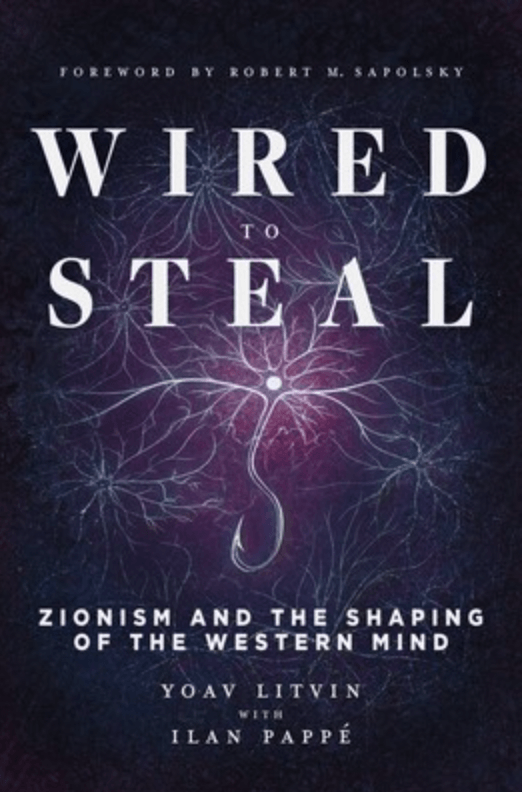
What distinguishes NAZA is that it brings allegations of Israeli genocide from the Palestinian “out-group” and its allies into the Israeli “in-group,” opening a potential space for Israeli voices to confront and challenge its normalisation, potentially leading to accountability.
The intensity of the reaction becomes more intelligible when examined through the mechanisms of escalation and normalisation described by the Wired to Steal (W2S) model, a neurobehavioral framework for understanding colonial expansion.
Normalisation of genocide
Since the events of 7 October, in which Hamas led a military operation resulting in the murder and kidnapping of hundreds of Israeli security forces and civilians, Israel retaliated indiscriminately, obliterating the Gaza Strip and even targeting its own people. The genocide, as international experts and organisations have termed it, is but a recent development in an ongoing Zionist genocidal-colonial cycle, in which Israel has expanded oppression and dispossession in response to acts of resistance by Indigenous Palestinians.
Crucially, Zionism is not exceptional. In its foundations and operation, Israel manifests other white European settler-colonial projects in which extraction and greed by a ruling class drive a cycle of manufactured identity, segregation, fear, dehumanisation and rewards for aggression. This sustains a self-reinforcing system of dispossession of designated out-groups, while escalation and normalisation reproduce it.
In contrast to Zionist narratives which decontextualise the events of 7 October to portray Israel’s subsequent actions as defensive rather than offensive, Palestinian resistance can be understood as being instrumentalised as an essential, albeit tragic, trigger for renewed and expanded aggression. It nourishes the ongoing Zionist settler colonial project which predates the establishment of the state of Israel in 1948.
According to the W2S model, resistance is also used to justify theft under the guise of “defence”. Settler society then normalises this through media institutions, social norms, incentives, and everyday conditioned behaviour, rendering the resulting construct a perceived reality.
In this way, normalisation expands the moral boundaries of what is considered acceptable, and who is considered human, thereby increasing the resources available for theft. This is clear to see in the deliberate and cynical blurring of civilian and militant categories, and the designation of Palestinian children as “future terrorists” by Israeli military and political leaders in recent years.
Furthermore, normalisation constructs a façade of so-called “open debate” among “varying opinions” and, consequently, a plurality of tolerated voices within settler society, while shifting attention from the conduct itself to the boundaries of permissible debate and the legitimacy of individual critics. Without it, the tawdry fabric of settler society is threatened.
Abraham and Szor as collateral damage
Zionist propaganda, also known as Hasbara, is one of the most sophisticated forms of state propaganda greasing expansion and theft. As an essential branch of hasbara, normalisation has evolved into an intricate web of deception, particularly utilised in the tropes of liberal Zionism, which presents the Zionist project and Israel as reformable and compatible with human rights. It includes a right-to-left political spectrum, democratic and progressive values, and a desire for peace and justice.
In contrast to Palestinian journalists, who could be racialised and scapegoated as clear members of the out-group and subsequently targeted for elimination as “terrorists,” Abraham and Szor represent a new kind of threat to Israeli society – a threat from within. They have been singled out as in-group targets to be made an example of, using tactics typically reserved for out-group members (though still mild, for now), with the effect of discouraging other potential in-group whistleblowers from coming forward. Fearmongering and social rewards for their harassment are utilised, while simultaneously clarifying the internal boundaries of Zionist identity.
Thus, rather than approaching the film as new evidence for Israeli criminality, the firestorm around NAZA can be understood as an internal struggle within the Zionist movement over how to respond to evidence of genocide without challenging the underlying Zionist project.
Some liberal Zionists have embraced NAZA as a vehicle for bringing criticism of Israeli conduct in Gaza into Israeli public discourse and encouraging greater scrutiny of existing policies. Establishment Zionists have pushed back against such claims, in part reflecting concerns that their wider acceptance could contribute to a broader crisis of Israeli social cohesion.
In this sense, the debate in its present form serves to normalise Israel’s actions since 7 October: genocide is recast as something “debatable,” maintaining Israel’s impunity for the worst crimes against humanity and war crimes, with the identities of those responsible remaining obscured.
Will the Zionist regime permit the film to screen in Israel? The full extent of NAZA’s impact is yet to be determined. Already, its reaction should encourage all to adopt the nonviolent Boycott, Divestment and Sanctions (BDS) movement against Israel for its oppression of freedom of speech and the targeting of the filmmakers.
Clearly, for it to have lasting moral impact, NAZA and its creators must give other whistleblowers the courage to step forward. Abraham, Szor and their colleagues can do more than hail the 24 Israeli military personnel featured in the film as courageous. They should urge them to come forward publicly from anonymity, which currently gives opponents an easy basis for dismissing the allegations without addressing their substance. Otherwise, NAZA risks becoming a discredited, normalising propaganda tool at the hands of the very forces it set out to hold accountable, and Abraham and Szor may also be swept into the gruesome machinations of Israel’s genocide of Palestinian people as mere collateral damage.
This piece first appeared in The New Arab.


No comments:
Post a Comment