Dozens of people have been quarantined over a suspected case of the plague in Russia’s Siberia, after a laboratory worker at a research institute fell ill and died in undisclosed circumstances. Al Jazeera’s Dmitry Medvedenko looks at what we know so far.
British police have arrested a 22-year old British national on suspicion of a terror offence linked to the security incident near a UK airbase hosting US warplanes on September 27.
Counter Terrorism Police say the individual is connected with “activity that took place close to RAF Fairford.”
In a statement, police said the arrest had been made “on suspicion of preparation of terrorist acts”.
“This remains a live investigation and our specialist teams continue to pursue multiple lines of enquiry into the circumstances surrounding events near RAF Fairford,” Vicki Evans, senior national coordinator for Counter Terrorism Policing said.
2:56
Now Playing
02:56
What we know about RAF Fairford ‘bomb plot’
Next
01:40
What we know about Russia’s suspected plague case
01:31
France’s student protests grow as hundreds of schools close
11:58
Qatar backs ‘Saudi measures to preserve security’ including Mecca Alliance
03:06
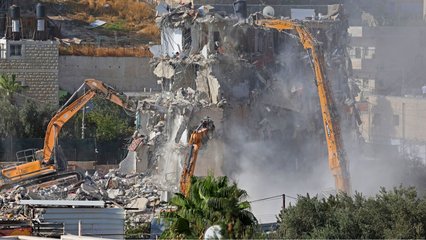
Israeli forces demolish residential building in occupied East Jerusalem
Unexplained incident
The latest arrest is the seventh connected to the incident, which remains largely unexplained, over the past two weeks.
Five British men in their twenties were detained near the perimeter of the base in the early hours of September 27.
Police said they had found a supply of gasoline in three vans linked to the five suspects, but no explosives.
On Thursday, a 25-year-old British-Iranian man was arrested in London.
All six have been released on bail under investigation.
Get instant alerts and updates based on your interests. Be the first to know when big stories happen.
US bombers moved on Sunday over threats
The US moved its B-52 and B-1 bombers from RAF Fairford on Sunday, though it’s unclear whether the move is connected to the arrests.
RAF Fairford has served as a stopping point for US bombers participating in the war against Iran, which began more than seven months ago, on February 28.
Located roughly 160km (100 miles) west of London, the base has since been rumoured to be the target of a “terror” plot involving Tehran.
1:47
Trump says US pulled bombers from UK’s RAF Fairford due to security threats
On Monday, US President Trump said his administration withdrew B-1 bombers from the site because of what he described as “some threats”.
“We had a threat, and if we’re going to be threatened, we would just move them, and that sort of alleviates that,” he told reporters, adding the people who made the threat “would be linked to Iran,” without elaborating.
US President Donald Trump returns a salute upon disembarking from Air Force One at Joint Base Andrews, Maryland, on October 5, 2026 [KENT NISHIMURA/AFP]
British Prime Minister Andy Burnham said the UK sees, “strong indications” that Iran played a part in the incident, without providing details.
Iran has denied involvement, but it has previously said it considers any base used to attack its territory a legitimate target.
United States President Donald Trump has ordered the use of a firing squad in the execution of a former army psychiatrist who killed 13 people in a mass shooting at Fort Hood, Texas, in 2009, the Pentagon spokesman has said.
Nidal Hasan, a US citizen of Palestinian descent, would be the first US soldier to be executed by the US military in more than 60 years.
Hasan will be killed by a firing squad under the recommendation of Defense Secretary Pete Hegseth and the approval of the president, Pentagon spokesperson Sean Parnell said in a statement on X on Monday.
The Army secretary will decide a time and place for the execution, he said.
“Judgement day for Hasan has finally come,” Parnell wrote.
Hasan was sentenced to death in August 2013 after a military jury found him guilty of 45 counts of premeditated murder and attempted murder for shooting a handgun in a medical facility at the Texas military base.
The attack killed 12 unarmed active-duty soldiers and a retired serviceman, and wounded 32 others.
Police arrested him at the scene, where he was shot and left partially paralysed.
The shooting took place weeks before Hasan was set to be deployed to Afghanistan.
He said during his court-martial that the shooting was an effort to stop the soldiers from going to Afghanistan and killing his fellow Muslims, and made almost no effort to defend himself.
The Trump administration added death by firing squad as an appropriate method of execution in April, along with gas asphyxiation and electrocution.
Military executions are extremely rare in the US and can only be approved by the president under the Uniform Code of Military Justice. If the order is carried out, he will be the first member of the US military to be executed since 1961.
According to the Death Penalty Information Center, the 1961 execution was carried out by hanging. The apparent last known execution by a US military firing squad was one carried out “by musketry” in November 1945, the center reported.
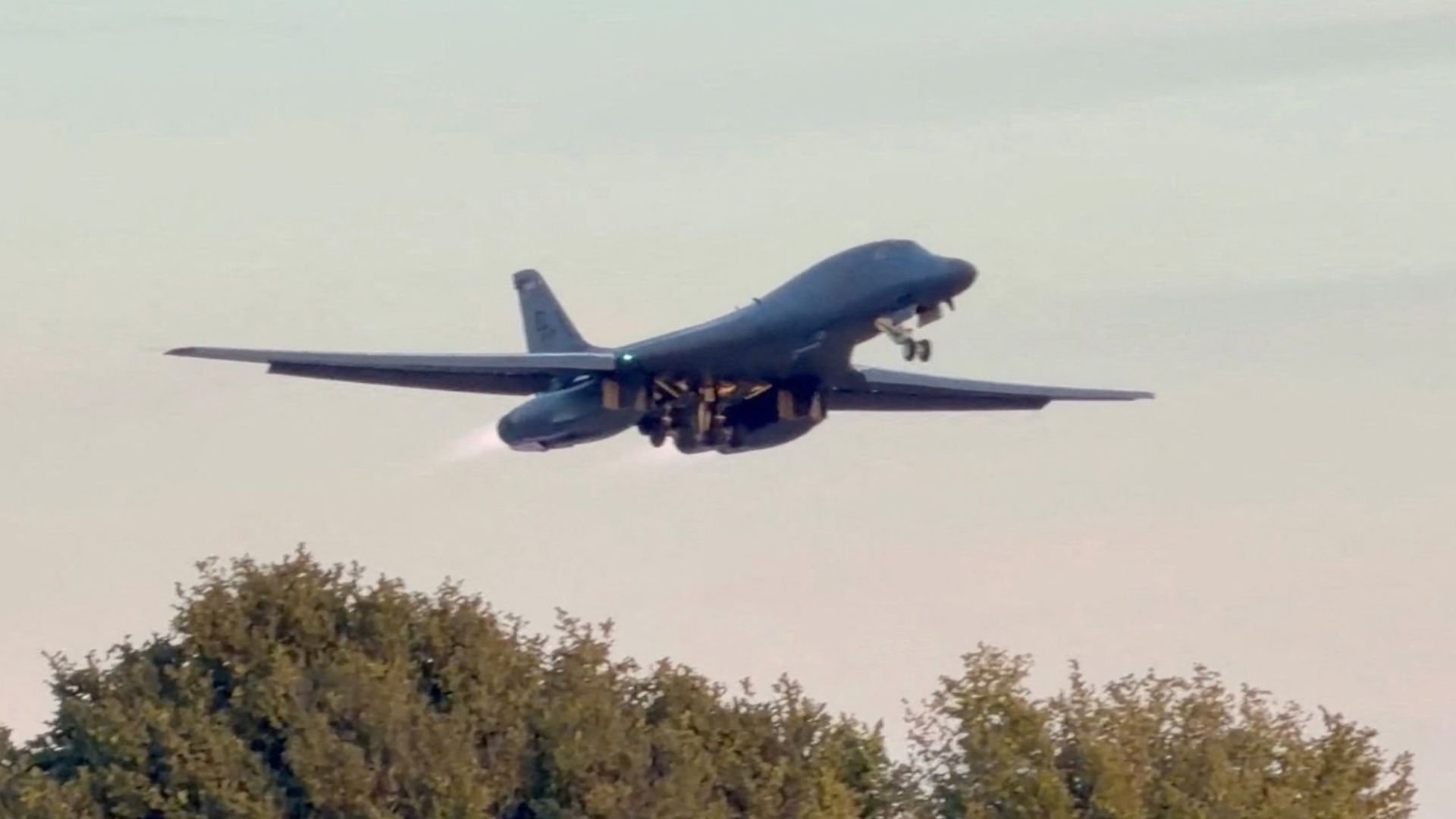
Over the course of Sunday, a dozen B-1B bombers took off from Royal Air Force (RAF) Fairford in western England and flew home to the United States. Their departure abruptly ended the base’s role as a launchpad for US strikes on Iran, which began on February 28.
The base, roughly 160km (100 miles) west of London, is the US Air Force’s only European airfield for heavy bombers and a key forward operating location for deployed bombers.
Over the past two weeks, six people were arrested on suspicion of “terrorism”. They were all released on bail.
US President Donald Trump said on Monday the bombers were moved because “there were some threats”, which he believed were linked to Iran. “So we moved them around a little bit, not very far,” he told reporters at the White House.
Hours earlier, US Secretary of State Marco Rubio played down any link to the alleged plot, saying it was “not unusual to see rotations happen” and that he had confidence in the security of US bases.
What happened at RAF Fairford?
On September 27, police arrested five men on suspicion of plotting to plant explosives near Fairford in the United Kingdom. They were released on bail a day later.
Investigators found petrol but no explosive devices in their vans, though UK officials say the men remain under investigation. On Thursday, police arrested a 25-year-old UK-Iranian dual national in London on suspicion of plotting an attack on the airbase. He was also released on bail on October 3.
UK Prime Minister Andy Burnham suggested that “Iran played a part” in the alleged plot but declined to give details. Iran has denied any such scheme and summoned the UK ambassador in Tehran in protest at the arrests.
2:56
Now Playing
02:56
What we know about RAF Fairford ‘bomb plot’
Next
01:40
What we know about Russia’s suspected plague case
01:31
France’s student protests grow as hundreds of schools close
11:58
Qatar backs ‘Saudi measures to preserve security’ including Mecca Alliance
03:06
Israeli forces demolish residential building in occupied East Jerusalem
What bombers does the US have?
The US Air Force flies three types of bombers, with a fourth on the way.
The B-52 Stratofortress is the oldest. The B-52H model currently in service was built in the early 1960s. With a wingspan of 56 metres (185 feet), it is the largest US bomber and can carry about 31 tonnes of weapons, including nuclear bombs and cruise missiles.
A B-52 Stratofortress takes off from RAF Fairford on March 19, 2026 [Leon Neal/Getty Images]
The B-1B Lancer, which entered service in the mid-1980s, is the fastest of the three. It can reach 1.2 times the speed of sound and has a swing-wing that sweeps back for high-speed flight. It carries the largest conventional payload, about 34 tonnes, but no longer carries nuclear weapons. These were the aircraft that left Fairford.
1:47
Trump says US pulled bombers from UK’s RAF Fairford due to security threats
The B-2 Spirit is a flying-wing stealth bomber designed to slip past air defences. Only 20 were built, of which 19 remain in service. It can carry both nuclear and conventional weapons, including the 13,600kg (30,000lb) “bunker buster” bomb used in US strikes on Iran’s nuclear sites in June 2025.
The B-21 Raider, a smaller stealth bomber, is still in flight testing, and it remains on track for delivery in 2027. Over the next decade and a half, the air force plans to replace the B-1B and B-2, leaving a future fleet of B-21s and upgraded B-52s.
The B-21 Raider, a new high-tech stealth bomber developed for the US Air Force, is seen in an undated photograph in Palmdale, California, US, released on December 2, 2022 [Handout/US Air Force via Reuters]
Where do these bombers fly from?
All US bombers are permanently based in the US, at five main airbases:
B-52H: Barksdale Air Force Base in Louisiana and Minot Air Force Base in North Dakota
B-1B: Dyess Air Force Base in Texas and Ellsworth Air Force Base in South Dakota
B-2: Whiteman Air Force Base in Missouri
B-21: Due to arrive at Ellsworth in South Dakota in 2027
All of these bases have long, wide runways, typically exceeding 10,000 feet (3,048 metres).
That makes bomber runways about as long as those at a big international airport. What limits where bombers can operate is not tarmac but security, weapons storage and support.
For missions abroad, the US rotates bombers through a handful of forward bases. Other important overseas operating locations include Andersen Air Force Base in Guam and Diego Garcia in the Indian Ocean.
Beyond these, the air force sends small groups of bombers to allied airbases for a few weeks at a time, in what it calls Bomber Task Force deployments. Recent rotations have included B-52s at Moron in Spain, B-1Bs at Orland in Norway and Misawa in Japan, and B-52s at Tindal in northern Australia, which arrived in September.
The bombers can also go on a strike mission from the US with the help of aerial refuelling. Bomber missions during the US-Israel war on Iran lasted more than 30 hours there and back. Each group of three bombers needed six to nine tanker aircraft to refuel them along the way.
This image released by the US Navy shows an aerial view of Diego Garcia [File: US Navy via AP]