Myanmar had already
been reeling under a public health and economic crisis due to the COVID-19 pandemic. The military coup in
February 2021 only made the situation worse. Its adverse ramifications can be
felt in every sector of the country.
The determined fight
of opposition groups resisting military rule has prompted the
military-appointed State Administration Council (SAC) to embark upon the “four cuts” strategy, which relies on the burning of entire villages, the
use of airstrikes and artillery shelling, as well as arbitrary arrests,
torture, and killings. The primary objective of this policy, which has been
pursued for decades against the ethnic armed organizations (EAO) in regions such as Kachin and
Karen states, is to sever grassroots support for the resistance groups.
The consequences of
the “four cuts” policy can be gleaned from data compiled by the United Nations human rights office, which revealed that between February 2021
and April 2023, at least 3,452 persons were killed by the military and its
affiliates, 21,807 people were arrested, and 5,839 were convicted. Around 1.5 million people have been displaced due to the conflict and another
75,000 people have reportedly fled to neighboring countries. The junta
troops had burned 70,324 civilian houses through the end of May 2023 in 13 of the country’s 14
states and regions. Around 18 million people — comprising about a third of Myanmar’s population
— need humanitarian aid because of the conflict and the post-coup economic
crisis.
Between January and
March, The Diplomat traveled covertly to four areas in Myanmar’s Chin State and
Sagaing Region, which are among the worst affected by the ongoing
conflict.According to the Chin Human Rights Organization (CHRO), 421 people,
including 385 civilians, of which 75 were women and 25 children, were killed by
the end of January. Data released by the Thailand-based Assistance Association
for Political Prisoners reveal that the figures are much higher for Sagaing
Region, where about 1,800 civilians lost their lives. This constitutes almost 45 percent of
the total death toll in the country.
It is evident that the
humanitarian crisis in Chin State and Sagaing Region is not only serious but
intensifying.
Deserted Roads,
Markets, and Fields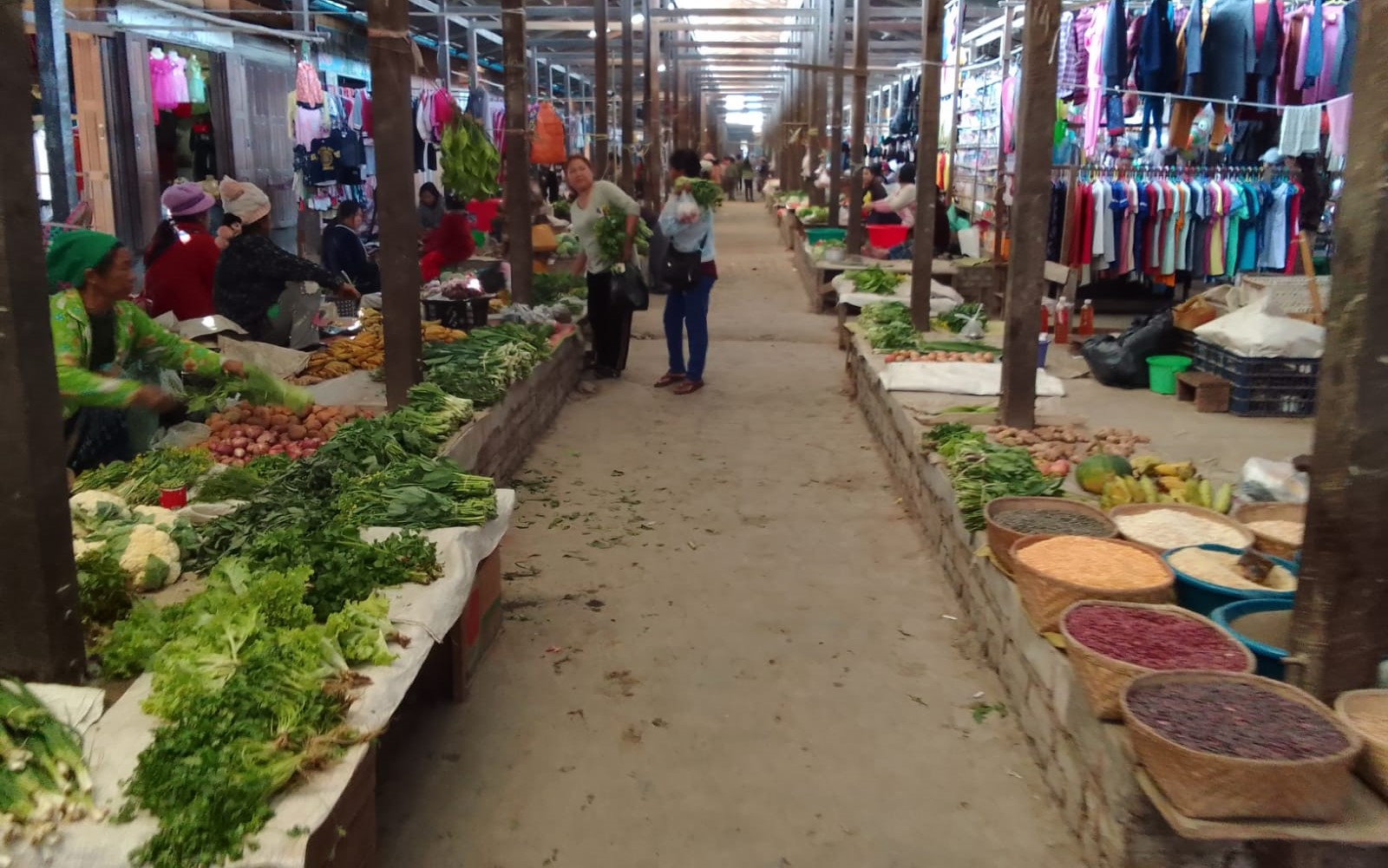 A market at Letpanchaung
(Kalay) in Myanmar’s Sagaing Region. Photo by Rajeev Bhattacharyya
A market at Letpanchaung
(Kalay) in Myanmar’s Sagaing Region. Photo by Rajeev Bhattacharyya
When I embarked upon
my journey on January 19 on a motorbike accompanied by resistance fighters, I
was struck by how deserted the roads and fields were on the 130-mile pot-holed
highway between the border town of Zokhawthar in India’s Mizoram state and
Kalay in Myanmar’s Sagaing Region.
The first big
settlement on the way was Tedim in Chin State, which I reached in five hours.
It resembled a ghost town with very few people on the road. This town has seen
little opposition to the military regime. It is under the control of the Zomi
Revolutionary Army–Eastern Command (ZRA-EC), which had joined hands with the
junta against the opposition.
The stretch from Tedim
to Kalay was the real conflict zone, which was even more desolate, barring a
few shops that were open in the three villages we crossed.
During my stay in
Kalay between January 19 and 29, I visited Santai and Natchaung villages,
Letpanchaung, and Kalaymyo city for interviews with people including
functionaries of resistance squads. Only once in this period did I see
farmers – four of them, including a woman – working on a
field near Santai where vegetables were being cultivated.
“The farmers are
avoiding the fields. Some of them were apprehended by the military,
jailed and killed for assisting the resistance groups,” said Black Cat,
the nom de guerre for
the commander of the Chin Rifles, who accompanied me to these places.
People come to markets
at Letpanchaung for only about three hours starting in 6 a.m. There were
hardly any customers in the shops in the afternoon from where we purchased food
and other commodities. A shop owner of a department store claimed that his
sales registered a “drastic decline” after the coup. The same refrain was heard
from a shop owner selling burgers in Kalay city, where very few vehicles were
seen on the road even at 10 a.m.
The streets and
markets at Tlanglo and Tlangpi villages along the 80-mile stretch between Camp
Victoria — the military headquarters of the Chin National Front (CNF) — and
Thantlang township had more people on the streets than in Kalay. The sense of
insecurity among the people in this part of the Chin State was far less as it
is under the control of resistance groups. CNF Vice Chairman Dr. Sui Khar
claimed in an interview on February 6 with The Diplomat that the junta controls
no more than 30 percent of the entire Chin State.
In sharp contrast was
the situation in the border district of Tamu in Sagaing Region, across the
border from the Indian state of Manipur. In Tamu, a fierce battle was raging
between the military and the opposition for control of the border district. I
did not spot a single person over a distance of three miles that I traveled
with resistance fighters on a narrow and secret route in Tamu from the border
at Moreh in Manipur to interview some functionaries of the People’s Defense
Forces (PDF).The only distinctive activity of people in Tamu is that a few of
them cross over to Moreh every morning to sell vegetables and other items. But
there has been a huge drop in the daily sales of their products, locals in the town
told me.
Slashed Family
Budgets, Inflation, and Concern Over Famine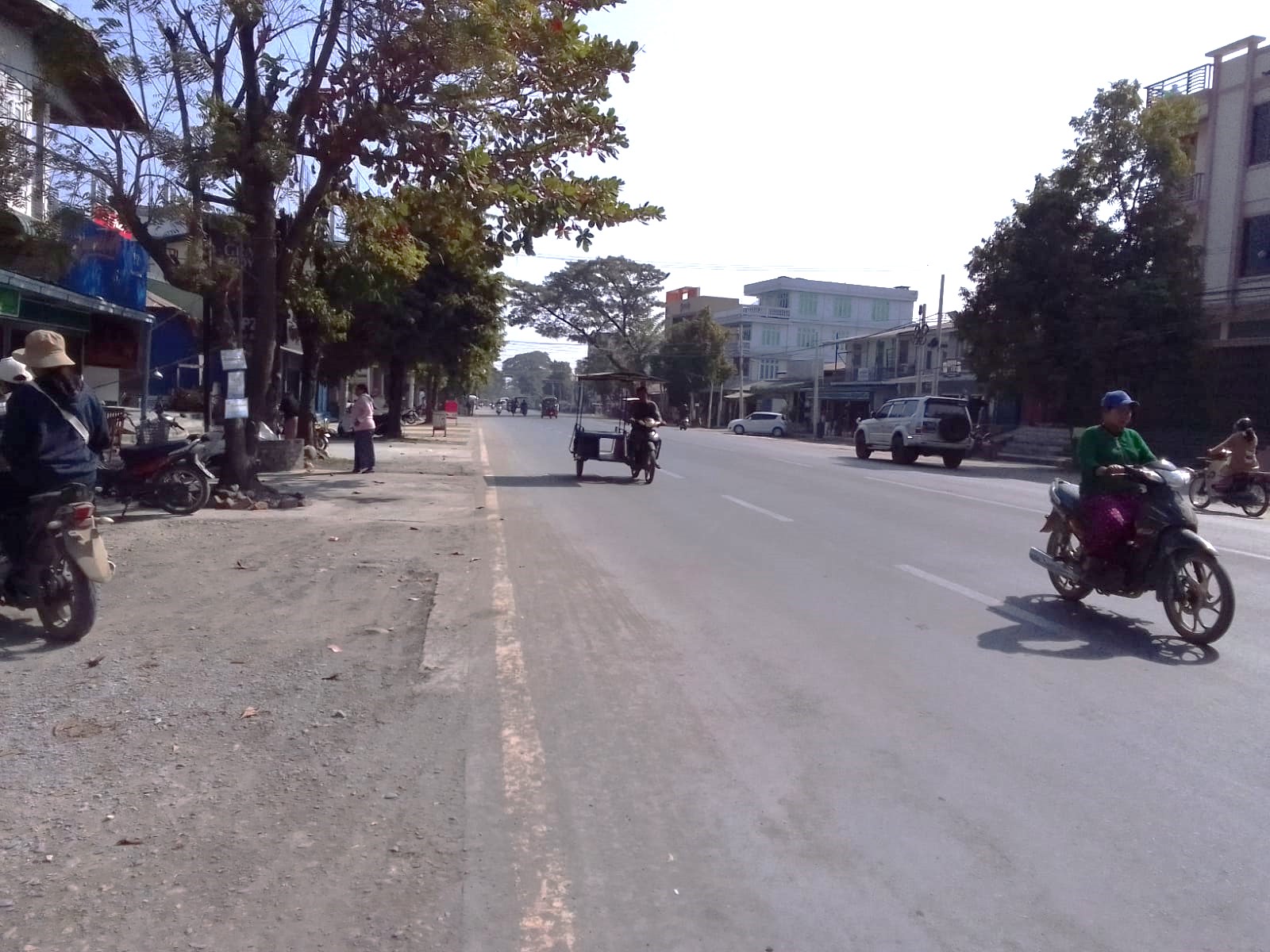 The road at Tahan in
Kalaymyo city in Myanmar’s Sagaing Region. Photo by Rajeev Bhattacharyya
The road at Tahan in
Kalaymyo city in Myanmar’s Sagaing Region. Photo by Rajeev Bhattacharyya
For more than two
years now, the sharp depreciation of the kyat and rising inflation have led to
mounting food and fuel prices that have hit people across all income groups in
Myanmar. A U.N. report says that food prices escalated by 63 in 2021 and by 177
percent in 2022 respectively. Most of the people in Chin State and Sagaing
Region I spoke to, including local residents, admitted that increasing prices
have compelled them to reduce their food intake, which was particularly evident
among those of lower-income groups.
A teacher who joined
the Civil Disobedience Movement in Kalay and was teaching students at a school
established by the Pa Ka Pha (Local Defense Force) gave me a list of some
commodities sold at the markets in Letpanchaung, whose prices have sky-rocketed
since the coup. A kilogram of pulses that was 2,500-3,000 kyat ($1.19-1.43)
before the coup had spiraled to 5,500 kyat ($2.62). Rice is sold at
50,000-60,000 kyat, up from 30,000-40,000 kyat earlier, and a gallon of petrol
(about 5 liters) is 14,000 kyat, compared to 4,500 kyat before the coup. These
three items sell for less at Thantlang in Chin State due to the supply from
India.The increase in food prices is coupled with dwindling supplies to the
markets. The owner of a roadside grocery shop near Kalaymyo explained that the
selling price of most commodities was fluctuating as the supply routes from
Mandalay and Yangon had become erratic. There are reports of roads being blocked sometimes by the military to prevent the transportation of
food items. Last year, there were reports of food scarcity at Matupi and Mindat
townships in Chin State after the military prevented trucks from driving on some routes.
Functionaries of
resistance groups and the CDM have no doubt that the country is hurtling toward
greater food scarcity if the conflict continues. Zaw Tuseng, president of the
Myanmar Policy Institute, told me in an online interview that the country’s
economic situation over the next year could be “deeply concerning.” Pointing to
the “near zero” foreign direct investment (FDI) in Myanmar and the fall in
border trade, he said that these trends are crippling the economy and limiting
income opportunities.
“The burning down of
villages is causing widespread displacement and instability, further disrupting
rural agriculture. These conflicts not only lead to the loss of livelihoods but
also damage critical infrastructure, hindering agricultural productivity and
access to markets,” Zaw Tuseng said, stressing that the “economic fallout from
this will likely be felt for years to come.”
Life in the Jungles
and Along the Border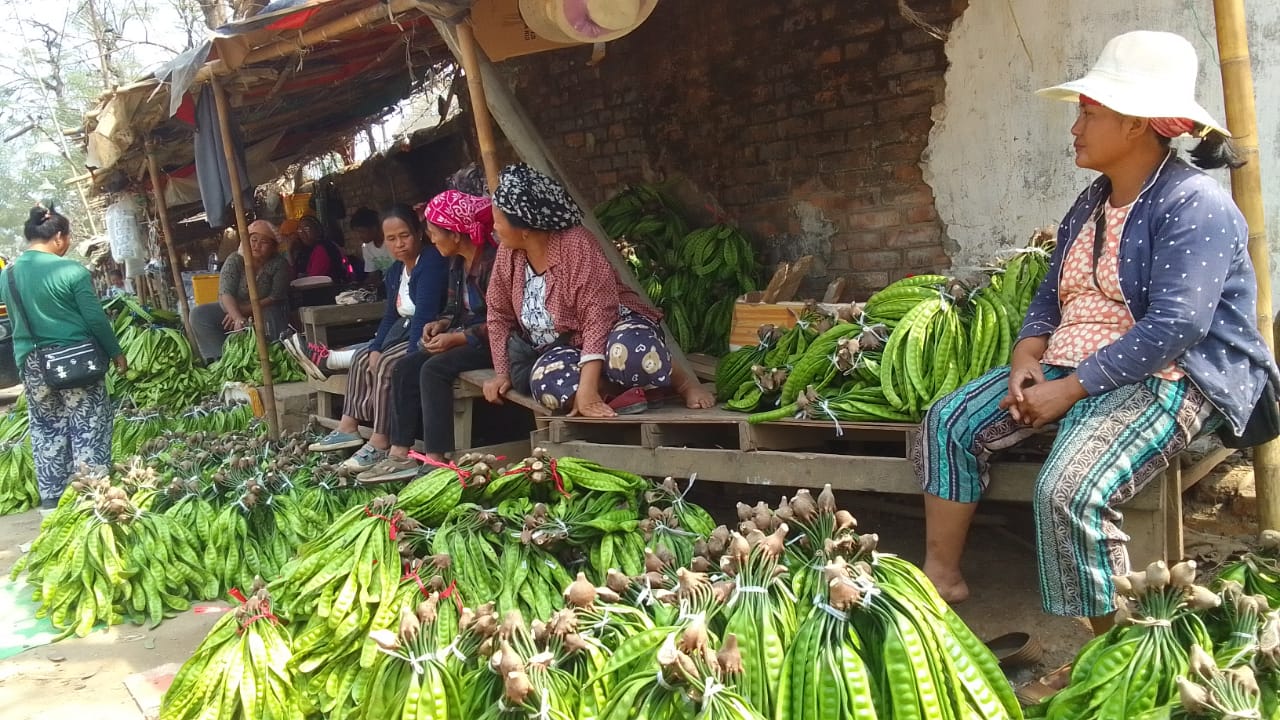 Vendors from Tamu in Myanmar
selling vegetables in the Indian border town of Moreh in Manipur state. Photo
by Rajeev Bhattacharyya.
Vendors from Tamu in Myanmar
selling vegetables in the Indian border town of Moreh in Manipur state. Photo
by Rajeev Bhattacharyya.
More distressing is
the condition of the displaced people in Myanmar who are living in the jungles
of Sagaing Region and the zone contiguous to the Indian state of Manipur. These
people are unable to reach safe areas and are apprehensive about crossing over
to Manipur as the government there has been reluctant to give shelter to more
Myanmar nationals fleeing the conflict.
According to the Burma
Refugee Committee of Kabaw Valley, about 5,000 refugees have taken shelter in
Manipur, mostly people from the villages of Yanglinphai, Khomunnom, and
Namontar that were burnt by the regime forces at the end of 2021.In January
this year, 81 refugees were arrested in Manipur for illegally entering India. Another 718
were pushed back by the border police two months ago as they were about to
set foot in the state. Afraid of persecution by the governments in both
countries, around 100 families are staying in temporary bamboo and tarpaulin
shelters on the border near Moreh in Manipur, the refugee committee said.
Demo Htoo, a former
police sergeant who heads a resistance group in Tamu, told me in an interview
on March 26 that “almost half of the IDPs in Sagaing Region, including Tamu,
are women and children. A large number are in the jungles and moving from place
to place for fear of the military. They are suffering from scarcity of food and
diseases.”
His claims could not
be verified independently, but they were echoed by another functionary
belonging to Battalion 3 of the PDF in Tamu.
Sagaing Region, along
with Kayah and Karen states, has the highest number of internally displaced persons (IDPs) in Myanmar. Thang Sei, a
member of parliament from Tamu, said that although the National Unity
Government (NUG) “has established healthcare units in many places, around
50,000 people in Sagaing Region do not have access to medical facilities.”
Children are suffering from ailments and the “availability of potable water is
a major problem.”
Many reports have surfaced about sick children in Sagaing Region being
unable to access medical treatment owing to restrictions imposed by the
military. A U.N. agency highlighted how the regime has been preventing access to emergency health services at many places across the
country, including in Chin State and Sagaing Region. There are also reports of
aid workers and volunteers being arrested and killed in Chin State. This was confirmed by CNF functionaries.
A health clinic set up
at a border zone of Manipur by two doctors from Tamu, who are part of the CDM,
previously provided some relief to IDPs and refugees. However, this unit has
not been functioning since May 3, when the ethnic conflict engulfed Manipur.
No Education for Many
Children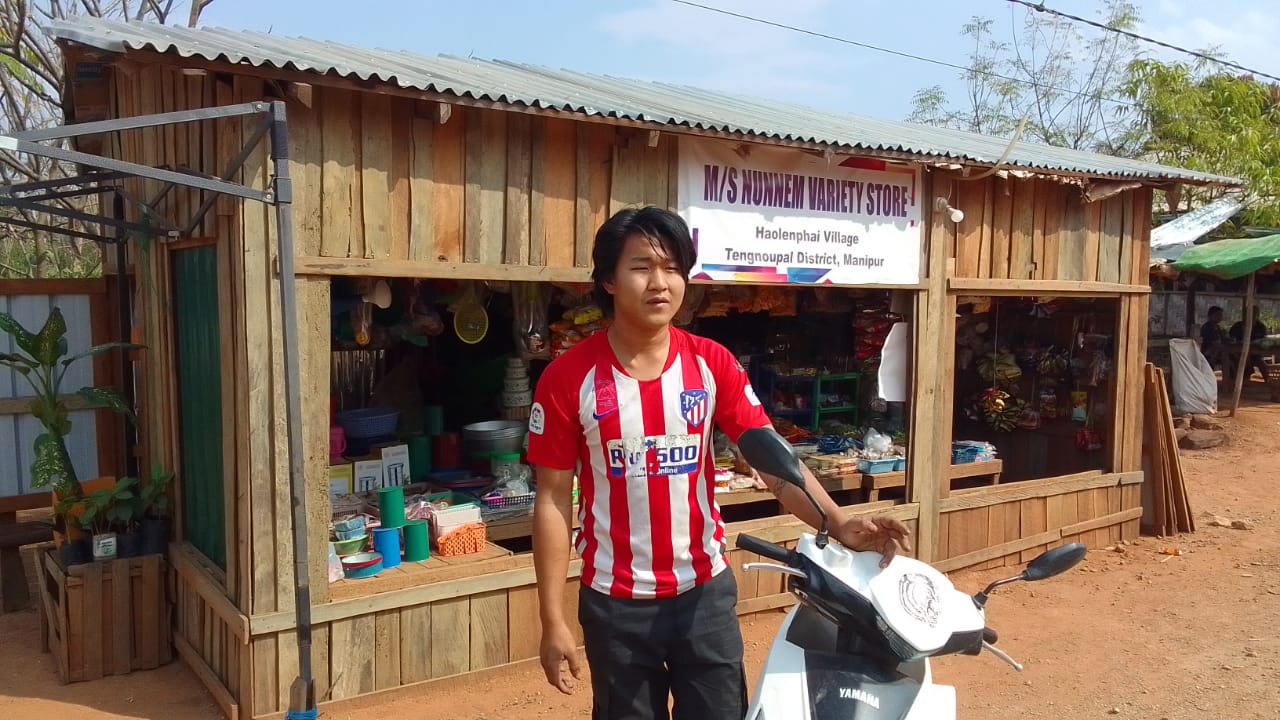 Sityanlin from Tamu near
his rented residence at Haolenphai in Manipur in India. Photo by Rajeev
Bhattacharyya.
Sityanlin from Tamu near
his rented residence at Haolenphai in Manipur in India. Photo by Rajeev
Bhattacharyya.
Sityanlin had hopes of
enrolling in a college after passing out of school. But within four months of
his completing Class 10, junta troops burned down his village, Tamul, which is
located 5 miles from the border with India in Manipur. The family of four,
which includes his parents and younger brother, relocated to Manipur a day
after the incident happened in mid-November of 2021.
On March 27, I spoke
to Sityanlin in the small house they had taken on rent at Haolenphai near
Moreh. He said he was not currently attending school because his identity
documents were burned along with his village. “No school gives admission
without these documents,” Sityanlin told me.
“We will have to just
wait for the situation to improve in our country so that we can return and
resume our normal lives.”
Sityanlin’s experience
is typical among the roughly 30 children who have been living in temporary huts
on the border near Moreh.
Students lucky enough
to have access to documentation can access schools run by Christian
missionaries in Moreh, where at least a hundred students from Tamu have been admitted. These students would cross the border
every morning at 8 a.m. and return to their homes in the afternoon. However,
these facilities have halted following the conflict in Manipur, which adversely
affected Moreh.
The turmoil in Manipur
has also led to the closure of the “Spring Schools” that were established in
some border areas of the state by the Burma Refugee Committee of Kabaw Valley,
with the support of the NUG, to educate the children of the refugees. A teacher
who had joined the CDM and is currently based in Manipur claimed that around
800 students were admitted to these schools, including about 40 students from
across the border.
“This program is
sustained through donations received from expatriates living abroad. There
could be around 700 students who have not yet been enrolled. We are hoping for
an early end to the disturbances in Manipur so that an adequate infrastructure
can be created for inclusion of the rest of the students not attending
schools,” he told me on condition of anonymity.
Hundreds of thousands
of students in Myanmar are reported to have abandoned their studies after the coup. Around 300,000 teachers and
other school staffers joined the CDM, leaving schools severely understaffed. In
June of 2022, when the Ministry of Education ordered the reopening of schools across the country,
around 5 million students did not turn up.
To fill the gap, the
NUG had set up its own schools throughout the country in areas controlled by
the resistance groups. NUG Education Minister Zaw Wai Soe has claimed that the shadow government was implementing an
interim education system throughout the country, with about 90,000 students
taking its 10th grade exam. At some places in Chin State and Sagaing Region,
where the NUG has not been able to extend its education program,
community-based schools have been set up by local committees and resistance
squads.
In north Kalay, I was
allowed to visit three schools established by the Pa Ka Pha. About 150 students
are attending classes, but a larger number avoid coming to these schools.
“Most of the teenagers
don’t want to attend school anymore,” Sir John, who heads the Pa Ka Pha in
north Kalay, told me. Schools have remained shut since the pandemic started
three years ago. “Our efforts are on to enlarge the existing schools and
convince the students to return. But there is also the constant threat of
raids by the regime troops,” he said.
Broken Families
Everywhere
Broken families are a
common phenomenon in most of the places I visited in Myanmar’s Chin State and
Sagaing Region and in the refugee camps of Mizoram. Members of the same family
are scattered at far-off locations for different reasons that range from the
necessity of earning money for survival to engagement with resistance groups.
At a refugee camp in
Mizoram’s Zokhawthar, I met two sisters who identified themselves as Khrih Lang
Nei and Esther Lal Nei from Sekan in Kalay. They relocated with their
parents, elder brother, and his family, including his wife and 4-year-old
daughter, after their village was burnt by the military in 2021. The younger
brother stayed back to join a resistance group. The elder brother was compelled
to take up a menial job in a far-off city on India’s mainland to support the
family.
At the IDP camp in
Salen village of Chin State, families are mostly from Thantlang, Hakha, and
Matupi. Here I met a woman in her mid-30s, who has four children. Her husband
was detained by the military in July of last year. Two weeks later, his body
was found with grievous injuries in a paddy field. While the woman’s eldest son
joined a mobile health care unit under the Chin Health Organization, another
son crossed the border to Mizoram to take up a job as a daily wage worker.
Communication between
the scattered members of such families is maintained through cell phones. But
those who are functionaries of resistance groups are cut off from their
families for months on end. This is true of the hundreds of young teenagers at
the rebel camps in remote locations, where the cell phone network is absent.
Pu Vela, a founder
member of the Kalay PDF, explained that there were more “fragmented families”
in Sagaing Region than in Chin State. “The battle is more intense in Sagaing
Region. And there are more young people with the PDFs here, who are
determined to fight the military regime,” he told me on January 29 at a camp
deep in the jungles between Kalay and Tedim.
For two-and-a-half
years, Myanmar’s junta has brutalized the population, which has courageously
opposed the military rule. Unlike previous phases of military rule, this time
around, the resistance movement is powerful, involving a larger number of
functionaries and covering larger swathes of territory, which the junta failed
to envisage. Neither side is willing to negotiate, and both are determined to
fight to the end.
AUTHORS

CONTRIBUTING
AUTHOR
Rajeev Bhattacharyya
Rajeev Bhattacharyya is a senior journalist in Assam in India’s
northeast.


No comments:
Post a Comment