There are dates that divide your life into a before and after. For me, it is April 12, 2024. That afternoon, hundreds of armed settlers stormed our village of Al-Mughayyir under the protection of the Israeli army, setting homes and cars ablaze. At least 25 residents were injured, some by settler and soldier fire — and 25-year-old Jihad Abu Alia was shot in the head and killed, martyred only weeks before his wedding.
On that day, the settlers reached my home. They barged inside, vandalized everything they could, and tried to burn the house while we were still in it. My wife and I covered our children with our own bodies as smoke filled the rooms. Afterward, our children needed months of psychological treatment to recover from the PTSD.
But my wife, who was pregnant at the time, paid the heaviest toll. The shock of that day affected her pregnancy so severely that doctors were forced to deliver our son prematurely. Yaqoub, the wish of my heart, lived for only two days. He is one of the youngest victims of settler terror, a child who died before he had a chance to see the light of day.
Home to fewer than 4,000 residents, the village sits 30 kilometers northeast of Ramallah, with agricultural lands stretching east toward the Jordan Valley. Between us and those lands runs the Allon Road, a north-south highway built by Israel through the West Bank that links settlements across the Jordan Valley while largely bypassing Palestinian communities.
For more than two decades, since the days of the Second Intifada, residents went out to try and prevent settlements from expanding beyond that corridor and swallowing the farmland that sustains the village. Yet since October 2023, we have found ourselves in an existential battle, alone with no protection against Israel’s merciless apparatus of erasure and displacement, aimed at turning our daily lives into an unbearable hell. Our stricken village has become a living laboratory for the ugliest policies of ethnic cleansing and deliberate economic strangulation.

Over the past three years, settlers have established eight outposts around Al-Mughayyir, tightening their grip on the village from every direction. Today, nearly all 43,000 dunams of our land have become inaccessible, either under the pretext of a “closed military zone” or because settlers have made it too dangerous to enter. Nearly 4,000 people have been squeezed into little more than a single square kilometer.
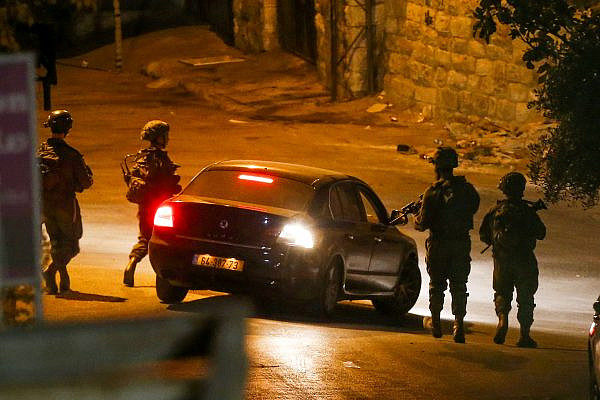
The army closed the main eastern entrance into Al-Mughayyir after October 7, and the only remaining way in and out of the village from the west is controlled by military checkpoints, where workers are delayed and humiliated. Delivery companies increasingly refuse to come. Teachers from outside the village struggle to reach our schools. Little by little, every ordinary act of life is made more difficult — with the clear goal of making us disappear.
Our only land
Settler and soldier incursions have become a feature of daily life in and around our village. Just this week, after receiving permission from Israel’s High Court, farmers went out to cultivate their land near the Allon Road — only to be attacked by settlers, while soldiers stood idly by.
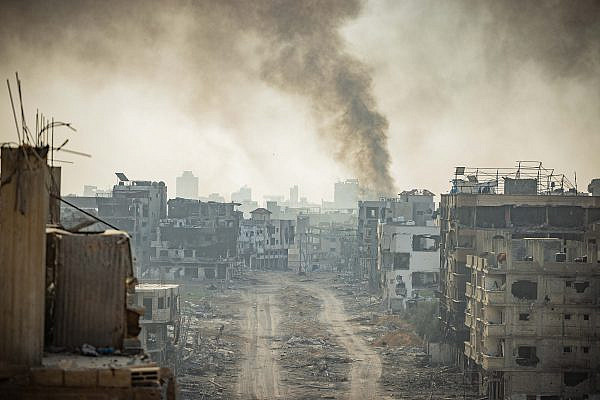
The siege is not only enforced by these routine acts of military violence, but has also transformed into an economic and environmental one. In 2025 alone, settlers and army bulldozers uprooted thousands of our olive trees, many during a three-day total siege on Al-Mughayyir last August. Our village’s greenhouses have been destroyed, crops burned, and fields repeatedly damaged by settler-ignited fires and the gas of stun grenades released during military raids.
As settler outposts have spread across the hills, they have violently swallowed up our grazing lands that have served generations of shepherds. “Closed military zones” have barred Palestinians from land where settlers freely graze their flocks — among them stolen sheep, with some families losing entire herds — under army protection. Within a few years, nearly 80 percent of the local livestock sector collapsed.

The pressure reaches every corner of human life. The buildings that settlers’s fires leave standing, the occupation’s judicial guillotine pursues. Army bulldozers have leveled homes, shops, and agricultural structures on the outskirts of the village that fall within Area C of the West Bank, where Israel refuses Palestinian building permits, and more than 90 buildings remain under demolition orders.
The function of such orders is clear: Whoever is not killed by bullets faces the slow death of poverty and unemployment, and whoever endures the siege faces having their home demolished over their head.
Death has touched practically every family in Al-Mughayyir. Munadel Abu Alia, 13; Amjad Abu Alia, 16; Hamdan Abu Alia, 18; Laith Abu Naim, 16; Raed Al-Na’san, 21; Muhammad Al-Na’san, 15: all killed by Israeli soldiers. Said Al-Na’san, 20, was shot dead by settlers last year while defending his neighborhood.
This April, settlers opened fire during an attack on our village school, killing 14-year-old Aws Al-Na’san and Jihad Abu Naim, 37, who stepped forward to shield the students with his body. Aws’ own father, Hamdi Al-Na’san, 38, had been killed in a similar settler incursion in 2019.
And less than a month ago, we buried 17-year-old Fadi Al-Na’san, who died from wounds he sustained a week earlier after settlers launched an attack on a house on the village’s outskirts; soldiers opened fire on him and others who tried to reach those under assault.
Most read on +972
I don’t know how a community survives such loss. I only know what happens next. If someone is wounded, the hospital fills with villagers. When someone is arrested, every family pays their relatives a visit. When we bury one of our dead, we bury them as though they were the eldest son of every household.
Despite the ever-present death and destruction, Al-Mughayyir chooses life every morning. It is, one might say, a school in the doctrine of sumud (steadfastness). Each season we plant new trees where others have been uprooted. We rebuild what is demolished because we know it may be demolished again. We return to land that others insist no longer belongs to us.
This is the only way, and this is our only land: Al-Mughayyir will remain.
A version of this article was first published in Hebrew on Local Call. Read it here.


No comments:
Post a Comment