Thursday, November 26, 2026

Are Trump’s tariffs aimed at securing US-friendly trade deals?

 United States President Donald Trump’s administration has proposed a new slate of trade tariffs against 14 of the US’s key trading partners, including China, India and the European Union.

The tariffs, which would go into effect next year, will hit China the hardest, potentially subjecting its products to a 40 percent import tax.

Recommended Stories

list of 3 itemsend of list

Washington says the tariffs, announced by the US Trade Representative (USTR) on Wednesday, are a response to unfair trading practices which harm US manufacturing, including “excess industrial capacity” – subsidies and policies that enable manufacturers to overproduce and undercut the US.

But Trump has long used tariffs as leverage in trade negotiations.

So, is the latest tariff announcement an effort to win concessions in upcoming trade deals? Here’s what we know:

Which economies do the tariffs target, and when would they start?

The tariffs would be imposed on products from China, Bangladesh, Cambodia, the EU, India, Indonesia, Japan, South Korea, Malaysia, Singapore, Switzerland, Taiwan, Thailand and Vietnam, according to the USTR. The maximum rates facing each country range from 20 percent to 40 percent.

It is unclear when exactly the tariffs would take effect, but a senior US official told the AFP news agency they would likely start in January at the earliest.

Why is the US imposing trade tariffs?

Trump has launched several rounds of trade tariffs against other countries and economies during his second term in office, with his administration citing various laws and justifications for the policies each time.

Advertisement

In April 2025, Trump imposed a sweeping raft of import taxes against almost all US trade partners, known as the “Liberation Day” tariffs. He said the measures were retaliation for unfair trade practices, including high tariffs, against the US that hurt local manufacturing. Trump imposed those tariffs under an emergency powers law, but the Supreme Court struck them down in February this year.

Then, in July, Washington cited a different law – section 301 of the Trade Act of 1974 – to impose more tariffs on more than 80 countries. This time, Trump’s administration claimed the targeted countries had failed to adequately restrict imported goods made with forced labour.

The latest tariff announcement also cites section 301 of the same trade act, which allows Washington to penalise countries it determines are treating US businesses unfairly. It follows an eight-month investigation into what Washington calls “structural excess capacity”, by which governments give their industries unfair advantages with subsidies, suppressed wages and other policies.

Jamieson Greer, the US trade representative, told CNBC that many US trading partners were using “market distorting practices that tilt the trade balance in their favour while eroding America’s manufacturing base”.

Inga Fechner, a senior economist at ING THINK, wrote that “while the legal justification for tariffs keeps changing, US protectionism is becoming increasingly difficult to unwind.”

2:55
  • Now Playing
    02:55
    US farmers squeezed by trade war, losing faith in Trump

    US farmers squeezed by trade war, losing faith in Trump

  • Next
    01:37
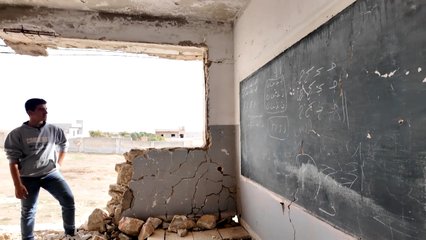
    Syrian children continue learning amid the ruins of war in Idlib

    Syrian children continue learning amid the ruins of war in Idlib

  • 02:04
    Thousands rally in Iraq’s Kurdish region against increased federal control

    Thousands rally in Iraq’s Kurdish region against increased federal control

  • 00:30
    Diesel tanker capsizes near Ibiza, killing crew member

    Diesel tanker capsizes near Ibiza, killing crew member

  • 02:44
    Why is France roiling?

    Why is France roiling?

Is this really about clinching better trade deals for the US?

For several targeted countries, that appears to be a big factor.

The tariff announcement comes as the US negotiates trade agreements with several of the targeted countries, including China, India, Vietnam and Singapore, with some of the proposed tariff rates explicitly linked to the outcome of those talks.

China’s tariffs are due to rise by 20 percent, respecting a cap under a current US-China trade truce. But if talks to secure a new trade deal fail by January 10, when that truce is due to expire, the rate could double to up to 40 percent, according to USTR.

Vietnam would also be subject to a capped tariff rate of 20 percent if it makes a trade deal with Washington, which it is actively negotiating. But if those negotiations fall through, its rate would jump to 35 percent.

India would face a 17 percent tariff rate if a trade agreement is reached with Washington, but a 25 percent rate if not.

Singapore faces a 10 percent tariff if it reaches a trade deal with the US, but a 20 percent rate if not.

Advertisement

Madeline Chalecki, assistant director at the Atlantic Council’s GeoEconomics Center, said the US is also exercising leverage over Mexico, which Trump recently said the US is close to concluding a trade deal with. Mexico was among the countries included in the USTR’s excess capacity investigation, but has not yet been hit with new tariffs.

“The threat of additional tariffs may be a better negotiating chip than the duties themselves,” the Atlantic Council quoted Chalecki as saying.

Mona Paulsen, an assistant professor at the London School of Economics and Political Science Law School, told Al Jazeera that beyond tariffs, the bigger worry regarding US trade negotiations is whether they are “from the beginning, an asymmetrical exercise more calibrated to US economic growth, and less one about two (or more) partners cooperating”.
11:37
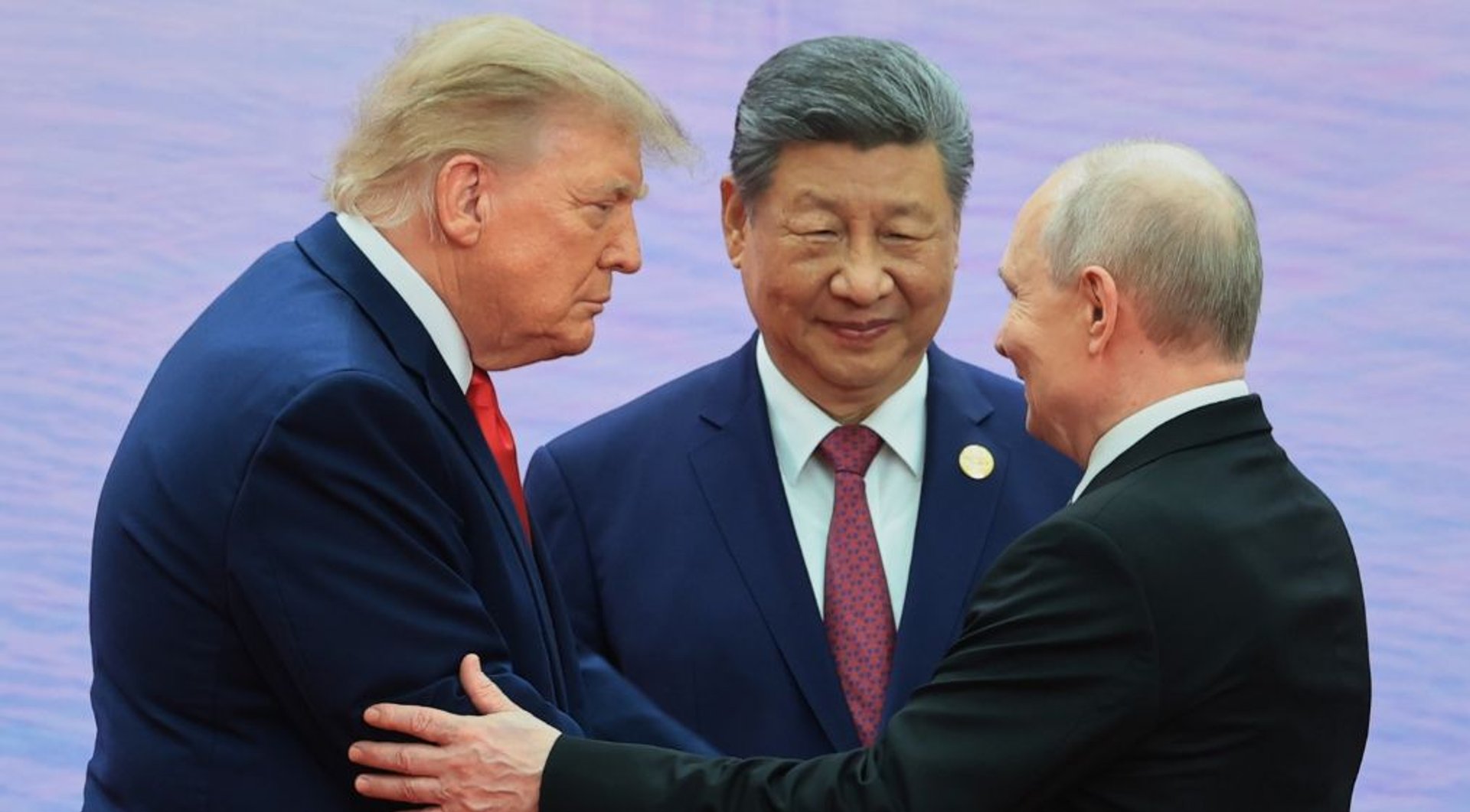
Can Trump, Xi and Putin agree on anything?

How have targeted countries responded?

Some of the targeted countries or blocs have criticised the US’s new tariffs, while others have pledged to step up efforts to pursue trade deals with the US.

China’s Foreign Ministry spokesman Guo Jiakun accused the US of engaging in “political manipulation”, saying the “so-called ‘overcapacity’ is a false issue”. Commerce Ministry spokesman He Yadong called on the US to “correct its erroneous practices” and said Beijing reserves the right to “take necessary measures” in response.

Singapore also called on the US to reevaluate ⁠the policy, which it expressed disappointment over.

India said any trade concerns between it and the US should be resolved in ongoing trade negotiations.

Vietnam said it was working to conclude a trade pact with the US and promised to address the “overcapacity” issue and to improve forced labour regulations.

The EU’s trade commissioner, ⁠Maros Sefcovic, ⁠said he strongly opposed the US tariff move, adding that Washington must abide by the 15 percent tariff limit it has already agreed for goods imported from the bloc.

Why else might Trump be imposing new tariffs now?

Several analysts say Trump is trying to set up a long-term tariff infrastructure, despite the Supreme Court striking down his “Liberation Day” tariffs earlier this year.

Josh Lipsky, vice president and chair of international economics at the Atlantic Council, said the Trump administration’s latest announcement appears to be an attempt to set up a “tariff web – one meant to stick past this administration”.

Gregory Shaffer, professor of international law at the Georgetown University Law Center, told Al Jazeera that Trump is trying to “set tariffs globally” without having to deal with Congress.

US Senator Ron Wyden, a Democrat who is expected to chair the Senate Finance Committee in next year’s Congress, called the tariff move “a blatant attempt by Donald Trump to reconstruct his illegal global tariffs”.

“Global overcapacity is a serious problem, but Trump’s unilateral price-hiking tariffs are not the solution,” said Wyden.
25:00
Trump vs US Congress

Netanyahu’s corruption trial: Is it really all over?

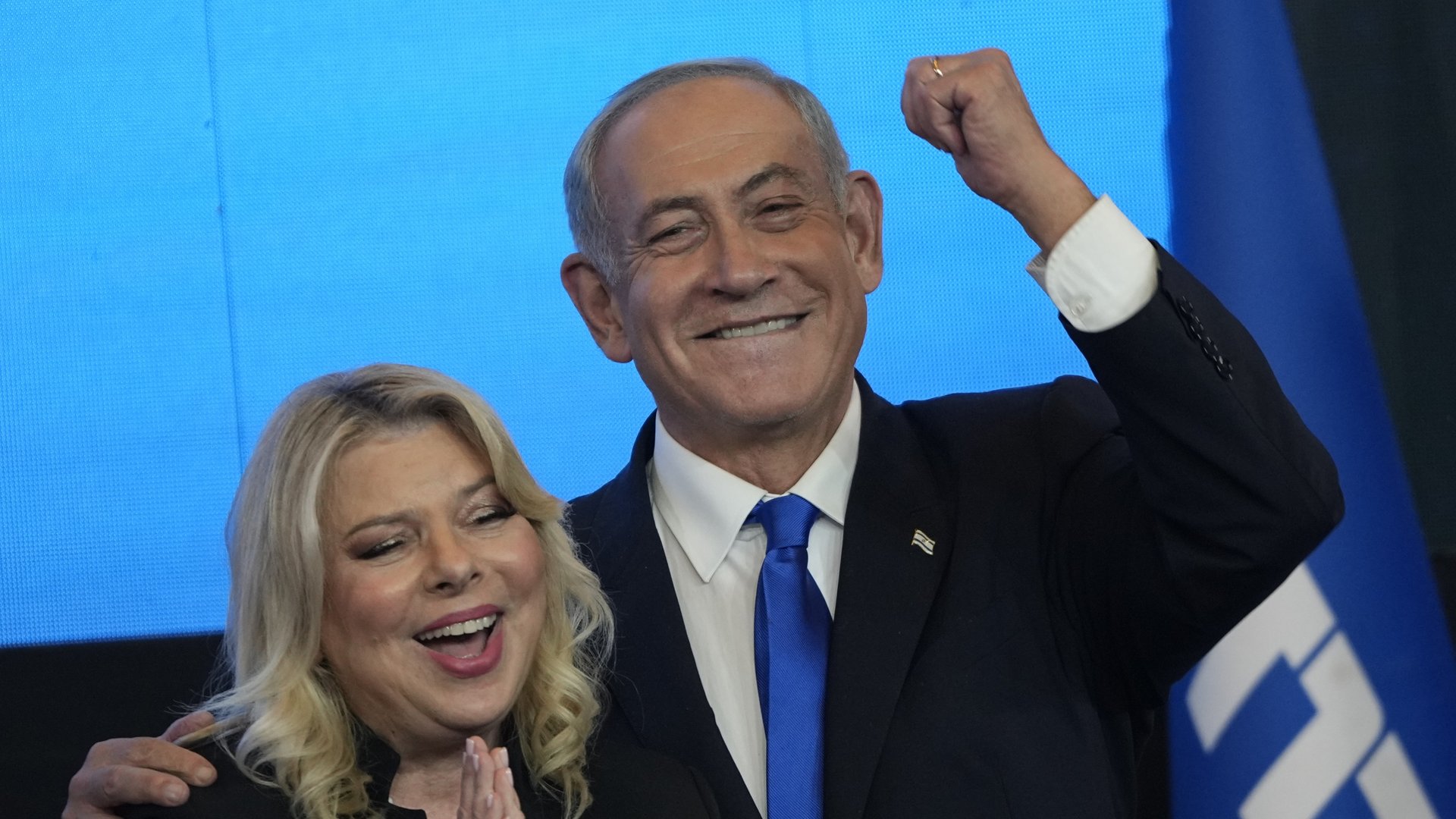
 Benjamin Netanyahu got a boost on Wednesday, when judges in his long-running corruption trial recommended dropping the most serious case against him.

Netanyahu, who has been Israel’s caretaker prime minister since October’s election, is fighting to maintain political power as his rival Gadi Eisenkot tries to build a coalition.

Recommended Stories

list of 4 itemsend of list

He has also been fighting three corruption cases since 2020, when proceedings against him for bribery, fraud and breach of trust began.

In his telling, the trial has dogged his political career, prevented him from forming a government during a chaotic period of repeated elections between 2019 and 2022 and was responsible for “years of terrible suffering” for himself and his family during the investigation and trial.

Much of the evidence against Netanyahu rests on his efforts to secure favourable coverage for himself and his wife, Sara, in the national media.

The first, Case 1000, relates to accusations that he and his wife received gifts and payments in return for political favours. The second, Case 2000, concerns accusations that he struck a deal with Israeli daily Yedioth Ahronoth, whereby he would legislate to limit the commercial activities of their rival Israel Hayom in return for favourable coverage. Another, Case 4000, relates to accusations that he granted favours to telecommunications company Bezeq in return for positive coverage for himself and his wife on a news site owned by the telecoms company’s chair.

1:35
  • Now Playing
    01:35
    Judges recommend prosecutors end corruption case against Netanyahu

    Judges recommend prosecutors end corruption case against Netanyahu

  • Next
    01:37
    Syrian children continue learning amid the ruins of war in Idlib

    Syrian children continue learning amid the ruins of war in Idlib

  • 02:04
    Thousands rally in Iraq’s Kurdish region against increased federal control

    Thousands rally in Iraq’s Kurdish region against increased federal control

  • 00:30
    Diesel tanker capsizes near Ibiza, killing crew member

    Diesel tanker capsizes near Ibiza, killing crew member

  • 02:44
    Why is France roiling?

    Why is France roiling?

Judges, who do not have the power to drop charges themselves, have recommended that the Attorney General and Netanyahu critic Gali Baharav-Miara drop Case 4000, saying the prospects of securing a conviction were low, particularly over the bribery allegations. They also expressed doubts about whether the conduct alleged in Case 2000 constituted a criminal offence – and called for the matter to be reconsidered.

Advertisement

In relation to Case 1000, the judges suggested that prosecutors and the defence seek an agreement to bring the proceedings to a conclusion, although a verdict remained another option.

“The judges’ intervention is unprecedented in its nature,” said Barak Medina, legal scholar at The Hebrew University of Jerusalem. “They expressed their views before the prosecution had an opportunity to present its arguments.”

So, is this the end of the matter? Will Netanyahu continue to carry the taint of alleged criminality, and how might his career be affected?

Here’s what we know:

Is Attorney General Baharav-Miara likely to drop the case?

It looks likely, but it is still too early to tell.

Responding to the judges’ suggestions, she said, “Every statement and proposal raised just now by the court” will be considered.

“We are open to examining everything. Including things that were argued in the past,” she said.

At the end of her remarks, the attorney general turned to the proposal by Netanyahu’s lawyers that proceedings be concluded through some kind of deal.

“We did this and were ready to accept his proposal, and we responded positively. Our extended hand remains.”

Israel's Attorney General Gali Baharav-Miara listens on as she attends a cabinet meeting at the Bible Lands Museum in Jerusalem on June 5, 2024. GIL COHEN-MAGEN/Pool via REUTERS
Israel’s Attorney General and longstanding Netanyahu critic Gali Baharav-Miara listens on as she attends a cabinet meeting at the Bible Lands Museum in West Jerusalem [File: Gil Cohen-Magen/Pool via Reuters]

Do they have a history?

Baharav-Miara and Netanyahu are longstanding political opponents.

Baharav-Miara was among the staunchest critics of Netanyahu’s attempts to overhaul the judiciary and unshackle his government from judicial oversight in the early months of 2023.

She has subsequently challenged several government policies and decisions, including measures affecting the independence of the civil service, and attempts to dismiss the head of Israel’s internal Shin Bet security agency, Ronen Bar.

The Netanyahu-led coalition repeatedly accused her of obstructing its agenda and voted unanimously to dismiss her in August 2025, a decision later overturned by the Supreme Court.

So, is Netanyahu in the clear now?

He seems to think so.

In a defiant speech calling for the trial to end following the judges’ recommendations, Netanyahu said: “The boycotts must end, and now.”

He was referring to the refusal of opposition politicians to work with him due to his case.

“I know what enormous and immediate dangers the state of Israel faces,” he continued. “There is only one way to deal with them. To unite in order to deal with them. We must unite to secure the future of Israel – no less than that, and immediately.”

Advertisement

None of Israel’s main opposition politicians have yet commented on the judges’ advice.

Roi Zur, an Israeli academic at the University of Essex, said the main problem with allying with Netanyahu was not the corruption trial, but rather “Netanyahu’s role in October 7 and the war that happened afterwards”.

“I don’t think a coalition with Netanyahu becomes more probable. [Naftali] Bennett, who was more open to such a coalition in the last two weeks, is still open to it, whilst the other three party leaders – Eisenkot, Lieberman and Golan – still seem to be against such a coalition,” he said.

Israel’s opposition leaders, L-R: Yair Lapid, Naftali Bennett, Gadi Eisenkot, Avigdor Lieberman and Yair Golan, have commented on the judges’ advice [Getty Images]

What have critics accused Netanyahu of?

Netanyahu has been accused of enacting government policies to derail his criminal proceedings. These include claims that he has prolonged the genocidal war on Gaza, putting his political survival ahead of Palestinian lives, a ceasefire and a deal to return Israeli captives.

The accusations intensified during his 2023 judicial overhaul, which opposition politicians, legal figures and protest movements argued would weaken judicial independence and provide Netanyahu with an escape route from prosecution.

In February 2023, former attorney general Avichai Mandelblit accused Netanyahu of pursuing the overhaul to bring his corruption trial to an improper end. Justice Minister Yariv Levin, the reforms’ architect, acknowledged that Netanyahu’s indictments had helped persuade the public of the need for judicial change.

The accusations extended to the conduct of the war on Gaza.

In May 2024, Defence Minister Yoav Gallant urged Netanyahu to put national priorities ahead of personal interests, criticising his lack of a post-war plan. A month later, Benny Gantz, then his principal political rival, accused him of obstructing a captive-release deal for political reasons.

In June 2024, former United States President Joe Biden said there was reason to believe Netanyahu was prolonging the war for political gain, a comment widely interpreted as referring to his corruption trial.

FILE PHOTO: U.S. President Joe Biden is welcomed by Israeli Prime Minster Benjamin Netanyahu, as he visits Israel amid the ongoing conflict between Israel and Hamas, in Tel Aviv, Israel, October 18, 2023. REUTERS/Evelyn Hockstein//File Photo
In June 2024, former US President Joe Biden acknowledged there was ‘every reason’ to suspect Netanyahu was prolonging the war for political self-preservation [File: Evelyn Hockstein/Reuters]

Have other leading Israeli ministers faced similar charges?

Most Israeli prime ministers to have served from 1996 to the present have at some point faced a corruption investigation.

In May 2014, former prime minister Ehud Olmert was convicted of bribery and breach of trust in several corruption cases relating to his time in office and as Jerusalem mayor. He served 16 months in prison.

His successor and Benjamin Netanyahu’s immediate predecessor Ehud Barak, a longstanding ally of disgraced American financier Jeffrey Epstein, was also investigated over allegations of bribery and illegal campaign financing in 2014 but was never charged.

In the late 1990s, Ariel Sharon was investigated over alleged payments to his son in return for political favours in a case known as “the Greek Island Affair”, but prosecutors dropped the case for lack of evidence.

Advertisement

In 2000, Ezer Weizman, who served as Israel’s president and previously as defence minister, was also investigated for corruption. While police said there was enough evidence to support a case of breach of trust and fraud, the statute of limitations had run out. Weizman resigned in July 2000.

How Fascism Wins and Fails by Walden Bello

  Facebook Twitter Reddit Bluesky Email  Trump presents the National Medal of Science to Elon Musk at a “New Golden Age” summit with tech an...