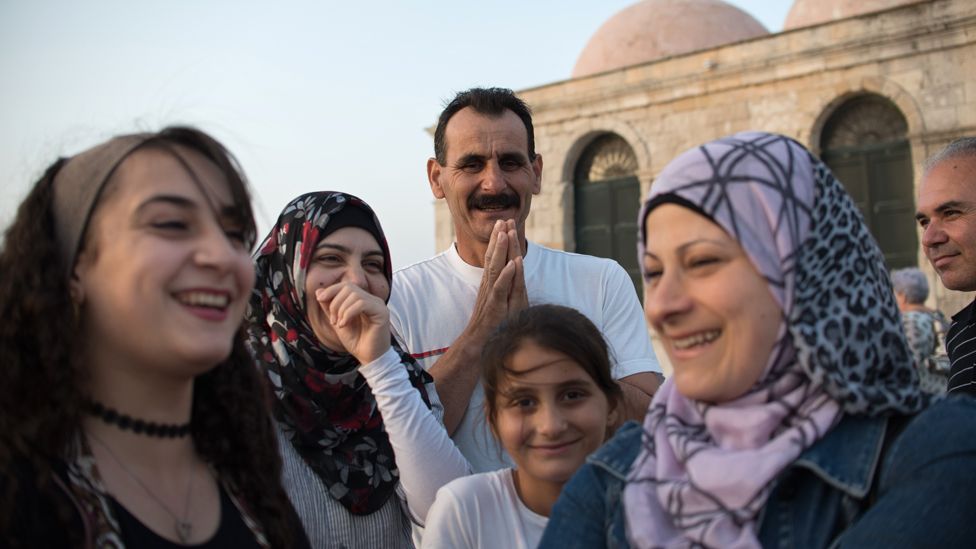
Entering a small shop in Chania, on Crete's north-west coast, Ahmed began to introduce himself. The owner looked at him open-mouthed. He understood what Ahmed was saying, but some of the words he was using were unfamiliar and old-fashioned, and others he didn't understand at all. It was as though Ahmed had arrived not just from Syria, but from another age.
"He could not believe that someone was still speaking the old language today," says Ahmed.
Ahmed, 42, was speaking in a version of the Cretan dialect he had learned from his parents, growing up in a village in northern Syria in the 1970s and 80s. His parents had spent all their lives in Syria - but some members of the previous generation had been born in Crete and, living together as exiles, they had kept Cretan culture alive.
"We learned Arabic at school but always spoke Greek at home," says Ahmed. Children learned Greek dances and recited short Cretan poems known as mantiades. The parents passed on traditional Cretan recipes, such as fried snails, and intermarriage with the Syrian population was rare. Ahmed's wife, Yasmine, is also from a Cretan family.
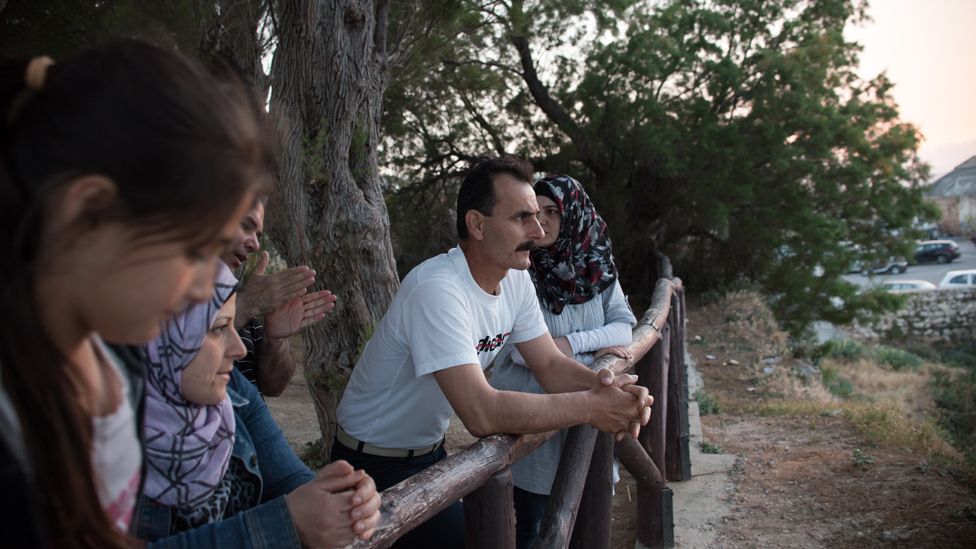
Some went to Turkey, Libya, Lebanon or Palestine, but Ahmed's family travelled to al-Hamidiyah, a village in Syria established for the refugees by Ottoman Sultan Abdul Hamid II.
In later years its 10,000 inhabitants would keep in contact with modern Crete by watching Greek television via satellite and occasionally villagers would travel back to the island to work.
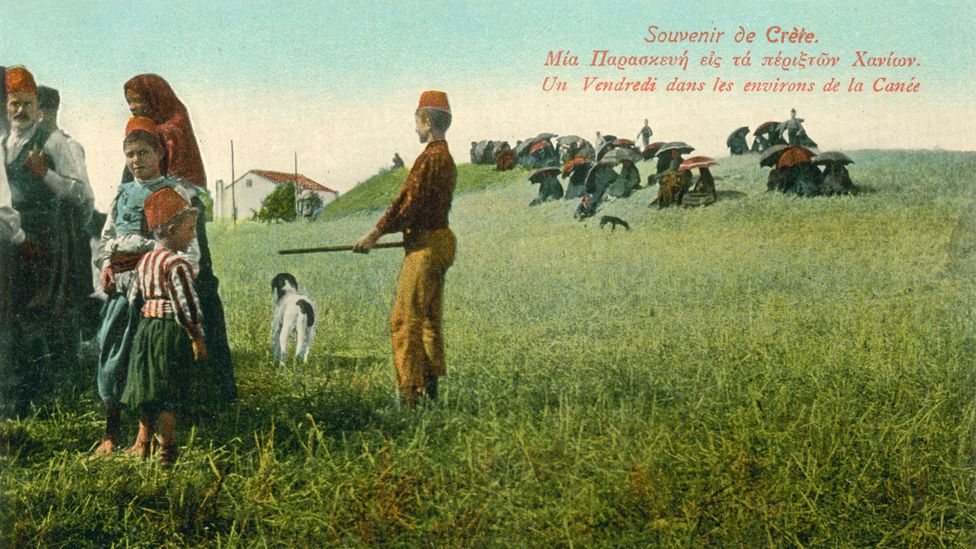 Image copyright Alamy
 "Everyone knew exactly which village everyone else's family came from. Our grandparents would say how beautiful Crete was and how they had everything they needed there.
"We always wanted to visit, but never had the chance."
Then Syria's civil war came, and left them little choice.
Ahmed's sisters, Amina, Faten and Latifa, and their families were the first to leave. Ahmed himself struggled to find work after suffering from a slipped disk and had difficulty scraping together the money to pay a people smuggler. But finally he, Yasmine and their four children - Bilal, 14, Reem, 12, Mustafa, nine, and four-year-old Fatima - set off for Greece in the spring of 2017.
"He started shouting to his colleagues, 'Look, look, there's a Cretan here! Come and see!'" Ahmed says. "Everyone started crowding round out of curiosity."
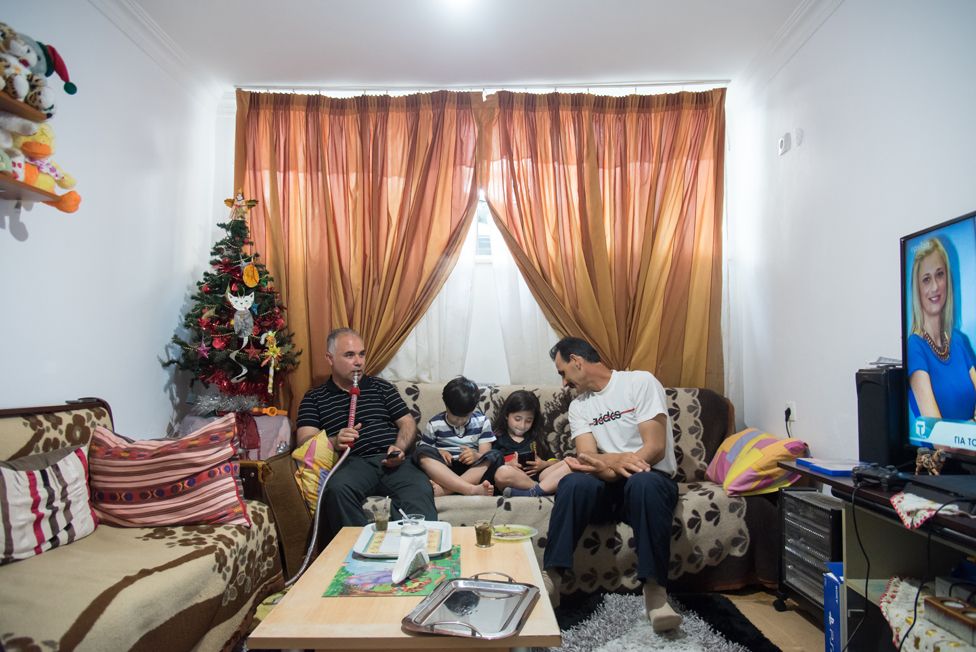
"But with a bit of patience, we can understand each other," says Ahmed.
And although they speak the language they have never learned to read or write it, so they still needed assistance to fill out forms.
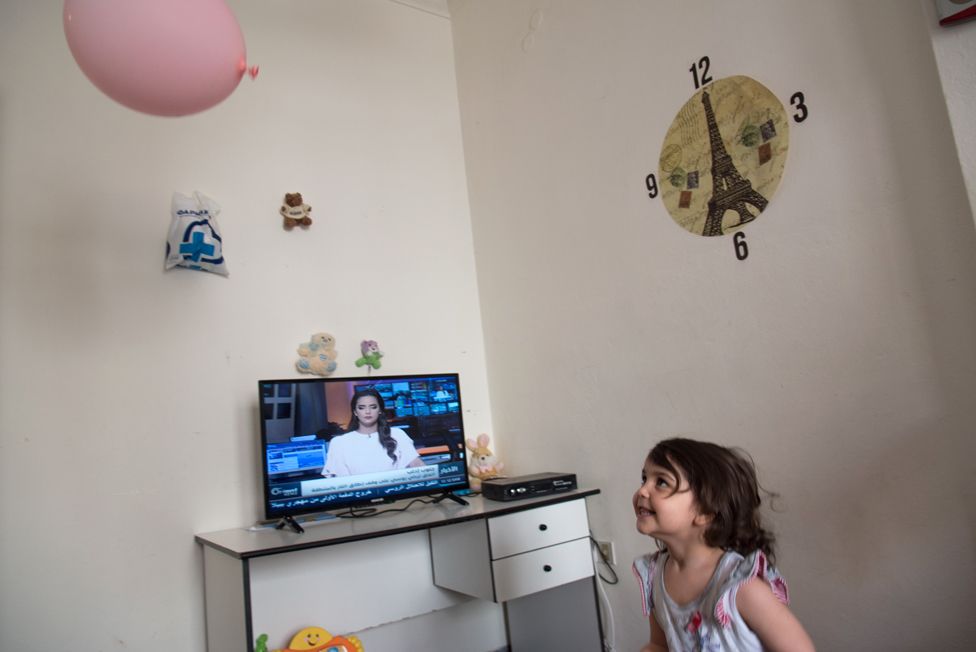
On arrival, Ahmed was immediately hospitalised, because of problems stemming from chronic epilepsy. Medical staff, amazed to hear the old dialect being spoken, called a reporter from the local paper.
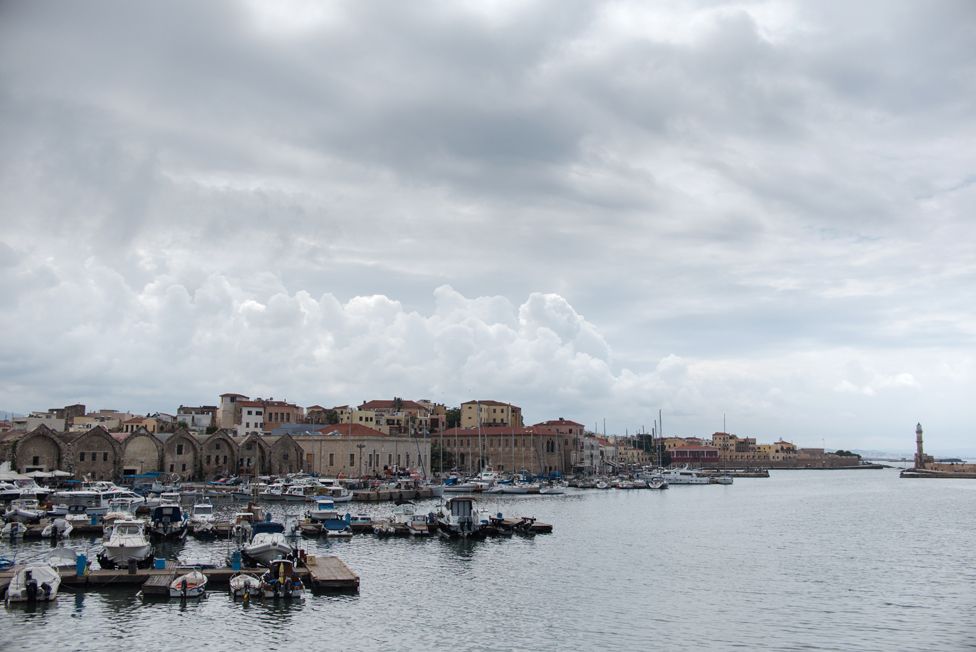
"When I left hospital everyone in the town already knew me," says Ahmed, whose family was settled in an apartment near Chania's historic Venetian port.
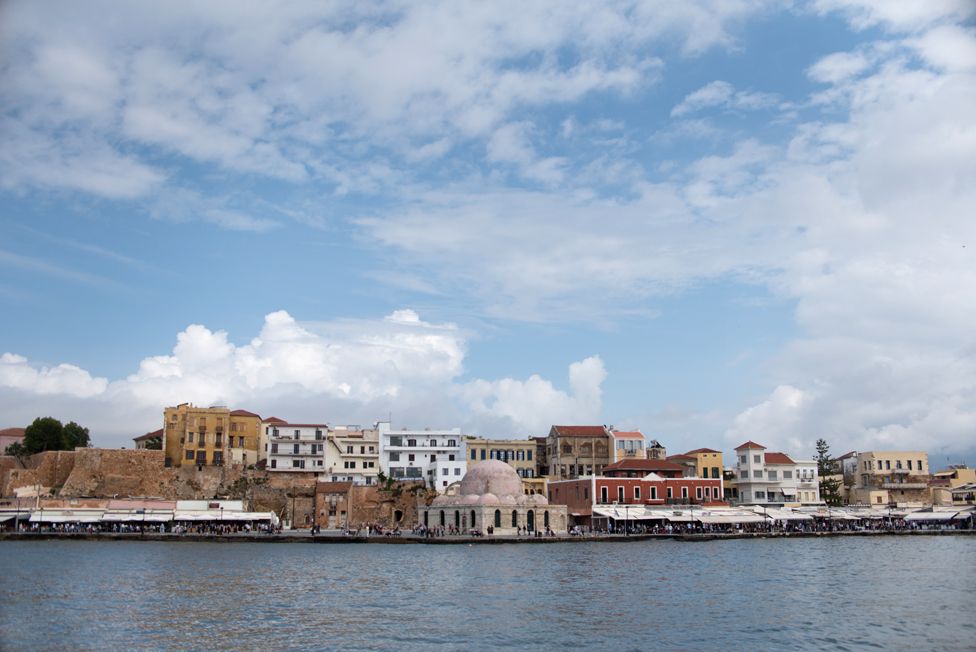
"They view us as Cretans that have returned."
Ahmed then made a pilgrimage to his grandparents' native village, Skalani, just outside the capital, Heraklion.
Walking down its streets, gazing at the shady tavernas and small stone houses, he felt goosebumps all over his body. Although it was his first time visiting the village, he'd been hearing about it all his life.
"I couldn't find their exact houses, but the locals showed me the fields that the Muslim community would have worked on," he says.
Ahmed and his siblings have to tread carefully when looking into their family history. "I don't want the people living there to think I'm trying to claim the land back," says Ahmed's brother-in-law, Mustafa.
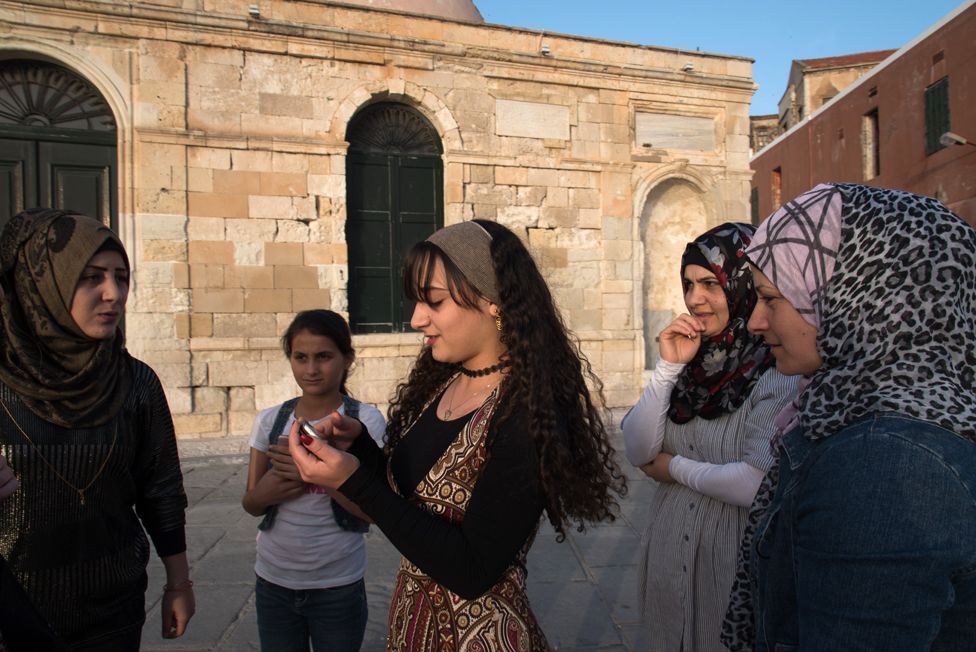
Although Chania had no Muslim community for more than a century, things are now changing. As well as the 25 members of Ahmed's family, several hundred refugees from the Middle East have settled in the town over the past few years. The long-closed Ottoman mosque on the seafront is now used as an art gallery, so Muslims pray in rented rooms.
A recently-opened Arab supermarket sells imported goods, and Ahmed and his family enjoy eating a fusion of local and Syrian food, such as Greek salad, pitta bread, and hummus.
And although Ahmed appreciates the chance to experience life in his ancestors' homeland, the circumstances that led him here make the experience bittersweet.
"When you are forced to leave the place you were born, you lose a part of yourself," he says.
"If Assad wasn't in power and it was safe for us to return to al-Hamidiyah, then I would. But I would like to keep ties with Crete and visit regularly."
Photographs by Louiza Vradi


No comments:
Post a Comment