The Myanmar military kidnapped civilians and forced
them to work as human shields, attacked homes, churches and carried out
massacres, according to a report that warns recent atrocities in eastern
Myanmar may amount to war crimes.
The
report, by the Myanmar-founded human rights group Fortify Rights, documents abuses by the country’s
military in Karenni state, also known as Kayah state, an area that has seen intense fighting between the
army and groups opposed to last year’s military coup.
The
military has faced strong resistance in Karenni state, and has responded with
brutal violence in an attempt to crush opposition.
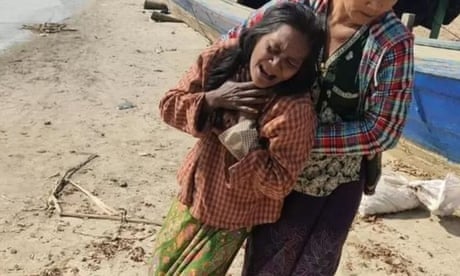
Myanmar watches a mother’s grief as
junta soldiers claim another victim
Read more
The
report includes claims that the army used civilians as human shields and as
forced porters – allegations which have also been reported elsewhere in the
country, including in Chin state.
An 18-year-old student from Moe Bye township, located on the border between
Karenni and Shan states, told interviewers that he was taken, along with his
uncle and two other men, in early June 2021 and used as a human shield in
clashes between the military and the local armed resistance. The group escaped
after having been detained for four days, during which time they were tied up,
blindfolded and tortured, the student said.
Another interviewee alleged that
he and nine others were captured by the military and forced to porter army
equipment for five days.
The Fortify Rights report, a flash report providing preliminary
documentation, based on interviews with 30 people, including eyewitnesses and
survivors, adds to growing evidence of military abuses.
Numerous international organisations have raised concern over
recent atrocities in Karenni, including the Christmas Eve massacre of at least 40 civilians,
including a child and two humanitarians working with Save the Children, near
the village of Moso in Hpruso township. The victims were killed and burned.
The Karenni Civil Society Network estimates that 170,000
civilians, more than half the state’s estimated population, have been displaced
since the military seized power last year. UN estimates suggest about 91,900
have been forced to flee their homes.
According to Fortify Rights, the military has targeted shelters
for those who are displaced, including camps and churches, resulting in the
deaths of civilians. In January, the military killed at least three people,
including two children, when it bombed a camp for displaced people near the
village of Ree Khee Bu in Hpruso.
Banyar Khun Naung, director of the non-profit Karenni Human
Rights Group, said there were no indications that violence would reduce in
intensity and that he feared shortages of food and essential supplies would
worsen over the coming months.
“In Karenni we can see that our socio-economic condition has
collapsed. Ordinary people, even if they are not [internally displaced people],
even if they are the host community of IDPs, they can hardly survive.
“We cannot grow rice, or vegetable, we cannot trade between
township to township, the online banking system has failed,” he said. The
supply of food and medicine to Karenni state was also being blocked by the military,
he said.
Statements by the UN expressing concern over the situation in
Myanmar have had “no discernible effect” on the military junta, Fortify Rights
said. The junta has also failed to honour a five point plan developed last year
by the Association of Southeast Asian Nations, which calls for the “immediate
cessation of violence” and a commitment for all parties to exercise “utmost
restraint.”
Asean, which has led diplomatic efforts to ease the crisis and
will meet this week, should support the establishment of a UN security
council-mandated global arms embargo, Ismail Wolff, regional director at
Fortify Rights.
“The Myanmar junta is murdering people with weapons procured on
the global market, and that must stop,” said Wolff. “The UN security council must
urgently impose a global arms embargo on the Myanmar military, and it would be
strategic and sensible for Asean to support it.”


No comments:
Post a Comment