The development
follows the UN World Food Programme (WFP)’s announcement that it would be cutting
back on assistance to those sheltering in the vast Cox’s Bazar camp complex
from 1 March because of a lack of funding.
These rations
cuts are a stain on the conscience of the international community,”
said Tom Andrews, UN Special Rapporteur on Myanmar. “I have spoken
with desperate families in the camps who have already had to cut back on
essential food items due to a spike in prices. Reversing these cuts in
food aid is literally a matter of life and death for Rohingya
families.”
One million
impacted
Mr. Andrews, who reports to the Human
Rights Council in
Geneva in an independent capacity, said that the cuts would impact
nearly one million Rohingya refugees who fled attacks and persecution
by the Myanmar military in 2017.
UN humanitarians have already warned that four in
10 Rohingya children now sheltering in Bangladesh suffer from stunted
growth. Anaemia also affects more than half of the youngsters in Cox’s
Bazar camps and more than four in 10 pregnant and breastfeeding Rohingya women.
The World Food Programme has reported that it has
a $125 million funding shortfall to provide lifesaving
assistance to the Rohingya, whose monthly ration has been slashed from
$12 to $10.
Families can use this money to choose from over 40 dry
and fresh food items at WFP outlets throughout the camps. But the repercussions
of the cutbacks “will be dire”, the UN agency said, as other critical
services are already dwindling, almost six years into the Rohingya crisis.
Empty words
UN News
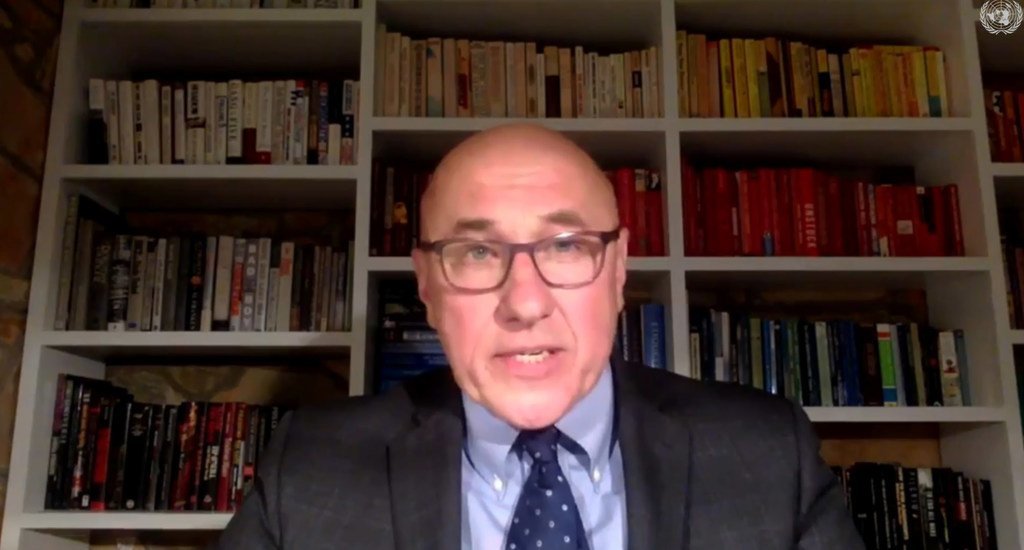
Thomas Andrews,
independent human rights expert on Myanmar, gives a briefing via
videoconference.
Echoing that warning, Special Rapporteur Andrews
called for immediate support from UN Member States who had offered only
“rhetorical support” for the Rohinyga. But “Rohingya families cannot eat
political rhetoric”, he said.
“It is past time for UN Member States to replace empty
declarations of support with life saving action,” Mr. Andrews said.
If no further humanitarian funding is forthcoming,
“these cuts will be even deeper over the next two months, with food rations
reduced by a third”, the Special Rapporteur continued. “That would mean that,
on average, Rohingya refugees in Bangladesh camps would need to try and survive
on $0.27 per day”.


No comments:
Post a Comment