Saturday, November 21, 2026

Letter from Bethlehem: Mazin Qumsiyeh

 My wife and I will be traveling to three European locations to give talks. Please email me if you can arrange talks to complement those already arranged and we can send you details.

30 November - 6 December: Barcelona
7 December - 10 December: Paris
10 December - 13 December: Vienna
Example event in Barcelona to be held 5 December https://luma.com/bnu3gr8j

Next week marks a historic milestone for our community as we celebrate the opening of the newly expanded Palestine Museum of Natural History building. What began as a modest 100-square-meter exhibition space has now transformed into a 1,400-square-meter national-level museum. Every month we hold a staff/volunteer meeting to review monthly progress. Here you can find a link for October development (slides): 

On behalf of the Palestine Institute for Biodiversity and Sustainability (PIBS) at Bethlehem University, I am writing to invite you to join us in this new chapter by becoming a vital financial or in-kind partner. 

At PIBS, our guiding motto is simple but profound: RESPECT: first for ourselves, then for others, then for the environment/mother Earth. Operating in a region of conflict and rapid transformation, our institute, museum, and botanical gardens serve as an oasis of peace, learning, and rejuvenation for both our local communities and wildlife. To DONATE: http://palestinenature.org/donations

The new museum facility features expanded and new interactive exhibits covering Palestine’s biodiversity, geology and paleontology, and ethnography. However, the museum is opening in phases, and several essential components and educational spaces remain pending due to critical funding constraints.

We are seeking your support to sustain and grow several of our most urgent initiatives:
1) More exhibits: Funding and material support are needed to finalize the remaining interactive displays in our new facility to maximize its educational and public engagement capacity. In particular the Paalestine hall (history of Palestine through the ages, the Naaakba etc).
2) Animal Rehabilitation Unit: We actively rescue and rehabilitate injured wildlife—including birds of prey, mammals, and reptiles—yet this crucial unit currently operates entirely without dedicated funding.
3) Conservation and Seed Bank: We conduct field trips to collect and preserve seeds from rare and endangered wild plants to safeguard Palestine’s biodiversity for future generations
4) Mobile Museum and Youth Programs: We run a mobile museum that travels to marginalized communities across the West Bank, alongside youth programs that link environmental learning with Palestinian cultural heritage.
5) Programming in the new museum facilities: These include workshops for women empowerment, for university students, and for other segments of our society related to living susstainably

There are cert
ain infrastructure aspects that also await genrous donors and can have naming recognition of donors (e.g. new exhibit halls, cafeteria, outside fountain, garden paths, new entrance hall). We are happy to send details on naming possibilities. 

Whether through financial sponsorship, donated equipment, scientific and educational materials, or professional expertise, your contribution will directly empower responsible human interaction with our natural world. You can volunteer remotely or in person (see http://palestinenature.org/volunteer )

 Recent short videos made by volunteers about Volunteering at PIBS
https://www.instagram.com/p/DfxTCNrzXXy/
https://www.instagram.com/reels/DfNZyf1zjty/  

To DONATE: http://palestinenature.org/donations (available tax deduction in some countries)

Please let us know if we can schedule a personal meeting or call to discuss how YOU can  partner with PIBS to make a difference for the future generations of humans and of other living beings.

Thank you for your time, consideration, and commitment to a sustainable future.

Sincerely,

Mazin Qumsiyeh on behalf of the team
Palestine Institute for Biodiversity and Sustainability (PIBS)
Bethlehem University

The Relationship Between IHL and Genocide in The Gambia v. Myanmar Case

 Much has already been written on the ICJ’s landmark judgment in The Gambia v. Myanmar case (GvM), and much more will no doubt be written in the coming days. In this post, I want to focus on how the Court dealt with a specific — and admittedly narrow — issue I recently addressed in an article in the Journal of International Criminal Justice: whether genocide can be committed through acts that comply with IHL, such as killing a combatant who is a member of a protected group.

Neither of the ICJ’s two previous genocide decisions, Bosnia v. Serbia and Croatia v. Serbia, specifically resolved that issue. They did, however, suggest that genocide could potentially be committed through IHL-compliant acts. In the Bosnia case, the Court rejected Serbia’s argument that it could not be found responsible for genocide because its deportation of the Bosniaks complied with IHL, noting in para. 334 that “no such justification could be accepted in the face of proof of specific intent.” In the Croatia case, the Court did not address the genocide issue directly, but acknowledged in para. 474 that because “a particular act may be perfectly lawful under one body of legal rules and unlawful under another… it cannot be excluded in principle that an act carried out during an armed conflict and lawful under international humanitarian law can at the same time constitute a violation by the State in question of some other international obligation incumbent upon it.”

There is no equivocation in GvM. On the contrary, the majority explicitly rejected the idea that that genocide cannot be committed through acts that comply with IHL:

305. Accordingly, the Court concludes that although compliance with another body of international law, including international humanitarian law, may inform the identification of intent with respect to the actus reus of genocide, as well as genocidal intent, such compliance does not exclude conduct from the scope of the Genocide Convention.

The majority’s analysis is extremely brief — barely two paragraphs. The first paragraph (303) simply notes, with regard to the actus reus of genocide, that “[t]he text of Article II of the Convention does not require that the acts enumerated therein be unlawful pursuant to a distinct body of international law.” The second paragraph (304), which addresses genocide’s mens rea, is a bit more substantive, pointing out that although compliance with IHL is relevant to the existence of specific intent, IHL-compliance and specific intent can nevertheless coexist in the same act:

With respect to genocidal intent, the Court likewise has considered that compliance or non-compliance with international humanitarian law, including whether attacks “caused casualties and damage far in excess of what was justified by military necessity”, may be relevant in inferring the presence or absence of the specific intent to commit genocide. On the other hand, the fact that members of a protected group could be lawfully targeted or incidentally harmed under international humanitarian law does not exclude the possibility that they may be killed or harmed with genocidal intent (citation omitted).

None of the other opinions and declarations in the case conclude either that an IHL-compliant act cannot satisfy the actus reus of genocide or question the idea that an IHL-compliant act could be committed with specific intent. Indeed, in his partly concurring and partly dissenting separate opinion, Judge ad hoc Kress provided a useful scenario that demonstrates why it would make little sense to exclude IHL-compliant acts from the scope of the Genocide Convention:

Imagine a case where a State has formed genocidal intent and has begun to realize it through acts of killings against members of the targeted protected group. Now imagine that members of that group organize themselves militarily and fight back in defence of the group in such a manner that the threshold of a non-international armed conflict is reached. I would find it difficult to accept that, in such a case, the killings of fighters of the newly formed military wing of the protected group cease to qualify as acts within the meaning of Article II (a) of the Genocide Convention merely because these acts do not violate the targeting rules applicable under the law of non-international armed conflict. For this would mean that the State concerned could — to that extent — carry out its genocidal plan without thereby committing genocide, simply because the targeted group succeeded in organizing itself militarily in its defence.

The scenario assumes, of course, that we know the state in question specifically intends to destroy the protected group. There will obviously be situations in which it is unclear whether a state using violence against members of a protected group intends to destroy the group or is acting pursuant to non-genocidal motivations. When that is the case, it may be difficult — perhaps impossible — to infer specific intent from acts that comply with IHL. Indeed, it may even be difficult to infer specific intent from acts that violate IHL. Sometimes a war crime is just a war crime.

The basic point, however, remains: when the specific intent to destroy a group can be proven, there is no reason to consider acts of violence against members of that group to be non-genocidal simply because they complied with IHL. On that point, the majority in GvM and Judge ad hoc Kress are absolutely right.

Rahul Gandhi backs strong India-Israel ties despite Gaza war

 Rahul Gandhi backs strong India-Israel ties despite Gaza war | Israel-Palestine conflict | Al Jazeera

Rahul Gandhi backs strong India-Israel ties despite Gaza war

NewsFeed

Rahul Gandhi backs strong India-Israel ties despite Gaza war

India’s opposition leader Rahul Gandhi, says New Delhi should continue to maintain strong strategic and defence ties with Israel. Gandhi is a leading challenger to PM Modi, the latter of whom has deepened the relationship between the two countries.

Indian man sentenced to 19 years in US Sikh separatist assassination plot

 An Indian national has been sentenced to more ⁠⁠than 19-and-a-half years in prison in the United States in a murder-for-hire plot targeting a prominent Sikh separatist leader living in New York City.

Nikhil Gupta, 55, pleaded guilty in February to three conspiracy charges for plotting to hire a hitman to assassinate Gurpatwant Singh Pannun, a US citizen, lawyer and vocal advocate for a sovereign Sikh state.

Recommended Stories

list of 3 itemsend of list

US District Judge Victor Marrero handed down the 235-month sentence at a federal court in Manhattan on Friday. Gupta faces deportation to India after completing his prison term.

Addressing the court on Friday, Gupta said he regretted straying from the nonviolent example set by Indian independence leader ‌‌Mahatma Gandhi. “I’m sorry to Mr Pannun, I’m sorry to the communities I hurt, I’m sorry to my own family,” he said.

Prosecutors accused Gupta of conspiring with an Indian government official to kill Pannun, a dual US-Canadian citizen and lawyer for the US-based separatist group Sikhs for Justice, in New York. Pannun is also a proponent of independence for Punjab, the northern Indian state where Sikhism was founded.

Court documents showed that Gupta and the Indian government official, Vikash Yadav, arranged to have $15,000 in ⁠⁠cash delivered to someone who could kill Pannun. But the person turned out to be an undercover law enforcement officer posing as a hitman.

Sikh separatist leader Gurpatwant Singh Pannun
Sikh separatist leader Gurpatwant Singh Pannun [File: Ted Shaffrey/AP]

Gupta was arrested in Prague and has been held without bail since his extradition to the US in June 2023. A plea agreement called for him to serve at least two decades in prison.

Advertisement

Yadav is also charged in the case but is not in US custody. It is unclear whether he has hired a defence lawyer.

India’s government has denied any involvement in the plot against Pannun, saying it was against government policy.

However, multiple alleged assassination plots against Sikh separatists have been uncovered in the US and Canada, testing relations with India. New Delhi denies involvement in the plots.

‘A foot soldier’

Prosecutors with the Manhattan US Attorney’s Office had recommended a sentence of about 24 years ⁠⁠in prison for Gupta.

“This case cuts to the very core of ⁠⁠American values,” prosecutor Ashley Nicolas said in court. “We don’t condone the use of violence to silence voices in this country, ever.”

Pannun was in court on Friday to see the sentence handed down. He described Gupta as “just a foot soldier acting at the behest” of Indian Prime Minister Narendra Modi, a Hindu nationalist who has opposed the independence movement.

Pannun said the Modi government wanted him dead “because I lead the campaign openly, defy threats and intimidation”.

Pannun also told the court he would keep advocating for Sikh sovereignty.

“Self-determination for my people and my homeland, Punjab, is my lifetime goal,” he said.

Israeli attacks on Gaza kill at least four Palestinians

 Israeli attacks in Gaza have killed at least four Palestinians in violation of last year’s “ceasefire”, as winter flooding deepens the humanitarian crisis in the enclave.

At least three people were killed when a van delivering food to displaced people was struck by an Israeli drone on Saturday in the Tal al-Hawa neighbourhood of Gaza City.

Recommended Stories

list of 3 itemsend of list

Separately, a Palestinian man was killed by Israeli gunfire in the Halawa displacement camp, east of northern Gaza’s Jabalia refugee camp.

Al Jazeera’s Ibrahim al-Khalili, reporting from Gaza City, said the van was “a humanitarian vehicle meant to deliver aid and assistance”. The man shot in Halawa was taken to al-Shifa Hospital, he said.

Earlier on Saturday, an Israeli attack targeted a young man on an electric bicycle in al-Mawasi, in Khan Younis in southern Gaza, al-Khalili said. Three people were injured and taken to Nasser Medical Complex.

“The ceasefire has yet to deliver a change for the people in Gaza,” he said. “Israeli attacks and gunfire have been part of the grim reality for the people in Gaza.”

Israel’s genocidal war on Gaza has continued despite a so-called “ceasefire”, which came into force last October. More than 1,600 Palestinians have been killed since then.

Boold stains the doors of a van that was transporting food rations to displaced people after it was targeted by the Israeli army, killing three people, in Al-Sina’a Street in the Tel Al-Hawa area, west of Gaza City on November 21, 2026. [AFP]

Settler violence in the West Bank

The ongoing attacks on the enclave coincide with a surge in pogroms carried out by Israeli settlers in the occupied West Bank.

Advertisement

Late on Friday, Hamza Masoud Salim Abdo, 42, was shot dead by security guards from an illegal Israeli settlement near the village of Dura al-Qar, north of Ramallah.

The Palestinian Health Ministry said his body was being withheld by Israeli authorities. Another Palestinian man was detained during the incident.

Reporting from Ramallah in the West Bank, Al Jazeera’s Nour Odeh said settlers have been carrying out attacks with “impunity”.

“Less than 3 percent of Israeli attacks that are investigated lead to a partial or full conviction by Israeli authorities. Also, the number of settler attacks reported to Israeli authorities is very, very low because Palestinians are often detained, questioned or harassed for filing reports against violent settlers,” Odeh reported.

The violence inflicted on Palestinians in the West Bank has been condemned by Israeli allies, including the United Kingdom. Critics say Western leaders have not supported their rhetoric with sufficient action.

Earlier this month, an Al Jazeera investigation found that the UK had awarded $14.4m in new public contracts to firms with links to illegal Israeli settlements in the West Bank, despite recently announcing a ban on importing goods from such settlements.

The British government has also sanctioned companies involved in settlement expansion.

1:29
  • Now Playing
    01:29
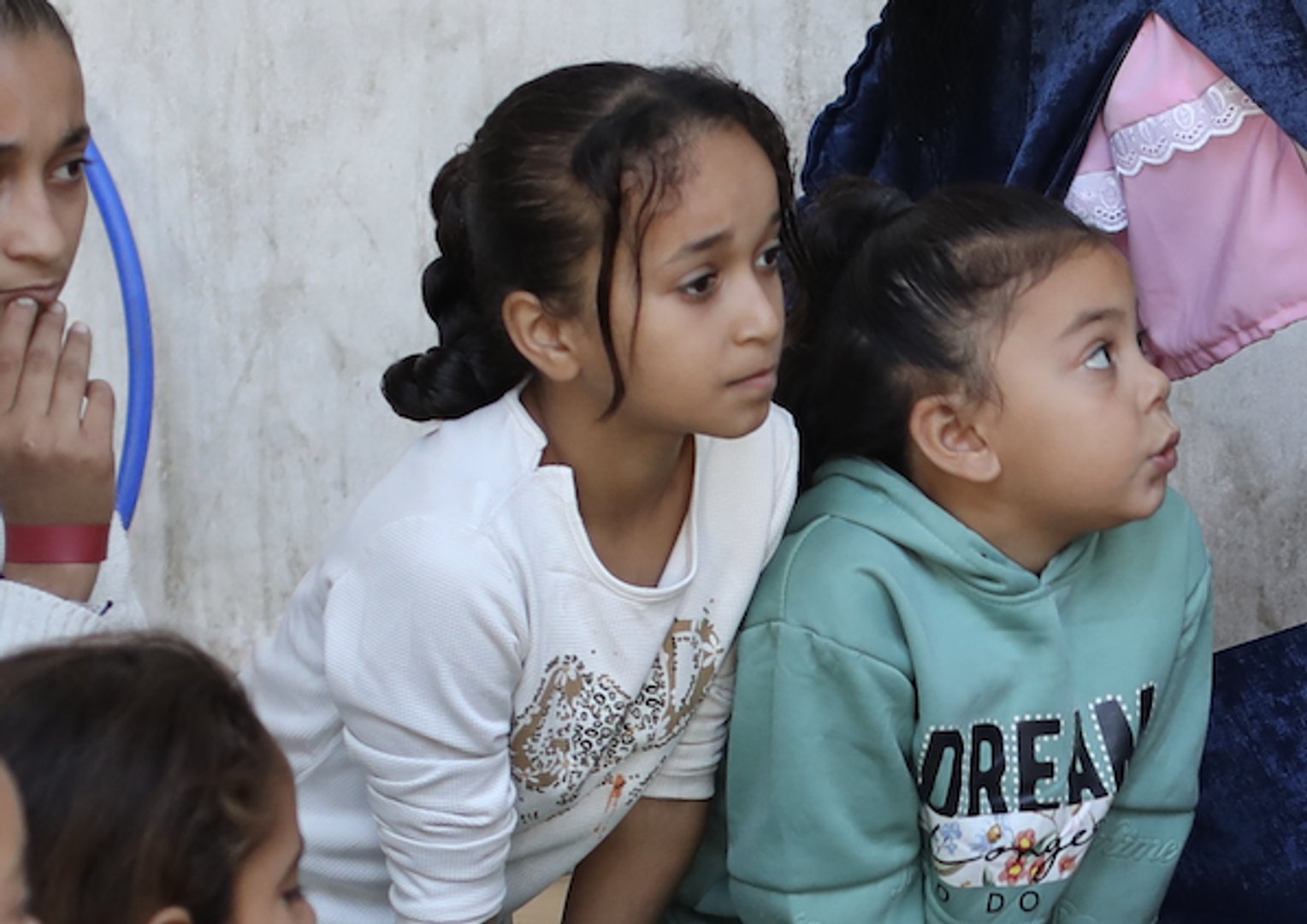
    Gaza’s displaced children celebrate World Children’s Day

    Gaza’s displaced children celebrate World Children’s Day

  • Next
    00:32
    Florida residents turn to kayaks and rafts as floods swamp streets

    Florida residents turn to kayaks and rafts as floods swamp streets

  • 00:51
    Mexico captures FBI-wanted cartel boss in military raid

    Mexico captures FBI-wanted cartel boss in military raid

  • 01:51
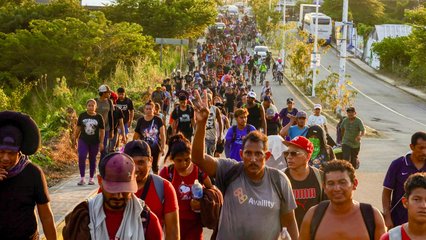
    Migrants caravan in Mexico walks towards US border

    Migrants caravan in Mexico walks towards US border

  • 00:34
    Deadly fire engulfs power station in southern Iraq

    Deadly fire engulfs power station in southern Iraq

‘Uncertain’ days ahead

Winter weather has compounded the humanitarian crisis in Gaza, with the World Food Programme (WFP) warning earlier this week that Palestinians have been forced to burn rubbish to cook their food.

“Now even the rubbish is wet,” warned Shaun Hughes, WFP’s country director for Palestine.

The International Organization for Migration (IOM) has said that more than 100,000 tents in Egypt cannot be delivered to Gaza due to strict conditions imposed by Israel.

“Usually anything under 38 millimetres is okay; anything above, it’s usually deemed as not acceptable,” Hughes explained.

“It is not a statement of dual use; it is just that this tent at this time is not allowed to enter Gaza … We don’t get the specifics,” said Karl Baker, head of the IOM’s Gaza programme.

Al Jazeera’s al-Khalili, reporting from Gaza, said: “The coming days are uncertain and the lack of basic necessities looms.”

Gaza’s Health Ministry reported on Saturday that 1,671 people had been killed since the “ceasefire” came into effect in October 2025. Al-Khalili said Israel has committed more than 600 ceasefire violations since then.

Meanwhile, 74,736 Palestinians have been killed since Israel launched its genocidal war on Gaza three years ago.

Genocide ruling against Myanmar welcome but it highlights good and bad of international law

  Alex Cunningham Vladimir Putin, Benjamin Netanyahu, Joseph Kony. All three men stand accused of slaughtering innocent civilians, abducting...